





Why Texture Matters as Much as Color
Texture changes how a wrap behaves in three measurable ways. It changes how the surface feels, how it interacts with light, and how it ages under road conditions. A perfectly smooth surface reads as wet, polished, and luxurious. A pronounced texture reads as technical, sporty, or industrial. Somewhere in the middle sit the satin, pearl, and brushed finishes that give vehicles their understated character. The Wikipedia article on surface roughness explains the science behind why the same color can look completely different at different surface scales, which is exactly why two black wraps from the same family can feel like entirely different products.
Glass-Smooth Liquid Finishes
At the smoothest end of the spectrum sits our Liquid Chrome Wrap collection. These films have an almost zero surface texture; the goal is to eliminate any micro-bumps that would scatter light or break the mirror illusion. Run your fingertip across a Liquid Silver or Liquid Gold panel and you feel something closer to glass than vinyl. That smoothness is what allows the wrap to bend and pool light the way liquid mercury does, and it is also what makes liquid chrome one of the most technically demanding finishes to install cleanly.
Just one step less reflective, the gloss films inside our car vinyl wrap catalog deliver that wet-paint smoothness most people associate with a freshly polished show car. The surface is engineered to be optically flat, but with enough adhesive flexibility to conform to body curves without stretching out the gloss. Smooth gloss remains the workhorse texture for 2026 because it photographs beautifully, ages predictably, and pairs with virtually any contrasting accent.
Metallic Surfaces: Smooth With Hidden Depth
Our metallic vinyl wrap range introduces the first layer of textural complexity. The top coat itself is smooth, but the film embeds thousands of microscopic metal flakes just beneath the surface. You cannot feel them, but your eye reads them as a fine sparkle that gives the panel dimensional depth. Shades like Ghost Midnight Purple and Frozen Berry Pink behave almost like two surfaces stacked together: a smooth optical layer on top, a granular shimmer layer underneath.
This category is a strong middle ground for owners who want more visual interest than flat gloss without the demanding routines that aggressive textures require.
Crystal and Glitter: Sparkle You Can Almost Touch
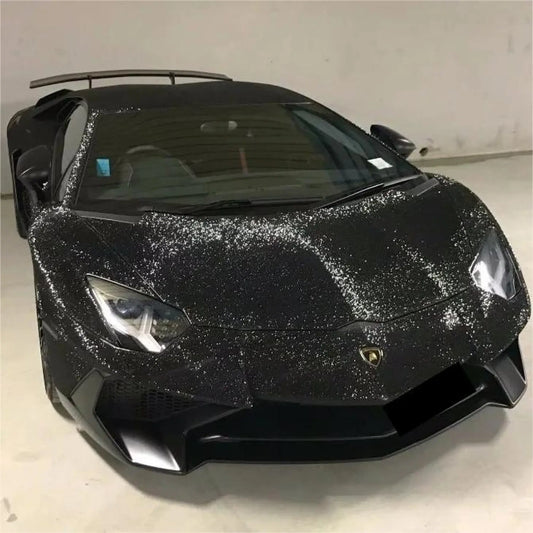
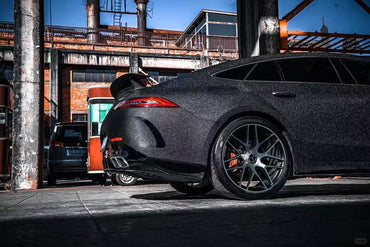
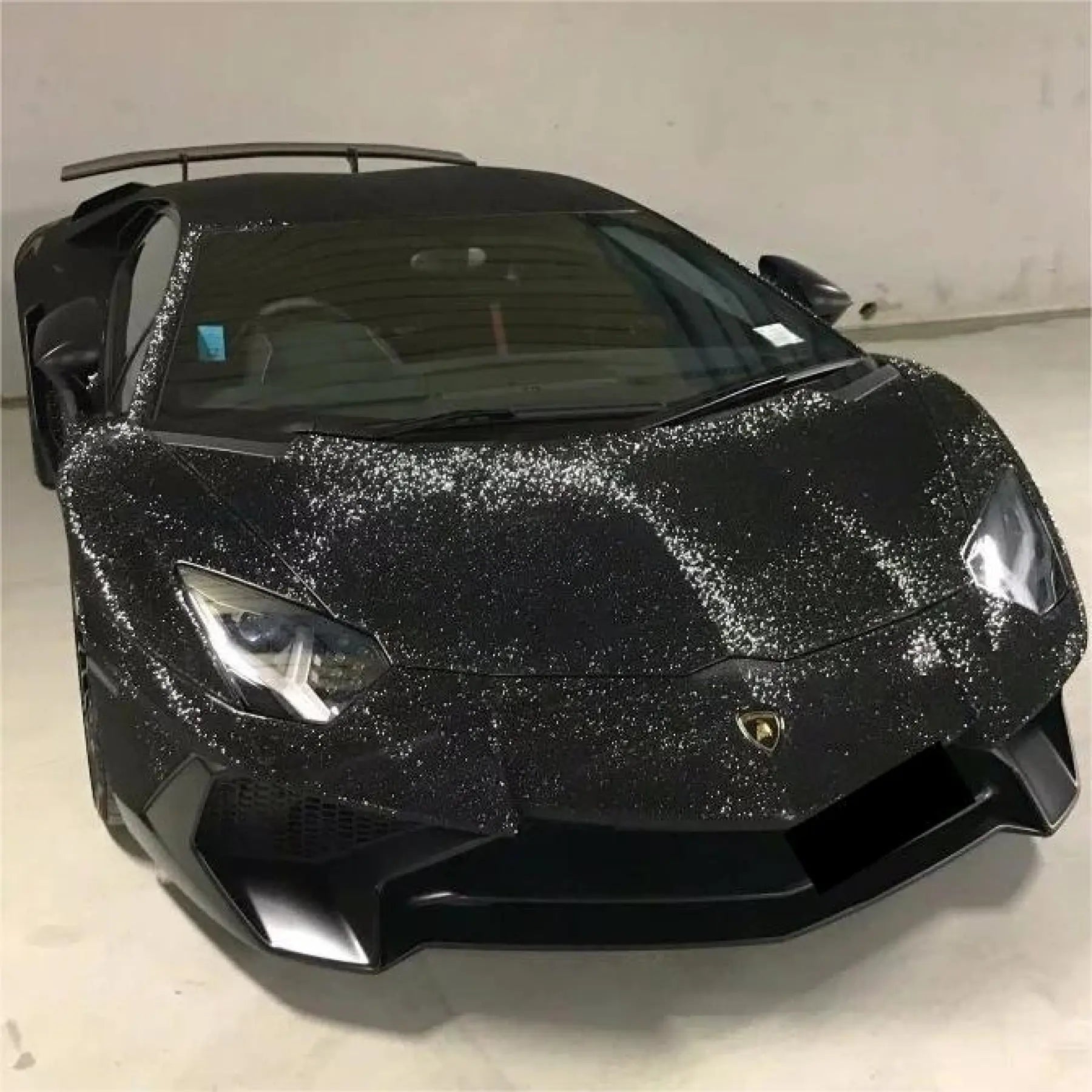
Step further into textural territory and you reach the Crystal Vinyl Wrap collection and the broader Glitter Sparkle Car Wrap range. These films contain larger, three-dimensional sparkle particles that create a finish your eye reads as textured even though the top coat itself remains smooth enough to wash like gloss. Diamond Glitter Black, one of our top sellers in this family, delivers a finish that looks like obsidian dusted with crushed crystal under direct light, then settles into a deep dark canvas in the shade.
These wraps are particularly popular for show builds and content creators because they perform exceptionally well under camera flash, where the embedded sparkle catches light and creates highlights that flat finishes simply cannot produce.
Ultra Matte: Texture Through Diffusion
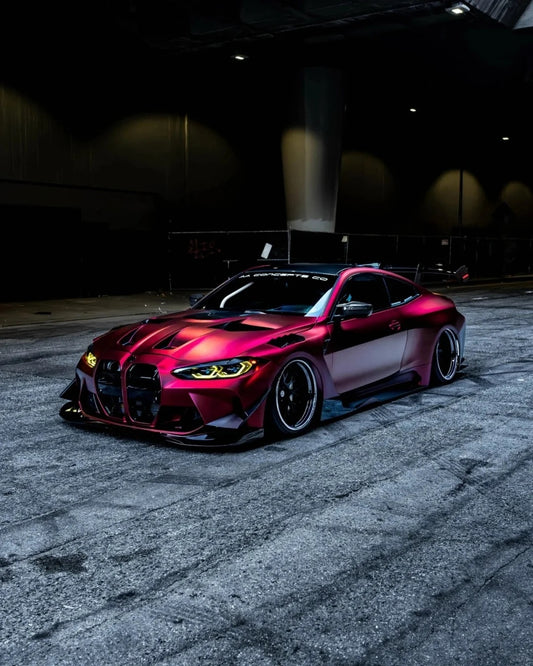
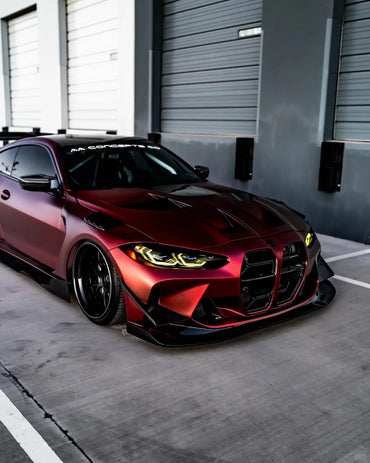
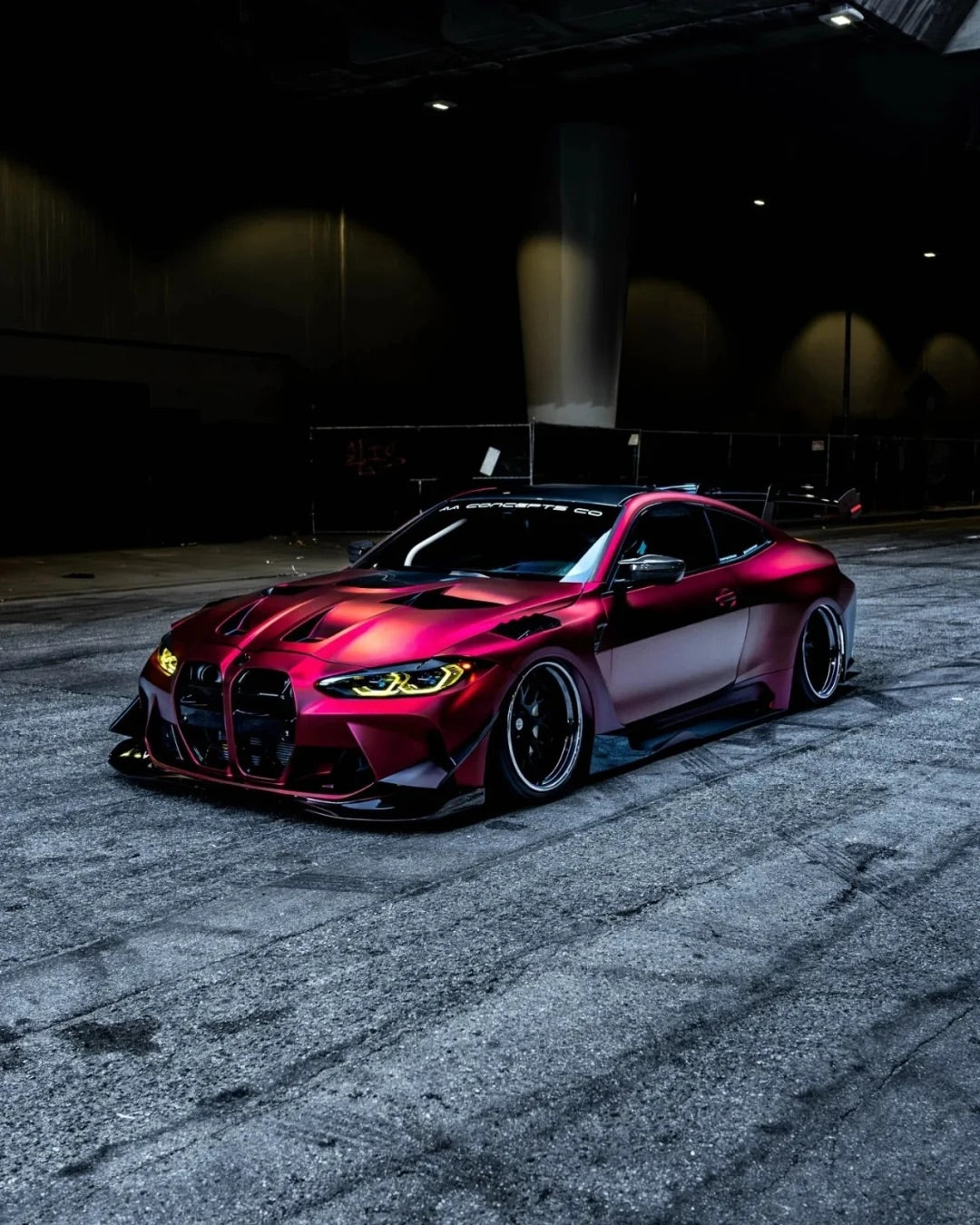
Matte is where texture starts to become tactile. The Ultra Matte Wrap series uses a microscopically rough top coat that breaks up reflections and produces the soft, suede-like surface that defines the modern stealth aesthetic. Run your fingers across a Flat Meteorites Grey panel and you can feel the difference: there is a gentle drag where gloss would slide. That micro-texture is doing real work, scattering light into a shadow-free glow and hiding the micro-imperfections that gloss surfaces tend to amplify.
Within the matte family, our Romance Red Satin Chrome Metallic and Magic Purple Russian Violet variants layer matte diffusion over a metallic substrate. The texture remains soft to the touch, but you get a controlled metallic glow underneath that flat matte cannot deliver. This hybrid texture has been one of the standout trends of 2026, particularly on European luxury sedans and performance SUVs.
Iridescent and Color Shift: Smooth Surface, Active Texture
Films like the Dual Color Dream Vinyl Wrap collection feel smooth under your hand, but the multi-layer pigment structure inside creates what feels like a moving texture as you walk around the vehicle. The eye perceives the shift between, say, emerald and indigo as a kind of optical motion, which adds dimensionality without adding any physical roughness. This is texture in a perceptual sense rather than a tactile one, and it is exactly why color-shift wraps remain one of the fastest-growing categories in 2026.
Holographic and Rainbow Laser: Engineered Micro-Patterns
The Rainbow Laser Vinyl Wrap series represents the most engineered texture in our catalog. These films carry a precisely embossed micro-pattern across the surface, fine enough that you cannot see the individual elements with the naked eye but coarse enough to diffract incoming light into rainbow flares. Galaxy Chameleon Diamond and Aurora Metallic Chameleon variants combine this micro-emboss with a multi-layer pigment stack, producing what is essentially a controlled diffraction grating laminated onto an automotive-grade adhesive backing.
The surface itself remains smooth enough for normal washing, but the embossed pattern means these films require careful installation. Stretching a holographic film too aggressively can flatten the micro-pattern in localized spots.
3D Carbon Fiber: Texture You Can Read With Your Fingers
At the most aggressive end of the texture spectrum sits our 3D Carbon Fiber Wrap collection. This is where the surface stops being a smooth membrane and becomes a deliberately sculpted geometry. The film is embossed with a fine woven pattern that mimics genuine carbon weave: alternating raised ridges and shallow valleys arranged in a twill grid. Drag your fingernail across a 3D carbon panel and you can hear and feel the weave, the same way you would on a real composite layup.
Within the carbon family, the visual character changes dramatically based on finish:
-
Matte 3D Carbon Fiber: Reads as functional and technical. The weave provides all visual interest while the matte top coat prevents glare. Best for stealth builds and interior trim.
-
Gloss 3D Carbon Fiber: Adds a wet-look top layer over the same physical weave. The gloss amplifies depth by creating sharp highlights along the ridges. Ideal for hoods, roofs, and accent panels.
-
Forged Carbon Fiber: A randomized, marbled pattern pulled from modern hypercar design. Available in gloss and matte, including bold red colorways for motorsport-inspired builds.
Carbon textures are most often used as accent wraps rather than full body installations. A carbon fiber hood, roof, or mirror cap delivers an immediate performance signal, while leaving the main body in a contrasting finish creates the multi-material look that defines premium 2026 builds.
Paint Protection Film: Texture in Service of Defense
Texture is not always about appearance. Our TPU Paint Protection Wrap lineup uses a specifically engineered top surface that combines smoothness for gloss retention with self-healing chemistry that allows minor scratches to disappear with heat. The surface feels glassy and slick, almost slippery, which is exactly what allows water and contaminants to bead and roll off rather than embedding into the film.
Our Colored Paint Protection Film range extends this philosophy by adding pigment without compromising the protective top layer. The result is a thicker, more substantial film that delivers both the textural smoothness of premium PPF and the visual punch of a colored vinyl wrap in a single application.
Pairing Textures for Multi-Panel Builds
Some of the most sophisticated wrap builds of 2026 deliberately combine multiple textures across different body zones. The principle is simple: texture contrast creates visual interest the same way color contrast does, and pairing two thoughtfully chosen finishes often looks more intentional than wrapping the entire vehicle in a single film.
A few combinations that have proven particularly successful:
-
Matte body + gloss carbon accents: The matte main panel makes the gloss carbon hood or mirrors pop with extra dimensionality.
-
Liquid chrome + matte carbon roof: Maximum-contrast pairing. The mirror chrome bounces against the deep texture of the carbon for an engineered look.
-
Glitter body + smooth gloss accents: Reverses the usual flow, putting visual movement on the main body and using calmer accents to frame it.
-
Color shift main + forged carbon hood: Pairs perceptual texture with physical texture for two completely different visual experiences.
Why Sample Kits Matter for Texture Decisions
Color you can roughly judge from a screen. Texture you cannot. The micro-feel of a matte versus the depth of a 3D carbon weave only becomes obvious when the film is in your hands. Ordering sample kits before committing to a full installation reveals more in five minutes than any product photograph ever could.
To see which textures are getting the most attention right now, our best sellers collection highlights the films currently winning at car meets and across social media.
How Texture Affects Installation
Different textures behave differently during installation, and matching your wrapping tools to the film type makes a real difference. Smooth gloss films are forgiving and respond well to standard squeegee techniques. Textured films like 3D carbon fiber require softer-edged tools to avoid flattening the embossed pattern. Matte films show squeegee marks more clearly than gloss. Holographic and chameleon films are heat-sensitive and can lose pattern definition if pulled too hard around tight curves.
Texture-Aware Maintenance
Maintenance routines should match texture, not just color. Smooth gloss and metallic films wash easily with pH-neutral automotive shampoo. Matte and carbon fiber textures need matte-specific products and a no-wax discipline, since polishing compounds fill the micro-texture and create permanent shiny patches. Crystal and glitter wraps clean similarly to gloss but benefit from extra rinse passes. Holographic films should be hand-washed exclusively to protect the diffraction surface.
Choosing Your Texture
The right texture depends on what you want your vehicle to communicate. Smooth gloss says polished and refined. Matte says modern and stealth. Crystal and glitter say expressive and high-energy. 3D carbon fiber says performance-focused and technical. Color shift and holographic say experimental and individual. There is no objectively best choice, only the choice that matches the personality of the build and the way you actually use the car.
What matters most is making the choice deliberately. The 2026 wrap scene is defined by texture-aware builds where every panel is chosen for both how it looks and how it feels. Sailifilm's catalog is built specifically to support that kind of thoughtful customization.
Future articles on the Sailifilm blog will dive deeper into individual texture families, including specific care guides for matte and carbon finishes, multi-panel design walkthroughs, and seasonal trend reports as the global wrap market continues to evolve.

