



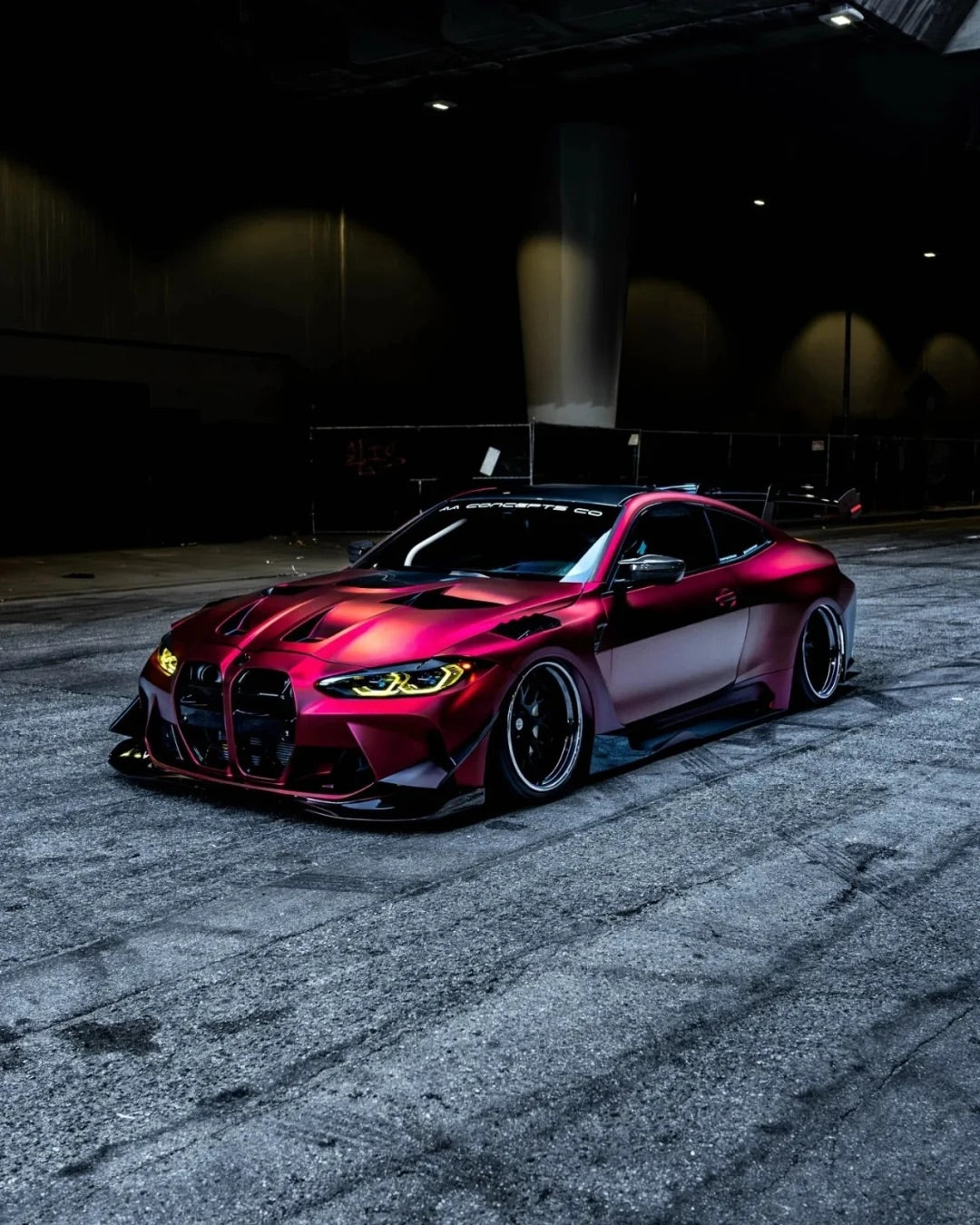


What a ceramic coating actually is
A consumer ceramic coating is a liquid containing silicon dioxide or a related organosilicon chemistry. Applied to a clean surface, the solvent flashes off and the remaining material cures into a thin, hard, semi-permanent film measured in single-digit microns. It is not a wax and it does not sit loosely on top. It cross-links into a continuous glass-like layer.
Two properties matter. It is hydrophobic, so water beads and sheets off instead of sitting in place. And it is slick, with a low surface energy that makes it hard for dirt, brake dust and organic contaminants to key into. Everything a coating does for a wrap flows from those two facts.
Where the real benefit is: fewer wash cycles doing damage
The strongest argument for coating a wrap has nothing to do with UV. It is abrasion arithmetic.
Vinyl is softer than automotive clearcoat. Every wash puts fine scratches into the surface, and over three or four years of weekly washing those micro-scratches accumulate into the dull, tired look people mistake for fading. A coated surface releases dirt with far less mechanical effort, so the same wash removes the same grime with a fraction of the pressure. Less scrubbing means fewer scratches, and fewer scratches means the film keeps its optical clarity for longer.
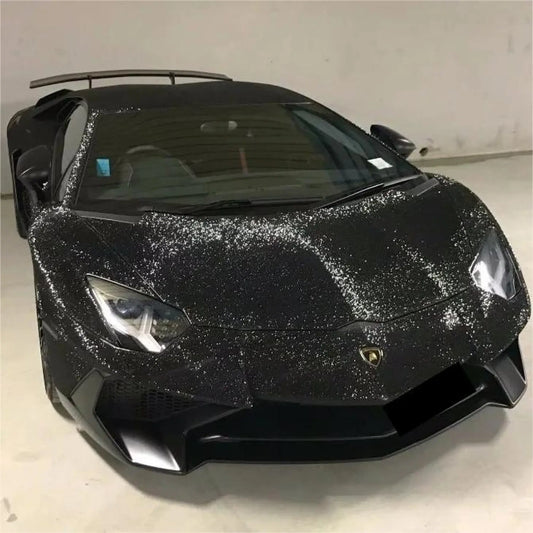
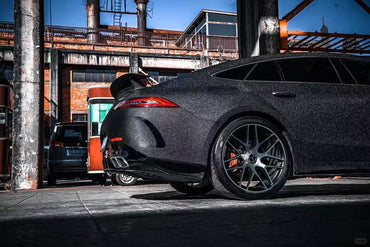
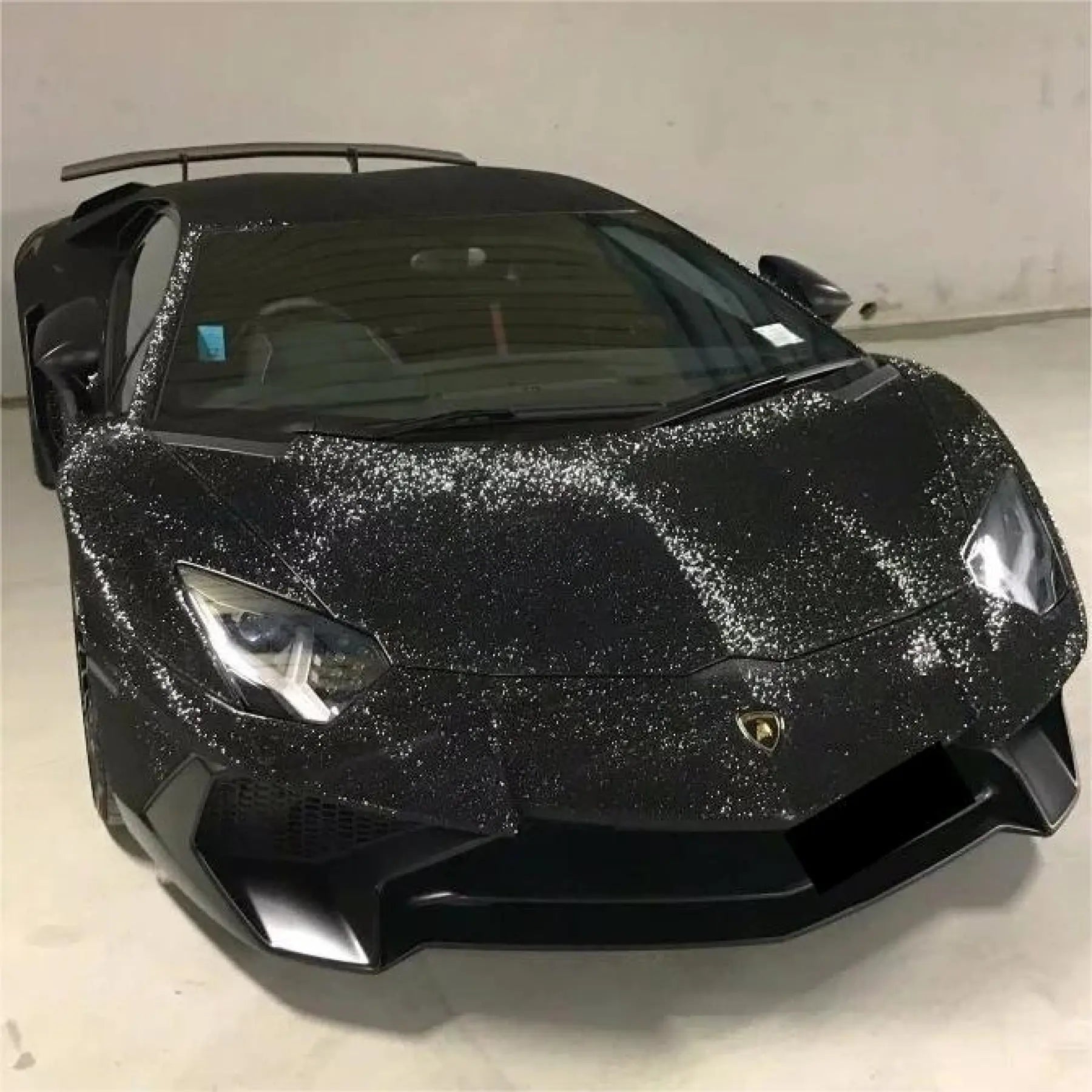
That effect compounds on reflective finishes. A Liquid Series panel depends on an unbroken surface to return light cleanly, so micro-scratching flattens the poured-metal effect long before the colour itself changes. The same applies to Metallic Series flake and to the interference layers described in our breakdown of how colour is built into a wrap film.
The second real benefit: stain and etch resistance
Bird droppings, insect residue, tree sap and industrial fallout are acidic or enzymatic, and given time and heat they chemically etch into vinyl. Once that mark is in the film it is permanent, because you cannot polish a wrap the way you can polish paint.
A coating buys time. The contaminant sits on the coating rather than in the vinyl, so a same-day wipe removes it completely instead of leaving a shadow. This is the single biggest practical win for anyone parking under trees or near the coast, where the salt-and-moisture combination described in our guide to how climate affects wrap longevity keeps a reactive film on the surface for days.
It also matters more on some finishes than others. The Ultra Matte Series owes its appearance to a micro-textured topcoat that scatters light, and that texture has more surface area for contaminants to lodge in. Matte and satin surfaces stain more readily and clean less forgivingly than gloss, which is why they gain the most from a slick sealed layer.
Where the claims overreach
Coatings are routinely marketed as UV protection, which needs qualifying. A coating layer measured in microns provides very little ultraviolet blocking on its own. Sailifilm films already carry a UV-stable topcoat engineered into the stack, and that topcoat, not an aftermarket layer, is what handles radiation.
The photodegradation that fades pigment and embrittles the vinyl body happens inside the film, driven by radiation that passes straight through a transparent coating. If your car lives outdoors in strong sun, a coating will keep it cleaner and glossier while the colour continues to age on roughly its own schedule. Shade beats coating for UV, every time.
The second limit is structural. Wraps most often fail at edges, through adhesive fatigue from daily heat cycling and through salt wicking into seams. A coating sits on the outer face and does nothing for the adhesive bond underneath. Correct installation tension and thorough post-heating, covered in the DIY car wrap installation guide, determine edge survival. No topical product retrofits a bad tuck.
What coating does and does not change
| Failure mode | Cause | Does coating help? |
|---|---|---|
| Micro-scratching and dulling | Wash abrasion on soft vinyl | Yes, substantially |
| Staining and etching | Acidic or organic contaminants | Yes, substantially |
| Water spotting | Mineral deposits drying on surface | Yes, moderately |
| Colour fading | UV photodegradation inside the film | Marginally |
| Edge lifting | Adhesive fatigue from heat cycling | No |
| Cracking and brittleness | Plasticiser loss over years | No |
| Rock chips and impact | Road debris | No |
Read the pattern rather than the rows. Coating addresses everything that happens on the surface and nothing that happens within the film or beneath it. That is a genuinely valuable half of the problem, but only half.
Finish compatibility, which is where mistakes happen
The most common and most expensive error is using a gloss-enhancing coating on a matte or satin wrap. Gloss coatings are formulated to fill and level a surface, and levelling a micro-textured matte topcoat partially fills the texture that creates the flat appearance. The result is a semi-gloss sheen, often patchy, and it cannot be undone. A matte Sailifilm panel treated this way is a replacement panel.
Match the product to the finish. Gloss films from the Crystal Series take a standard coating well and generally look deeper afterwards. Ultra Matte and any satin finish require a coating explicitly labelled matte-safe. Textured films such as the 3D Carbon Fiber Wrap need care too, since a levelling product can pool in the raised weave and leave uneven gloss across the pattern.
Conventional carnauba wax deserves a separate warning. Waxes are applied with pressure and friction, contain solvents and oils, and can smear matte finishes, work into seams, and stress edges. Wax is not a cheaper substitute for coating on wrapped vehicles.
Sequencing and timing
Order of operations is not optional. Coat only after the wrap is fully installed and cured. Adhesive continues bonding for roughly the first day or two, and post-heated edges need to settle before anything seals over them. Coating a wrap the same afternoon it went on risks trapping solvent at edges.
Coating is also the final layer. Nothing bonds reliably on top of a cured coating, so if any part of the build involves TPU paint protection film over the colour film, that goes on first. Prep the surface with a light isopropyl wipe and lint-free cloth so the coating bonds to film rather than to residue, then keep the panel dry through the initial cure window.
Expect a service life measured in one to a few years depending on product and washing habits, not the lifetime of the wrap. A coating is a renewable maintenance layer, not a one-time upgrade.
Who should coat and who should not bother
It is worth it for matte and satin builds, which stain easily and clean poorly untreated. It is worth it for reflective finishes such as Liquid and Rainbow Laser, where surface clarity is the whole effect. It is worth it for daily drivers parked outdoors, coastal vehicles, and anyone whose wash routine is honest about being occasional and rushed.
It is less compelling for a garage-kept weekend car washed carefully by hand, where abrasion is already minimal. And it is not a rescue for a wrap that is already dull, since coating locks in the current condition rather than restoring anything.
The realistic payoff is not extra years of film life. It is that year four looks closer to year one, and that the routine described in the car film maintenance guide takes less effort and does less harm each time you carry it out. Before committing to a finish and a care plan, order a sample kit and test how the film behaves against your own paint and your own washing habits.
Frequently asked questions
Can you ceramic coat a vinyl wrap?
Yes, provided the product is rated for vinyl film and matched to the finish. Coatings bond to the wrap topcoat the same way they bond to clearcoat. Apply only after the wrap is fully installed and cured, and use a matte-safe formulation on any matte or satin finish.
Does ceramic coating make a matte wrap shiny?
A gloss-enhancing coating will, and the change is permanent. Gloss products level and fill the micro-texture that produces the flat appearance, leaving a semi-gloss and often uneven surface. Only use a coating explicitly labelled safe for matte and satin film on Ultra Matte finishes.
Does ceramic coating stop a wrap from fading?
Not meaningfully. Fading comes from UV breaking down pigment and polymer inside the film, and a thin transparent coating passes most of that radiation through. Sailifilm films already include a UV-stable topcoat. Shaded or covered parking reduces fading far more than any topical product.
How long does a coating last on a wrap?
Typically one to a few years depending on the product, application quality and how the car is washed, which is shorter than the wrap itself. Treat it as a renewable maintenance layer to be reapplied, not as a permanent upgrade.
Should I wax my wrap instead?
No. Traditional wax needs pressure and friction to apply, contains oils and solvents, and can smear matte surfaces, collect in seams and stress edges. A vinyl-safe sealant or coating is the correct choice; wax is not a budget alternative on wrapped panels.
Does coating replace paint protection film?
No, they solve different problems. Coating is microns thick and handles chemical and washing contact; TPU paint protection film is far thicker and absorbs physical impact from stones and debris. On a high-mileage build, PPF goes on the leading surfaces first and the coating goes on last.
Next step
Decide what you are actually buying. If the goal is a wrap that still photographs like new in its third year with less effort per wash, a correctly matched coating earns its cost. If the goal is stopping fade or preventing edge lift, the money belongs in shade, careful installation and honest maintenance instead. Choose the finish first, match the care plan to it, and equip properly with the right wrapping tools so the install gives the coating a sound surface to protect.
Background reading: Organosilicon chemistry · Hydrophobe · Surface energy · Photodegradation · Silicon dioxide · Vehicle vinyl wrap

