










Side mirror wraps have become one of the fastest-growing segments in the car customization space in 2026. Whether you are planning a full vehicle color change or a targeted accent upgrade, wrapping your mirror caps delivers a striking visual transformation at a fraction of the cost of a full wrap or professional paint job. The key to a flawless mirror wrap, however, starts long before you pick up a squeegee. Removing the mirror cap shell cleanly and safely from its housing is the single most important preparation step, and the process varies significantly from one vehicle to another.
Why You Should Remove Mirror Caps Before Wrapping
Wrapping mirror caps while they are still attached to the vehicle is possible, but it introduces several challenges that compromise the final result. Mirror housings sit on curved, compact surfaces surrounded by tight recesses, sensor pods, turn signal lenses, and trim edges. Attempting to work around these obstacles while the cap is mounted produces uneven tension, visible tuck lines, and edges that lift within weeks.
When you remove the mirror cap and wrap it on a clean workbench, you gain full 360-degree access to every curve, recess, and edge. You can rotate the piece freely, apply heat evenly, and tuck the vinyl into every channel without fighting gravity or awkward hand positions. Off-vehicle wrapping also eliminates the risk of accidentally scratching adjacent painted surfaces with your cutting tool or heat gun. Professional installers consistently recommend cap removal for any finish that demands precision, including metallic vinyl wrap, liquid chrome wrap, and crystal vinyl wrap finishes, where imperfections are magnified by reflective surfaces.
Essential Tools for Mirror Cap Removal and Wrapping
Before you start, gather the following items. Having everything within arm's reach prevents unnecessary interruptions and reduces the risk of damaging clips or connectors mid-process.
Removal tools: Plastic trim removal tool set, microfiber towel (to protect painted surfaces), Phillips and Torx screwdriver set, a small flat-blade screwdriver for releasing spring clips, and a clean container for storing screws and clips. Avoid metal pry bars, which can crack plastic housings. For specific wrapping accessories, Sailifilm offers a curated wrapping tools collection that includes squeegees, cutting blades, and heat-resistant gloves designed for this exact type of project.
Wrapping tools: Heat gun with adjustable temperature, felt-edge squeegee, knifeless tape, isopropyl alcohol (70% or higher for surface preparation), and a sharp utility blade. If you are working with self-healing TPU paint protection wrap, you will also benefit from a infrared thermometer to monitor film temperature during stretching.
Mirror Cap Removal by Vehicle: Step-by-Step
Tesla Model 3 and Model Y
Tesla mirror caps are among the most straightforward to remove in the current vehicle market. The cap shell is held by spring-loaded clips with no screws. Gently tilt the mirror glass downward by hand to expose the gap between the cap and the mirror housing. Insert a plastic trim tool into the gap at the bottom edge of the cap and apply steady outward pressure. Work the tool around the perimeter, releasing each clip incrementally. Once all clips are free, slide the cap upward and away from the housing. There is a small wiring harness for the turn signal repeater on some trims. Unplug it by pressing the connector tab before fully separating the cap. Tesla caps are ideal for accent wraps using rainbow laser vinyl wrap or dual color dream vinyl wrap, which create a head-turning color-shift effect against Tesla's factory white or black paint. For more information on color-shifting film technology, see the Wikipedia article on vinyl wrap.
BMW 3 Series, 5 Series, and X Models
BMW uses a clip-and-slide retention system on most models from the G20 generation onward. Start by tilting the mirror glass fully downward. Locate the release tab at the inner lower edge of the cap where it meets the mirror base. Press the tab inward with a flat plastic tool while gently pulling the cap toward you and slightly upward. The cap will disengage and slide off the housing rail. Be cautious with M Sport mirrors, which may have a slightly tighter fit due to the larger cap footprint. BMW mirror caps present complex compound curves that benefit enormously from ultra matte wrap finishes, which deliver a sophisticated stealth appearance that complements BMW's aggressive body lines. The non-reflective surface of ultra matte film is also more forgiving on curved surfaces because it does not amplify minor imperfections the way gloss or chrome finishes can.
Toyota Camry, Corolla, RAV4, and Lexus Models
Toyota and Lexus mirror caps typically require mirror glass removal before the cap shell can be accessed. Carefully tilt the glass to its lowest position, then use a plastic tool to gently pry the glass from its pivot clips. Disconnect the heated mirror and blind spot monitor connectors behind the glass. With the glass removed, you can see the internal retention tabs holding the cap to the motor housing. Press each tab simultaneously and pull the cap away from the housing. Toyota cap tabs are known to be fragile, so patience is essential. Rushing this step risks snapping a tab, which will make the cap loose once reinstalled. For Toyota mirror wraps, 3D carbon fiber wrap creates an aggressive performance accent that pairs well with factory grey, white, or silver finishes. Carbon fiber texture also helps mask minor surface imperfections on older mirror housings.
Ford F-150, Bronco, Mustang, and Explorer
Ford's mirror cap attachment method varies by model year and trim. On the F-150 and Bronco, tilt the mirror glass and locate four internal clips accessible with a flat-blade screwdriver. Release each clip and gently pull the cap forward while unplugging any puddle light or turn signal connectors. Mustang S550 and S650 caps use a similar clip pattern but with a tighter snap fit. For the Explorer, some trims require removing a single Torx screw behind the mirror glass before the cap releases. Ford trucks and SUVs are popular platforms for bold accent wraps. The glitter sparkle car wrap collection from Sailifilm offers eye-catching diamond and pearlescent finishes that stand out on larger mirror housings. The Sailifilm best sellers collection is also a good starting point for first-time wrappers, featuring proven materials with air-release adhesive channels for easier installation. For insights on how automotive paint protection technology evolved from military applications, check the Wikipedia overview of paint protection film.
Honda Civic, Accord, and CR-V
Honda mirror caps follow a clip-only design similar to Tesla but with slightly more resistance. Tilt the mirror glass down, insert your plastic pry tool along the lower seam of the cap, and work it toward the outer edge. Honda clips tend to release with a satisfying pop. No connectors are usually present on base trim models, though higher trims with integrated turn signals will have a single plug to disconnect. Honda's smooth, rounded mirror shapes make them excellent candidates for car vinyl wrap in virtually any finish. If you want to experiment before committing to a full project, Sailifilm offers sample kits that let you evaluate color, texture, and adhesion quality on a small scale before purchasing a full roll.
Hyundai Tucson, Elantra, and Kia Sportage
Korean vehicles generally use a two-piece mirror cap design. The outer decorative shell separates from an inner frame piece. Tilt the mirror glass and use a trim tool along the bottom edge to release the outer shell first. It lifts upward and away. Hyundai and Kia caps are lightweight and wrap quickly, making them a great beginner project. The colored paint protection film series from Sailifilm is particularly well-suited here. Colored PPF combines aesthetic customization with genuine self-healing protection, meaning your mirror wraps will resist rock chips and light scratches while delivering a complete color transformation. Available colors include Crystal Sky Blue, Ferrari Red, Blood Red, Arctic Grey, Light Pink, and Piano Black.
Best Sailifilm Vinyl Wrap Finishes for Mirror Caps
Mirror caps are small enough that premium finishes remain budget-friendly even when using specialty films. Here are the top Sailifilm finishes recommended for mirror cap projects in 2026:
Rainbow Laser Vinyl Wrap delivers holographic, color-shifting iridescence that changes hue depending on the angle of light. This is the showstopper finish for car meets and social media content, and it pairs beautifully with neutral factory colors like white, grey, and black.
Liquid Chrome Wrap offers a true mirror-like reflective surface that transforms mirror caps into polished chrome accents. This finish demands careful installation because every imperfection is visible, which is why off-vehicle wrapping with proper surface preparation is non-negotiable.
Ultra Matte Wrap provides a non-reflective, velvety surface that emphasizes shape over shine. Ultra matte black mirror caps on a gloss-finish vehicle create the kind of two-tone contrast that drives engagement on platforms like Instagram and TikTok.
3D Carbon Fiber Wrap replicates authentic carbon fiber weave texture at a fraction of the cost. This is the go-to finish for performance-oriented vehicles and motorsport-inspired builds. The textured surface is also the most forgiving for beginners because it naturally hides minor installation imperfections.
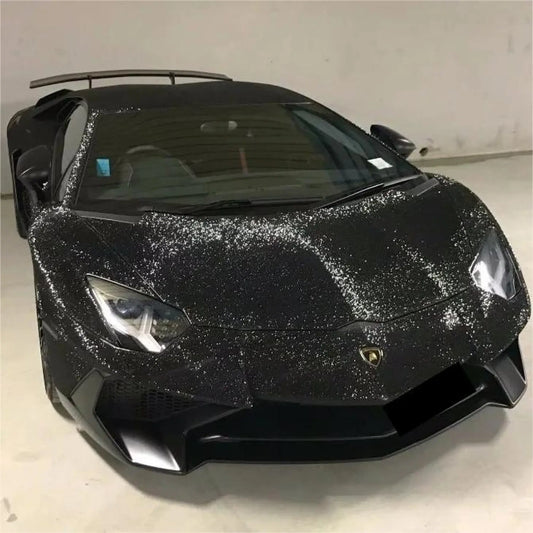
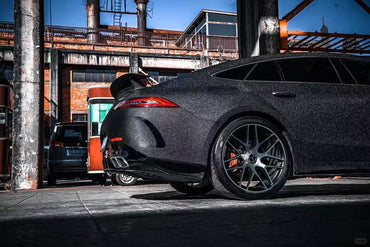
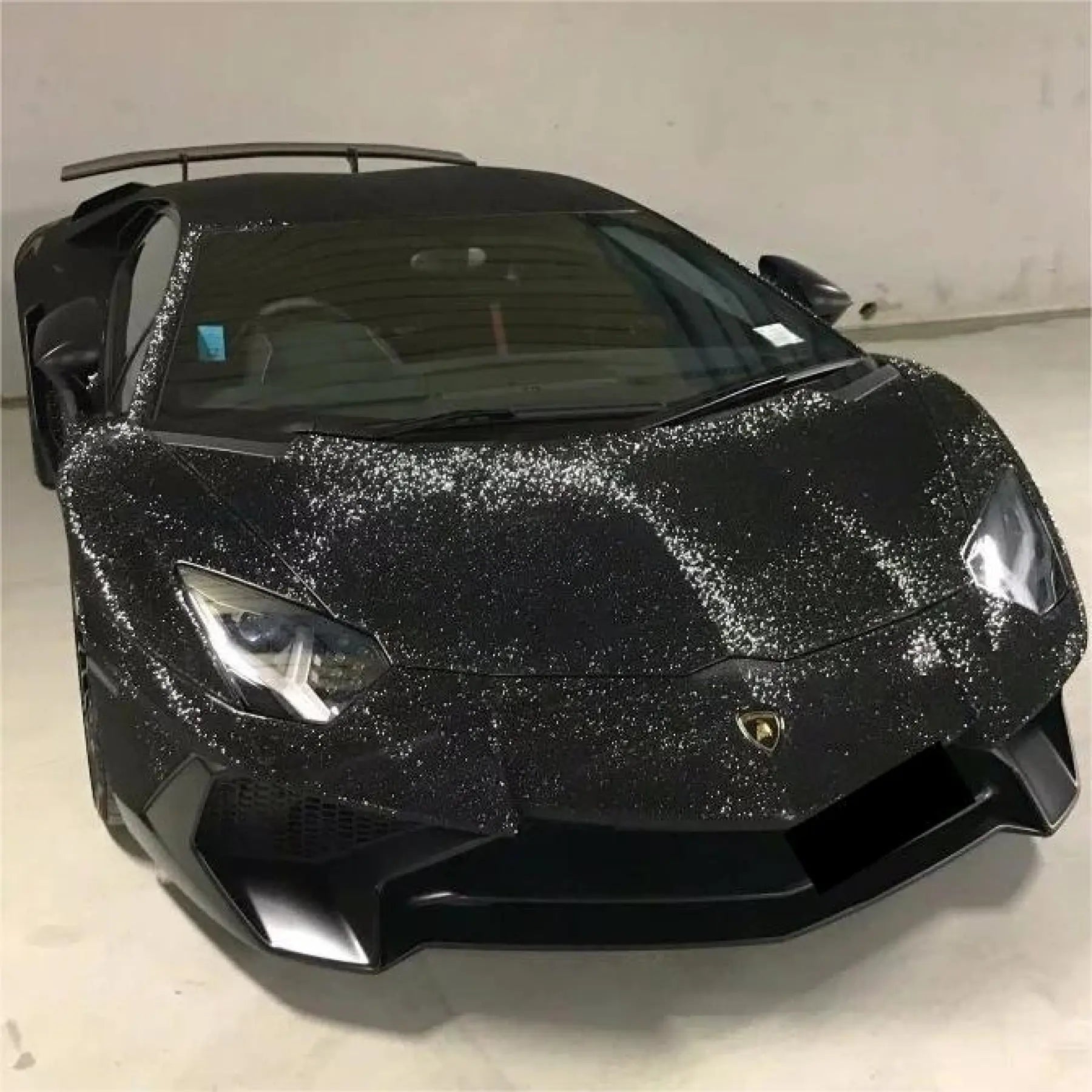
Glitter Sparkle Car Wrap adds diamond-like sparkle and depth, creating a premium aesthetic that catches light from every direction. This finish is trending heavily in 2026, especially among luxury SUV and sedan owners.
Mirror Cap Wrapping Tips for a Professional Finish
Start in the deepest recess of the cap, not the flat center. This distributes tension outward and prevents bunching in tight corners. Apply the film to the recess first, anchor it with light squeegee pressure, then work outward across the cap's broadest surface. Use low heat from your heat gun to activate the adhesive and improve conformability around compound curves. Avoid overheating, which can permanently distort thin plastic cap shells or cause the adhesive to become too aggressive for repositioning.
Use knifeless tape to create clean trim lines along the cap's inner edge where it meets the mirror housing. This eliminates the risk of blade marks on the cap surface. After trimming, use post-heat at 200°F to 220°F along all edges and tuck points to activate the adhesive's permanent bond and prevent edge lifting. According to automotive industry research reported by SEMA, the vinyl wrap aftermarket continues to grow at over 20% annually, driven by DIY accessibility and social media exposure. Mirror cap wraps represent the easiest entry point for new enthusiasts looking to gain skills before tackling full panels or complete vehicle wraps.
Maintaining Your Wrapped Mirror Caps
After installation, avoid washing the vehicle for at least 48 hours to allow the adhesive to fully cure. When you do wash, use pH-balanced car shampoo and soft microfiber towels. Avoid automatic car washes with spinning brushes, which can catch and lift vinyl edges. For enhanced longevity, apply a vinyl-safe ceramic coating over your mirror wrap every three to six months. This adds hydrophobic protection and makes cleaning easier while preserving the finish's visual depth. Sailifilm's TPU-based films, including colored paint protection film and TPU paint protection wrap, feature built-in self-healing technology. Light scratches disappear with exposure to heat from sunlight or warm water, keeping your mirror caps looking freshly installed for years.
For authoritative background on automotive film technology, visit the Wikipedia article on vehicle vinyl wrap and the Wikipedia article on paint protection film. To stay current with aftermarket industry trends and statistics, the SEMA official website publishes annual market reports covering the vehicle customization sector.
Start Your Mirror Cap Wrap Project Today
Mirror cap wrapping is the ideal beginner project for anyone entering the vehicle customization space. The cost is minimal, the risk is low, and the visual impact is immediate. With the right tools, proper cap removal technique, and premium film from Sailifilm, you can achieve a professional-grade result in a single afternoon. Browse the full Sailifilm car vinyl wrap collection to find the perfect finish for your project, or start with a sample kit to test colors and textures before committing to a full roll.

