












Why the Two-Piece Method Outperforms Single-Sheet Wrapping
The fundamental challenge with mirror caps is their compound curvature. Unlike a hood or roof panel that curves primarily in one direction, a mirror cap curves simultaneously on multiple axes. When you attempt to conform a single sheet of vinyl across these opposing curves, the material must stretch significantly in some areas while compressing in others. This creates tension imbalances that cause three predictable failures: fingering along concave transitions, lifting at edges where overstretched film tries to retract, and premature adhesive failure on the convex peak where the film is thinnest.
The two-piece method eliminates these problems by assigning each piece to a section of the cap that curves primarily in one direction. The first piece handles the inner face of the cap, the area closest to the vehicle body and window. The second piece covers the outer face, the larger visible surface that includes the top and outward-facing curves. Because neither piece needs to transition across the sharp inflection point where these two zones meet, both can be applied with minimal stretch, preserving full film thickness and adhesive integrity across the entire surface. This approach is standard practice in professional wrap shops for any mirror cap with a convex-to-concave transition. According to automotive industry data from SEMA, accent wraps including mirror caps, spoilers, and roof panels represent one of the fastest-growing segments in the aftermarket customization market, driven by DIY accessibility and the proliferation of premium vinyl finishes.
Tools and Materials You Need
Gather everything before you begin. Interruptions during a mirror wrap lead to uneven adhesion and misaligned seams. You will need a heat gun with adjustable temperature settings, a felt-edge squeegee for curved surfaces, knifeless tape in the 3.5mm width, isopropyl alcohol at 70% concentration or higher, a sharp utility blade with fresh snap-off segments, microfiber towels, and an infrared thermometer if you are working with TPU-based films. Sailifilm offers a purpose-built wrapping tools collection that includes professional-grade squeegees, cutting blades, and heat-resistant gloves specifically designed for complex panel work like mirror caps and door handles.
For film material, mirror caps require very little vinyl. A single mirror cap typically needs a piece measuring roughly 12 by 14 inches for the outer section and 6 by 10 inches for the inner section. This makes mirror wrapping extremely cost-effective, even with premium specialty films. If you want to test a finish before committing to a larger project, the Sailifilm sample kits allow you to evaluate texture, color accuracy, and adhesion behavior on a small surface before purchasing a full roll.
Surface Preparation: The Foundation of a Lasting Wrap
Clean the mirror cap thoroughly with isopropyl alcohol, paying special attention to edges, recesses, and the area where the cap meets the mirror housing. Mirror caps accumulate wax residue, road film, and silicone-based detailing products that prevent proper adhesive bonding. If you are working with the cap still mounted on the vehicle, mask the surrounding painted surface with microfiber towels to protect it from accidental blade contact or heat exposure. If you have removed the cap from the mirror assembly, which is recommended for the best results, place it on a clean, lint-free surface where you can rotate it freely.
Mirror cap shells are typically injection-molded ABS or polycarbonate plastic, which are classified as low-surface-energy substrates. This means adhesive bonds are weaker on these surfaces compared to painted metal. Thorough alcohol cleaning is non-negotiable, and many professional installers also apply a thin adhesion promoter to the cap edges and recesses where lifting is most likely to occur. For detailed preparation guidelines, the Wikipedia article on vinyl wrap provides useful background on how automotive films interact with different substrate materials.
Step-by-Step: The Two-Piece Mirror Cap Wrapping Technique
Step 1: Map the Seam Line
Before cutting any material, study the mirror cap geometry and identify the natural transition ridge where the inner face meets the outer face. Most mirror caps have a visible mold line or body crease running from the base of the cap near the door to the tip near the outer edge. This crease is your ideal seam location because the human eye naturally expects a visual break along body lines, making a seam placed here virtually invisible. On caps without a visible mold line, place the seam along the sharpest curvature change on the window-facing side of the cap, where it will be least visible to anyone viewing the vehicle from the front, rear, or side.
Run a strip of knifeless tape along your chosen seam line. Press it firmly into the surface to create a crisp cutting guide. The knifeless tape serves double duty here: it provides a perfectly straight trim line and eliminates the risk of blade marks on the plastic cap shell. This is especially critical when working with liquid chrome wrap or crystal vinyl wrap finishes, where even a hairline scratch on the substrate can telegraph through the reflective surface layer.
Step 2: Apply the Inner Piece First
Cut the smaller inner piece to size, allowing approximately two inches of excess on all edges. Peel the backing and position the film over the inner face of the cap. Begin tacking the vinyl in the deepest recess of the inner face, not on the flat center. Starting in the recess allows tension to distribute outward naturally, preventing the bunching that occurs when material is pushed into a concave zone from a flat starting point.
Use your felt-edge squeegee to work outward from the recess across the inner face, applying gentle heat as needed to improve conformability around minor curves. When you reach the knifeless tape seam line, press the vinyl firmly over the tape and extend it past the tape by at least half an inch. Pull the knifeless tape filament to create a clean, blade-free cut along the seam line. The resulting edge should be crisp, straight, and slightly recessed below the surface plane where the outer piece will overlap it. Wrap the remaining excess around the cap edges and secure it on the back side.
Step 3: Apply the Outer Piece
The outer piece covers the primary visible surface of the mirror cap, including the top, the outward-facing curve, and the leading edge that faces oncoming airflow. Cut this piece generously, roughly the size of a standard sheet of paper, to ensure you have enough material to manage tension without overstretching.
Position the outer piece so that its edge overlaps the trimmed edge of the inner piece by approximately 2 to 3 millimeters along the seam line. This micro-overlap creates a butt joint that is essentially invisible once heated and sealed. Tack the vinyl at the center of the cap's broadest flat area, then work outward in all directions with the squeegee. Apply low heat from your heat gun to soften the film as you approach compound curves. The key here is controlled, gradual stretching. Aggressive pulling creates thin spots that are prone to premature failure, especially on high-exposure surfaces like mirror caps that face constant wind pressure at highway speeds.
As you work toward the leading edge of the cap, use slightly more heat to activate the adhesive and allow the film to conform around the tightest radius. Wrap the excess around all edges and secure it on the back side of the cap. If you are using a textured film like 3D carbon fiber wrap, maintain consistent squeegee direction to preserve the weave pattern alignment across the entire surface.
Step 4: Seal the Seam and Post-Heat
With both pieces applied, examine the seam line closely. The micro-overlap should create a nearly flat transition with no visible gap and no raised ridge. Apply targeted heat along the seam at 200 to 220 degrees Fahrenheit while pressing gently with a microfiber-wrapped finger or a soft squeegee edge. This heat activation bonds the overlapping edges together and relaxes any residual tension in the film, preventing the seam from opening over time.
Perform a full post-heat pass over the entire mirror cap at the same temperature range. Focus extra attention on all edges, tuck points, and the areas where the film transitions from the face of the cap to the back side. Post-heating is the single most important step for long-term durability. It converts the adhesive from a repositionable state to a permanent bond, and it relieves the internal tension that causes edge lifting during temperature cycling. Skip this step and your mirror wrap will begin to peel within weeks, regardless of how cleanly it was applied.
Best Sailifilm Finishes for Two-Piece Mirror Cap Wraps
Mirror caps are small enough that even premium specialty films remain budget-friendly for this application. The two-piece method works with every finish type, but certain Sailifilm collections perform particularly well on mirror cap geometry.
3D Carbon Fiber Wrap is the most forgiving finish for two-piece mirror installations. The textured surface naturally conceals the seam line, and the dimensional weave pattern masks minor installation imperfections. Carbon fiber accents on mirrors, spoilers, and hoods remain one of the strongest trends in the 2026 customization market, delivering a motorsport-inspired aesthetic at a fraction of the cost of genuine carbon fiber components. Browse the full collection at Sailifilm 3D carbon fiber wrap.
Ultra Matte Wrap offers exceptional seam concealment thanks to its non-reflective surface. Matte finishes scatter light rather than reflecting it, which softens the visual impact of any seam edge. Ultra matte black mirror caps against a gloss-finish body create the kind of two-tone contrast that dominates automotive social media feeds in 2026. The ultra matte wrap collection includes Satin Chrome Metallic finishes in colors like Romance Red, Space Grey, and Midnight Blue that add subtle depth without gloss-level reflectivity.
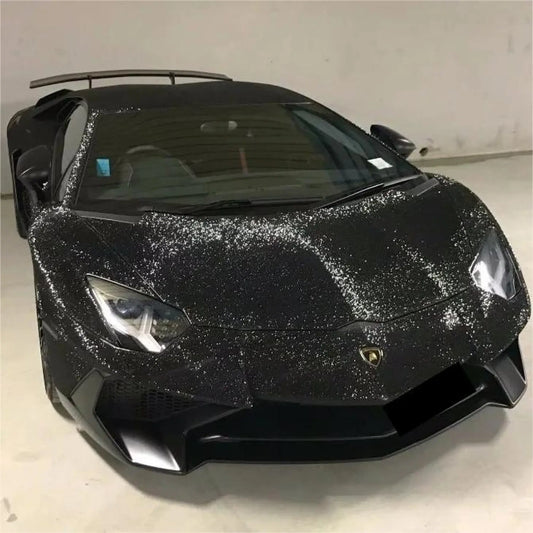
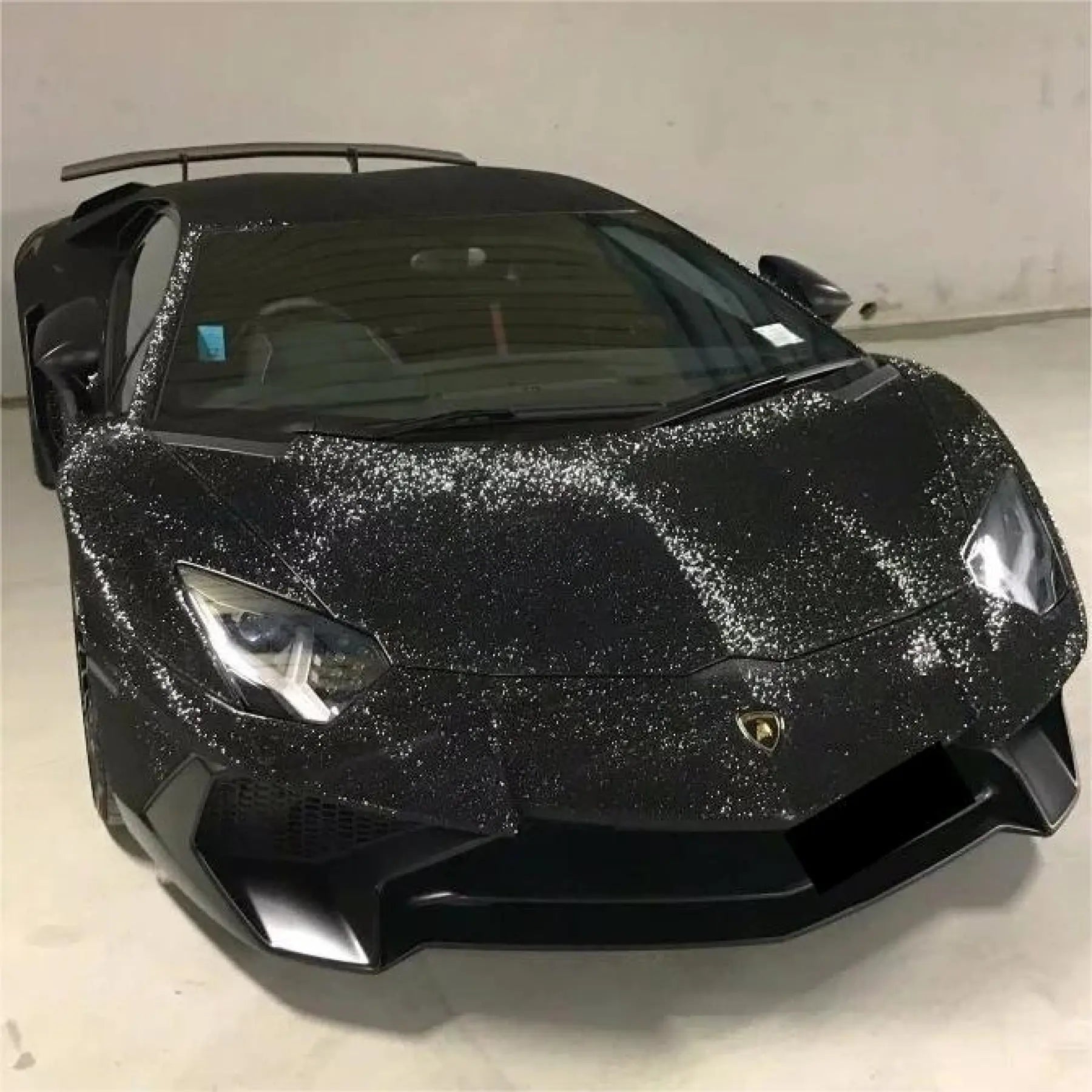
Glitter Sparkle Car Wrap produces a stunning diamond-like particle effect on mirror caps. The embedded metallic flakes catch light from every angle, and the visual complexity of the sparkle pattern draws the eye away from any seam line. The glitter sparkle car wrap collection includes Diamond Glitter Black, Pearlescent Sparkle White, and a range of jewel-tone options that transform mirror caps into eye-catching accent pieces.
Rainbow Laser Vinyl Wrap delivers holographic, color-shifting iridescence that changes hue based on viewing angle and lighting conditions. This is the ultimate show-car finish for mirror cap accent wraps, and the color-shift effect naturally disguises seam placement because the viewer's eye is drawn to the shifting spectrum rather than any surface detail. Explore the full range at Sailifilm rainbow laser vinyl wrap.
Metallic Vinyl Wrap incorporates fine reflective particles that create depth and shimmer without the high reflectivity of chrome or liquid metal finishes. Metallic films are among the most popular choices for mirror cap accents because they pair naturally with virtually any factory paint color. The metallic vinyl wrap collection offers colors spanning from subdued Gunmetal Grey to bold Lava Orange.
For vehicle owners seeking both aesthetic transformation and genuine paint protection, colored paint protection film and TPU paint protection wrap combine thermoplastic polyurethane construction with vivid color options. These films deliver self-healing technology that repairs light scratches with heat exposure, making them ideal for high-impact surfaces like mirror caps that face constant road debris. Learn more about TPU film technology through the Wikipedia overview of paint protection film.
Common Mistakes to Avoid with Two-Piece Mirror Wraps
Using cheap calendered vinyl on mirror caps. Calendered films lack the conformability of cast vinyl and are engineered for flat or gently curved surfaces. Mirror caps demand cast-quality film with air-release adhesive channels. Every film in the Sailifilm car vinyl wrap collection is designed with air-release technology for bubble-free installation on complex curved surfaces.
Placing the seam on the most visible surface. Always route the seam along a body crease or mold line on the window-facing side of the cap. Never place it across the top center where it will be visible from above or across the front face where oncoming light will cast a shadow along the edge. Strategic seam placement is the difference between a professional result and an obvious DIY job.
Skipping post-heat entirely. Even a perfectly applied two-piece wrap will fail prematurely without thorough post-heating. Every edge, every seam overlap, and every tuck point needs 200 to 220 degrees Fahrenheit applied for several seconds to convert the adhesive to its permanent state. This step is especially critical on low-energy plastic substrates like mirror cap shells.
Overstretching around the leading edge. The front-facing edge of the mirror cap encounters the highest wind pressure during driving. If the film is overstretched in this area, the thin vinyl becomes a weak point that peels first. Use heat to coax the material around this curve rather than pulling force. Patience at this stage saves you from having to redo the entire installation in a few weeks.
Mirror Cap Wrap Maintenance and Longevity
Allow 48 hours after installation before washing the vehicle. This gives the adhesive time to reach full bond strength. When you wash, use pH-balanced car shampoo and soft microfiber towels only. Avoid automatic car washes with spinning brushes, which can catch vinyl edges and initiate peeling. For enhanced protection and easier cleaning, apply a vinyl-safe ceramic coating over the wrapped mirror caps every three to six months. This adds hydrophobic properties that cause water to bead and roll off the surface, reducing water spotting and contamination buildup.
If you chose TPU paint protection wrap for your mirror caps, the self-healing topcoat will automatically repair light scratches and swirl marks when exposed to heat from sunlight or warm water. This technology keeps mirror caps looking freshly installed for years without requiring polishing or correction. Quality vinyl wraps on properly prepared mirror caps typically last three to five years, while premium TPU-based films can exceed seven years with attentive care. For the broadest selection of proven materials, explore the Sailifilm best sellers collection, which features the most popular finishes validated by thousands of successful installations. The SEMA aftermarket industry trends page provides additional data on wrap longevity and consumer satisfaction trends.
Start Your Two-Piece Mirror Wrap Project Today
The two-piece mirror cap wrapping technique transforms the most technically challenging small-panel installation into a manageable, repeatable process that delivers professional results every time. By dividing the cap into two zones with a strategically hidden seam, you eliminate the tension problems that plague single-sheet attempts and dramatically extend the lifespan of your mirror wrap. Whether you choose 3D carbon fiber for a motorsport accent, ultra matte for stealth contrast, or dual color dream vinyl wrap for a color-shifting statement, the two-piece method ensures every finish performs at its best on your mirror caps. Browse the complete Sailifilm car vinyl wrap collection to find the perfect finish for your next project.

