



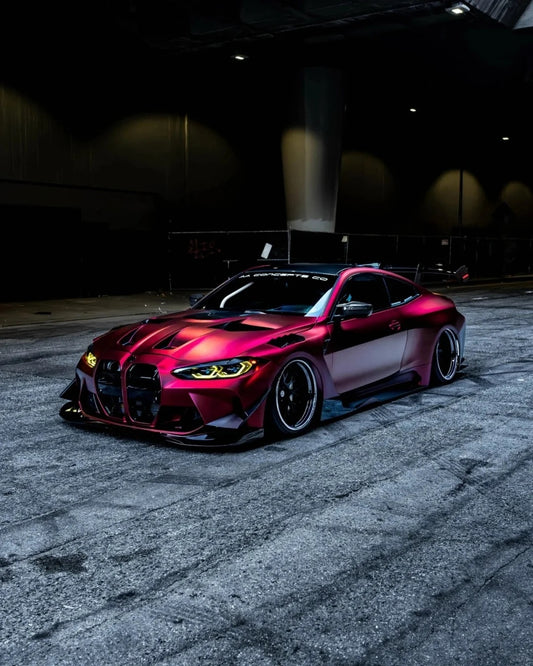
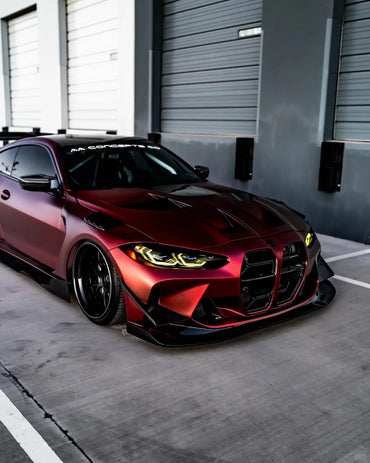
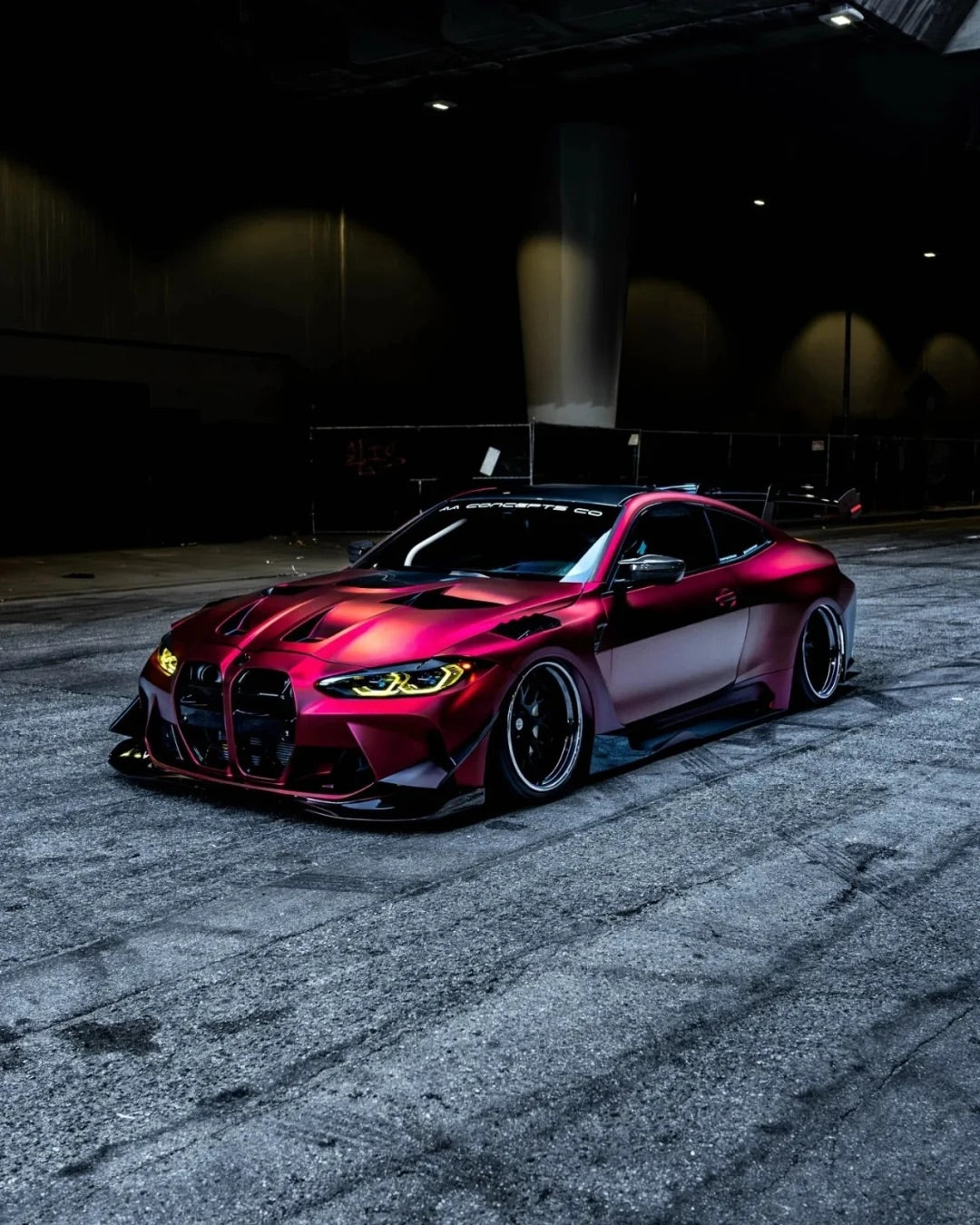
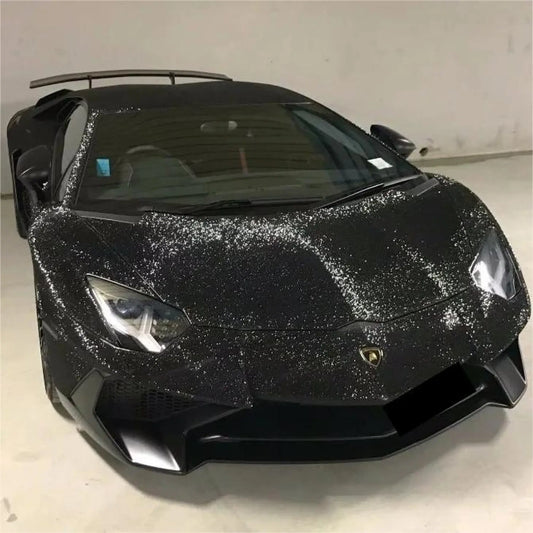
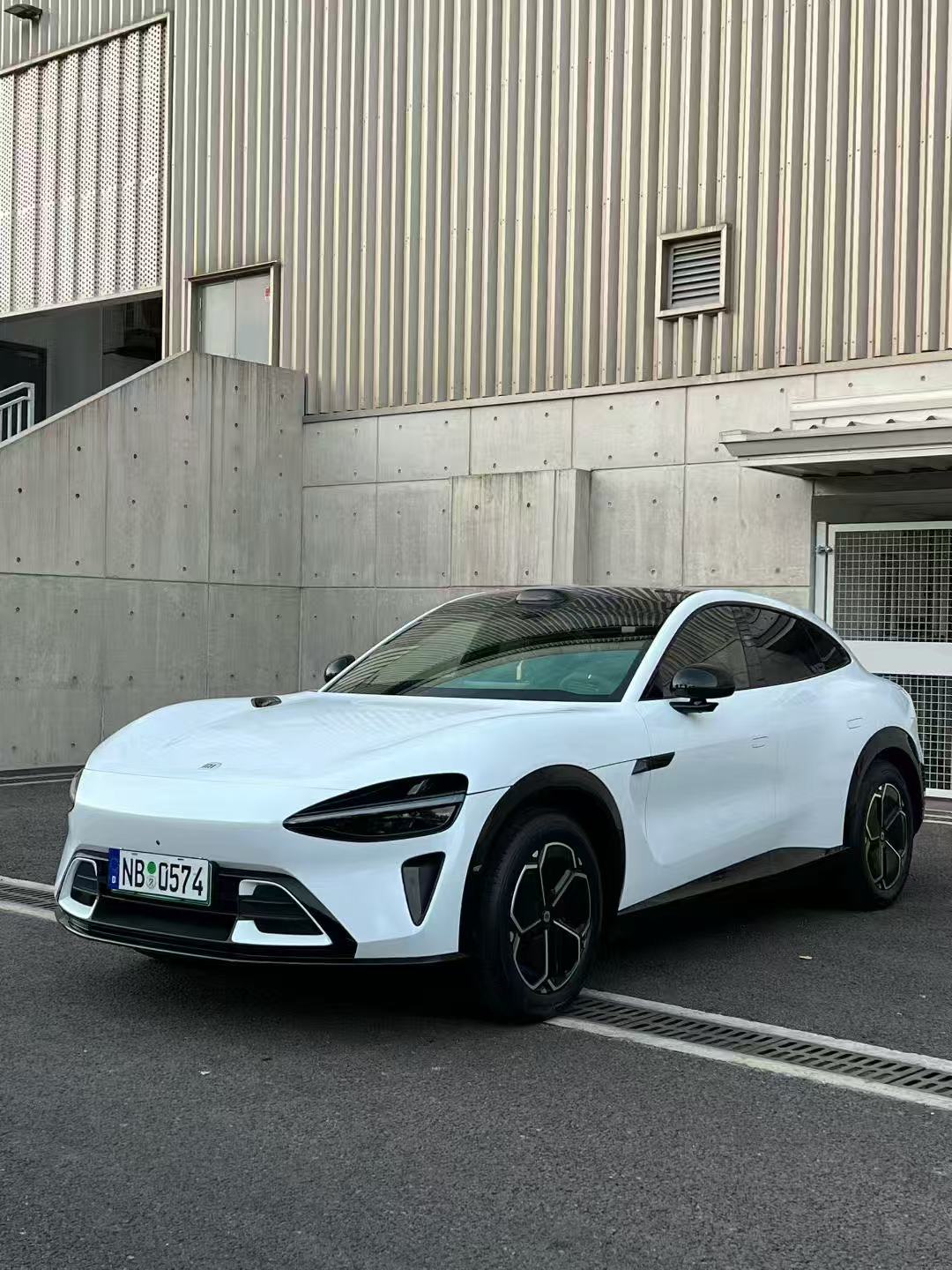


This is the part of metallic and color-shift work that catches even experienced wrappers off guard. Solid gloss and matte films forgive a rotated panel. Metallic and chameleon films do not. The moment a flake layer or an optical-interference stack is involved, the film stops behaving like a flat color and starts behaving like a directional material that has a correct orientation and an incorrect one. Get the planning right and the finish looks factory. Get it wrong and no amount of squeegee skill will rescue it after the fact.
If you are stocking, selling, or installing finishes from the Metallic Series or the Dual Color Dream Series, directional planning is not an optional refinement. It is the single discipline that separates a wrap that photographs beautifully from one that gets re-quoted.
What "Directional Film" Actually Means
A directional film is one whose appearance changes depending on which way the material is oriented on the panel. The base color stays the same, but the way light returns to the eye does not.
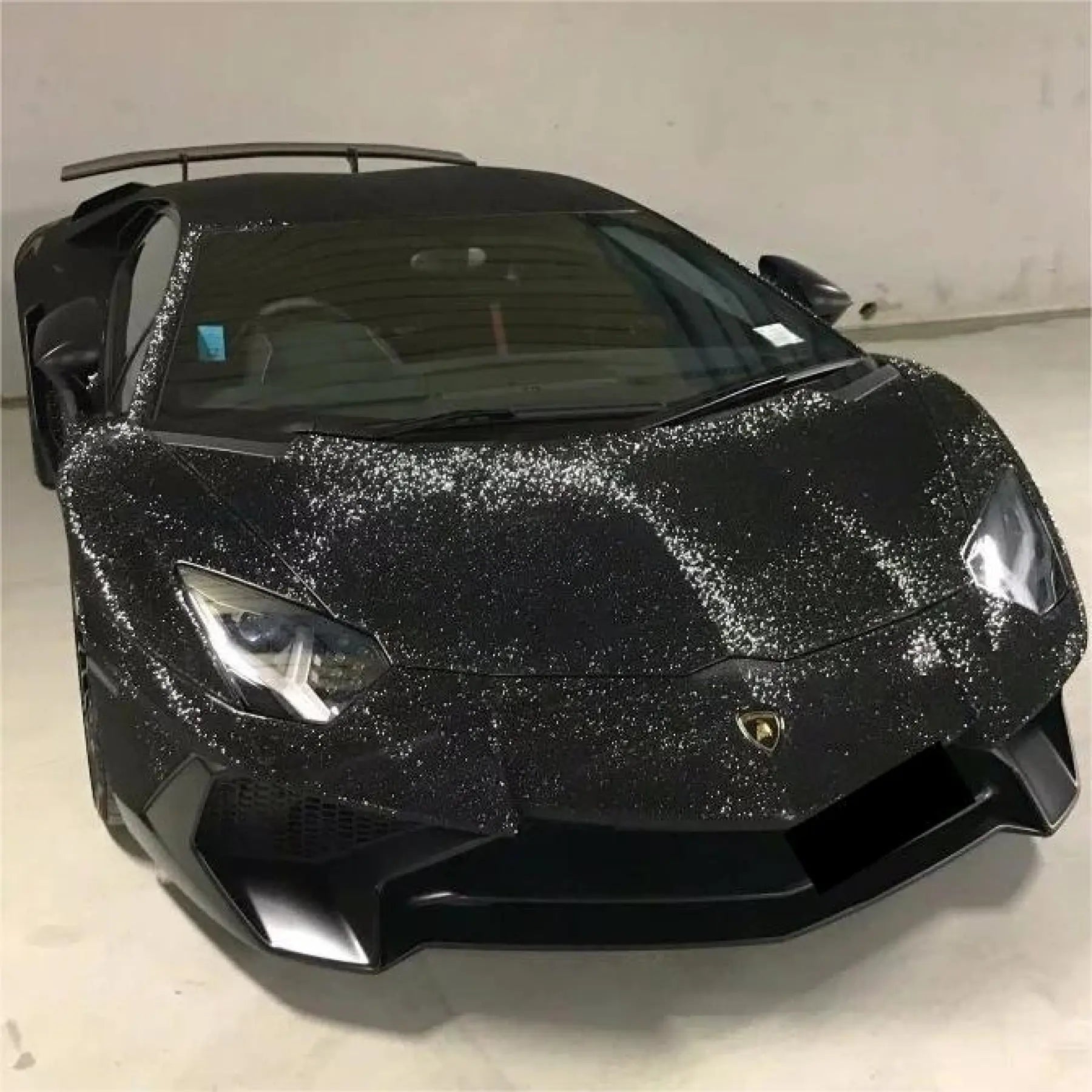
In a metallic finish, the cause is the flake. SailiFilm's metallic gloss films carry fine metallic flakes suspended below the surface, and those flakes lie in a consistent lay along the length of the roll. When light hits flakes that are all oriented the same way, you get an even, mirror-like return across the whole panel. Rotate one piece ninety degrees and its flakes now catch light on a different axis. Side by side under the same sky, the two pieces read as two different brightnesses of the same color. Nothing is defective. The grain simply does not match.
In a color-shift finish, the cause is the optical stack. The Dual Color Dream films build their effect from layered micro-thin polymers, metallic flakes, and pearl pigment engineered to reflect specific wavelengths at specific angles. That is what produces the travel from green to blue, gold to grey, or purple to pink as you walk around the car. But that travel is itself angle-dependent, which means the layer direction of the film dictates which color appears at which viewing position. Two panels run in opposite directions will sit at different points in their color shift at the same instant. The car ends up looking like it is wearing two colors that were supposed to be one.
This is why both categories ship as directional film, and why the instruction "check orientation before cutting" exists on the liner in the first place. The flake lay and the layer stack are decided at the factory. Your job on the bench is to keep every panel pointed the same way the roll intended.
The Failure Mode Nobody Photographs
The reason directional mistakes are so costly is that they are usually invisible at the moment you make them.
Inside a shop, under flat overhead lighting, a rotated panel can look perfectly fine. The flakes still shine, the color still shifts, the customer signs off, the car drives away. Then it rolls into direct sun, or under a row of street lamps, or into a parking structure with light coming from one side, and the mismatch announces itself. A door now reads brighter than the fender beside it. A quarter panel sits a half-shade off from the roof. On a color-shift wrap, the effect is worse, because the human eye is exceptionally good at noticing when two adjacent surfaces are mid-transition at different points.
You cannot squeegee this out. You cannot heat it out. The only fix is to pull the offending panel and redo it with correct orientation, which means wasted film, wasted labor, and a customer who now watches the rest of the job nervously. Planning the direction before the first cut is dramatically cheaper than discovering the problem after the last one.
Planning the Job Before the First Cut
Directional installation is won at the planning stage, on paper, before any liner comes off. A few principles carry almost every metallic and color-shift job.
Decide a single master direction for the whole vehicle. Pick one direction of film travel, typically front-to-back along the length of the car, and commit every panel to it. Hood, roof, doors, quarters, and bumpers should all run the same way. This is the rule that prevents the brighter-door problem before it can happen.
Run continuous surfaces as continuous runs. Hood, roof, and quarter panels benefit from being planned as single directional runs rather than pieced together from rotated offcuts. The wider roll sizes exist precisely so these large surfaces can be covered with the grain intact and with fewer seams interrupting the effect.
Place seams where the body hides them. Color shift makes seams more visible than they are on a solid color, because a seam can sit at the exact line where the angle changes. Experienced installers tuck seams into existing body lines and shadow gaps so the eye never lands on them.
Account for material waste honestly. Because you cannot rotate offcuts to save material on a directional film, your usable yield per roll is lower than it would be on a solid gloss. This is not waste to be engineered away; it is a planning input. Order length with the directional constraint built into the estimate, not discovered halfway through.
For the SailiFilm size structure, the practical takeaway is to size the roll to the run you intend, not to the square footage alone. A finish that needs to travel down the full length of a sedan in one direction has different roll-length math than a partial hood-and-mirror accent. Both Metallic and Dual Color Dream films are stocked across a wide range of lengths up to 5ft x 79ft specifically so the run length can be matched to the panel strategy rather than forcing the panel strategy to fit a short roll.
Heat, Stretch, and the Limits of the Flake Layer
Directional planning solves orientation. It does not by itself solve the second way these films get ruined: overstretching.
The metallic and color-shift effect lives in a thin engineered layer near the surface. When you over-stretch the film around an aggressive curve, you thin that layer out. On a metallic finish, that produces a pale, washed-out patch where the flake density has dropped. On a color-shift finish, it produces a dead spot where the shift weakens or disappears entirely, because the optical stack has been stretched past the thickness that creates the effect.
This is why these films reward restraint. Use heat to relax and conform the material into curves rather than yanking it into place under raw tension. Plan relief cuts and panel breaks so no single piece is asked to stretch beyond what the effect layer can survive. And once the film is down, post-heating matters: bringing the film up to the correct temperature after application releases internal stress and locks the adhesive, which is what prevents edge lifting and shrinkage weeks later. Skipping the post-heat is one of the most common reasons an otherwise clean wrap starts peeling at the edges.
The discipline here connects directly to film construction. The way a film stretches, recovers, and holds its effect under heat is decided by how it was built, which is a topic worth understanding in its own right — the science of how vinyl elongates and recovers is covered in depth in the relationship between film construction and conformability, and it is the foundation that makes directional planning physically possible.
Why This Matters More on Sculpted Cars
There is a reason directional planning gets harder, and more rewarding, on performance cars.
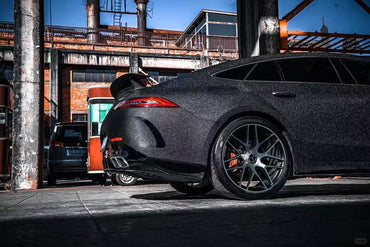
The sculpted body lines of a coupe or sports car amplify the effect because every curve catches light at a different angle, multiplying the color shifts across a single panel. That is exactly what makes a Dual Color Chameleon Green Blue look almost theatrical on a sports coupe. But the same geometry that amplifies the good also amplifies the bad. On a heavily sculpted panel, a directional error does not stay quietly in one corner — it gets multiplied by every curve, so a mismatched quarter panel on a sports car is far more obvious than the same error on a flat van side.
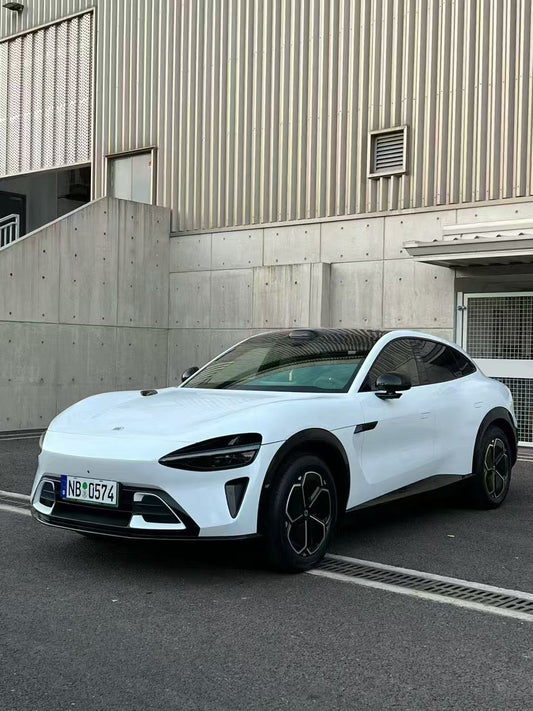
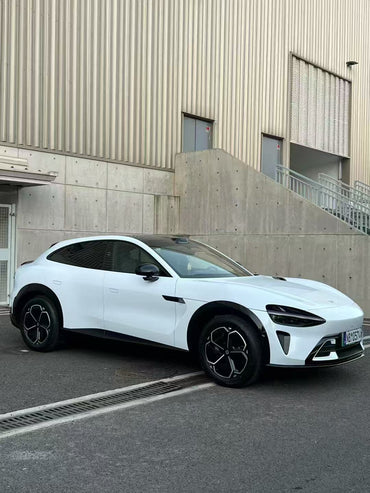
Different vehicle shapes therefore ask for different planning. Large flat SUV and crossover panels showcase color-shift depth beautifully and are relatively forgiving to plan, since the runs are long and straight. Executive sedans wearing subtler shades like Gold Grey or Chameleon Blue Grey want the shift to read as a sophisticated near-solid from a distance, which means directional consistency is doing quiet work even when the customer cannot name what they are seeing. And the most dramatic shades, the ones built for show cars and social media, are the least forgiving of all, because the same drama that makes them photograph well makes every directional error photograph just as clearly.
The Bottom Line for Installers and Shops
Metallic and color-shift films are not harder to install than solid colors because they are fragile. They are harder because they carry information in their orientation that a solid color does not. A flake lay and an optical stack both have a correct direction, and the entire finish depends on respecting it across every panel of the vehicle.
The shops that win with these finishes are not necessarily the ones with the fastest squeegee hands. They are the ones who plan the master direction before the first cut, run continuous surfaces as continuous runs, hide their seams in the body, respect the stretch limits of the effect layer, and post-heat every edge. Do that, and a SailiFilm metallic or Dual Color Dream wrap looks like it came off the factory line. Skip it, and you will be explaining to a customer why their hood and their doors are two different colors in the sun.
Explore the full Metallic Series and Dual Color Dream Series, or test a shade before committing with a sample kit so you can confirm the color travel and flake read under your own shop lighting before the full install.

