





Elongation: How Far the Film Will Travel
Elongation is the most visible of the three. It describes how far a film can stretch before it distorts, thins out, or tears—usually expressed as a percentage of its original length. A film with high elongation can be coaxed deep into a recessed door handle, around a sharp mirror radius, or over a contoured bumper without forcing the installer to cut a relief seam.
Car bodies are not flat. They are a landscape of compound curves, rivets, channels, and tight junctions where two panels meet at an aggressive angle. A film that stretches generously turns those obstacles into non-events. A film that resists stretching bridges across recesses instead of sinking into them, and bridging is where failure begins. Anywhere the film spans a gap under tension rather than resting inside it, you've planted the seed of a future lift.
But elongation alone is a trap. Stretch a low-grade film to its limit and the pigment thins, the gloss dulls, and the color goes pale at the very spot you worked hardest on. Real conformability means stretching without visible distortion—the film travels the distance and keeps its depth of color intact. That balance is a construction property, set long before the film reaches your hands, and it's central to how every car vinyl wrap in our range is engineered.
Memory: The Force That Wants Your Work Undone
If elongation is the friend, memory is the saboteur. Memory is the film's tendency to return to its original, unstretched shape after you've stretched it. The moment you heat a panel and pull the film into a curve, you've stored energy in the material. A film with strong memory holds that energy like a coiled spring, waiting for the next warm day to release it—and when it releases, the edge creeps back, the recess pops, and the panel lifts.
This is why memory is the property that quietly destroys wraps months after installation. Everything looks perfect when the installer drives away. Then the sun does its work. Thermal cycling—heating by day, cooling by night, repeated through a season—gives a high-memory film thousands of small opportunities to pull back toward the flat sheet it was born as. The shrink-back you see at door edges and mirror corners isn't an adhesive failure. It's memory winning.
Low memory is what separates a film built for vehicles from one repurposed for flat signage. A film engineered with minimal internal stress accepts the stretch and forgets it was ever flat. It settles into the contour and stays there because there's no stored tension trying to undo the install. This low-stress behavior is exactly why our films are built on an engineered PET base layer—a construction that resists the shrink-back that plagues high-memory economy stock. The same principle is explored in depth in our breakdown of why film construction determines your wrap's lifespan.
Recovery: The Property That Makes Installation Forgiving
Recovery is the most misunderstood of the three, and the one professionals quietly rely on most. Recovery is the controlled, intentional ability of a heated film to relax back toward its natural state during installation—without leaving stress marks, distortion, or pre-stretch shadows behind.
Here's why it matters. When an installer over-stretches a section—and on complex panels, some over-stretch is unavoidable—a film with good recovery can be gently reheated and allowed to relax, settling the material evenly rather than locking a thin, distorted patch into place forever. Think of it as a margin for correction. A film with poor recovery punishes every mistake permanently: stretch it too far and the stress mark is there for the life of the wrap. A film with good recovery lets the installer work, adjust, and refine.
Recovery and memory sound similar but pull in opposite directions in practice. Memory is the uncontrolled urge to snap back after the job is done, working against you for years. Recovery is the controlled relaxation you summon with heat during the job, working for you. The ideal film gives you generous recovery on the bench and almost no memory once it's cured in place—a combination that only comes from deliberate engineering.
How These Three Properties Show Up Across Sailifilm Series
The reason conformability science isn't abstract is that you can see it expressed differently in every finish we make. Each series leans on these properties in its own way.
The Ultra Matte Series is the most unforgiving test of all three. A matte surface hides nothing—any stress mark from poor recovery or any lift from high memory shows instantly under flat light. That's why a stress-free, low-memory construction is non-negotiable here. The 3D Carbon Fiber Wrap collection puts elongation center stage: a textured, three-dimensional finish has to follow every curve and sink into every recess, demanding high conformability that an economy film simply can't deliver without bridging.
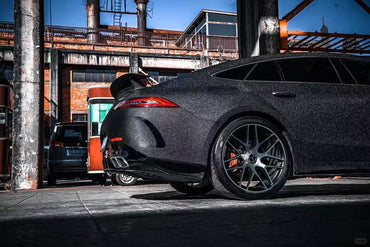
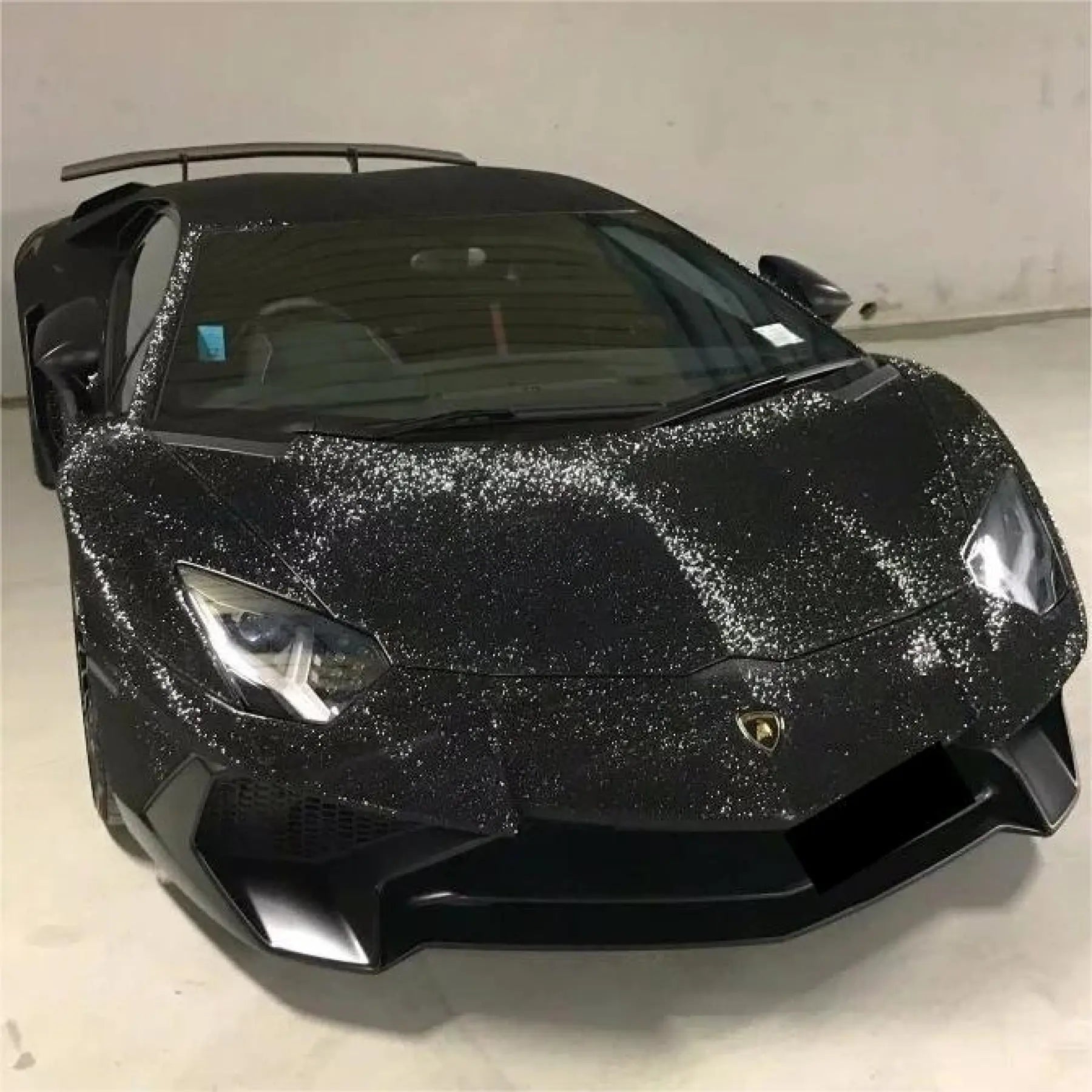
The Metallic Series and the deep, shifting tones of the Liquid Series depend on elongation that travels without thinning the pigment—stretch the film over a curve and the metallic depth has to hold, not pale out. The optical effects in the Crystal Series, the Rainbow Laser Series, and the Dual Color Dream Series survive long-term only on a film that holds its stretched shape, because a high-memory film that creeps back would distort the very color-travel effect you paid for.
Heat: The Tool That Controls All Three
None of these properties are fixed. Heat is the lever that moves all three at once, which is why temperature control is the single most important skill in any install. Warmth temporarily increases a film's willingness to elongate, makes recovery possible, and—critically—is also what triggers memory in a high-stress film.
This is the paradox installers manage every day: the same heat that lets you conform the film is the heat that, in a poorly built film, wakes up its desire to shrink back. With a low-memory PET-engineered film, heat becomes purely a friend—you can stretch, settle, and post-heat to lock the conform without fearing that you've armed a spring that will release next July. Working in the right ambient temperature range and post-heating stretched areas to "set" them is what turns a good film into a flawless install. Our DIY Car Wrap Installation Guide walks through exactly how to manage heat across different panel types.
Why This Isn't the Same Conversation as Paint Protection
It's worth drawing a clear boundary. Everything above concerns styling films—color-change vinyl whose job is conformability and appearance. If your goal is shielding paint from stone chips and abrasion rather than changing its color, that's a different material science entirely. TPU-based paint protection film is engineered for impact absorption and self-healing rather than color travel, with very different elongation and recovery behavior tuned to that purpose. Our Colored Paint Protection Film and the wider TPU Paint Protection Wrap range solve the protection problem through a separate construction—worth understanding before you decide which job you're actually trying to do.
Conformability Sets the Ceiling—Skill Decides the Rest
Elongation, memory, and recovery are baked into a film before it's ever unrolled. They set the maximum quality your install can reach. But even the best-engineered film rewards good technique and punishes carelessness: clean prep, correct heat, patient edge work, and proper post-heating are what let you reach the ceiling the film makes possible. Once installed, a finish that conformed without stored tension also ages better, because there's no memory quietly working to lift it. For keeping that finish at its best, our Car Film Maintenance Guide covers the routine that protects your investment.
The Takeaway
When you choose a wrap, you're not just choosing a color—you're choosing how the film will behave the moment heat and tension meet your bodywork. High elongation lets it travel into every contour. Low memory keeps it from creeping back once it's there. Controlled recovery gives the installer room to work. Get those three right, and the wrap that looks immaculate on day one still looks immaculate years later. That balance is the build standard behind every Sailifilm series.
Ready to feel the difference for yourself? Explore the full Sailifilm car wrap collection and start with a sample kit to test the conformability with your own hands before you commit to a full vehicle.

