








The Hidden Layer That Does the Hard Work
Flip a quality wrap film over and look at the adhesive side. It appears smooth to the naked eye, but under magnification there is a microscopic grid pressed into the glue: a network of tiny grooves called air-release channels. These channels are far too small to see or feel, yet they completely change the physics of how a wrap goes onto a vehicle.
Here is the core idea. When you press film against a panel, the air underneath has to go somewhere. Without an escape route, it gets trapped and forms a bubble. Air-release channels give that air a path. As the installer works across the surface with a squeegee, trapped air travels along the channels toward the nearest edge and vents out. The result is a bond that goes down flat the first time, with no pockets baking in under the sun a week later.
Think of it like the grooves on a car tyre. A slick tyre would float on a wet road; the channels cut into the tread give water somewhere to go so the rubber keeps contact. Air-release channels do the same job for adhesive, only the thing being pushed out is air instead of water.
Why This Translates Directly Into Install Speed
Installation time is mostly spent on two things: laying film and fixing problems. Air-release technology attacks the second category, and that is where the hours disappear on a standard wrap.
Fewer bubbles to chase. On film without proper air management, an installer has to work slowly and deliberately, squeezing air toward the edges inch by inch and hoping none gets stranded. Channelled adhesive lets air vent continuously, so the squeegee passes can be faster and more confident.
Less lifting and re-laying. When a bubble does appear on non-channelled film, the only fix is to lift the film and try again, which stretches the material and risks distortion. With air-release film, most air simply works its way out, so there is far less peel-and-redo.
Repositionability. Many channelled films pair the air grooves with a pressure-activated adhesive that doesn't reach full grip until firmly pressed. That gives the installer a window to slide and align the panel before committing—a feature that turns a stressful one-shot placement into a relaxed, adjustable one.
Add those up and you get the real-world difference: a job that might take a full day on cheap film can be finished in a fraction of the time on properly engineered material, with a cleaner result. For a deeper look at the issues this prevents, our planned guide on common vinyl wrap installation mistakes covers the bubble problem in detail.
The Film Behind the Channels: Why Construction Matters
Air-release channels only perform as well as the film they're built into. A channel system pressed into a low-grade, unstable base will still fight you, because the film itself wrinkles and resists. This is where the base material does the quiet heavy lifting.
Across the Sailifilm range, our colour wraps are built on a PET (polyethylene terephthalate) base layer. PET brings dimensional stability and a controlled stretch behaviour that work hand in hand with the air-release adhesive. A stable film lays flatter, slides more predictably, and holds its position while the channels do their venting job. The two systems—stable PET face and channelled adhesive back—are what make a fast, clean install possible rather than just theoretically nice. You can read more about why the base layer decides longevity in our companion article on cast vs calendered vinyl construction.
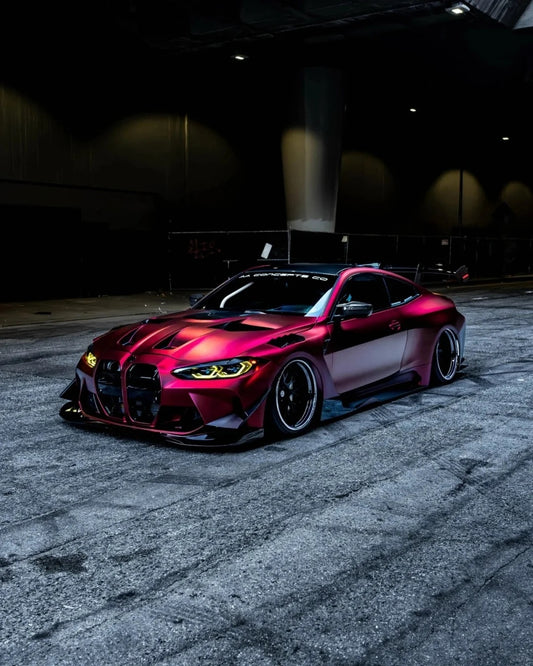
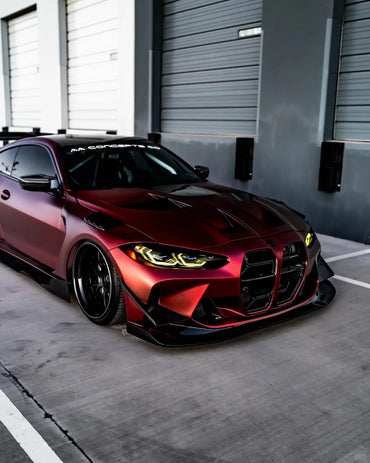
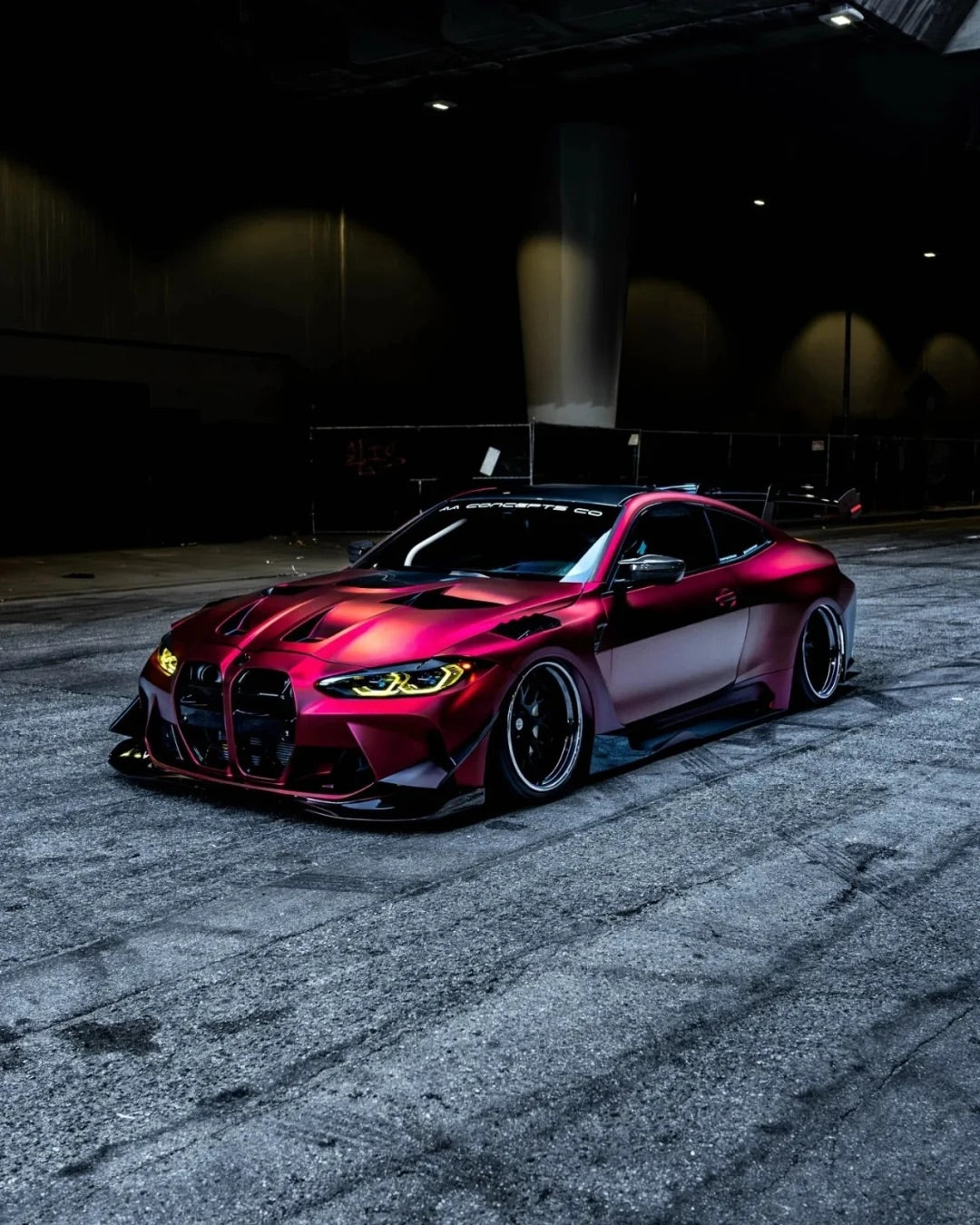
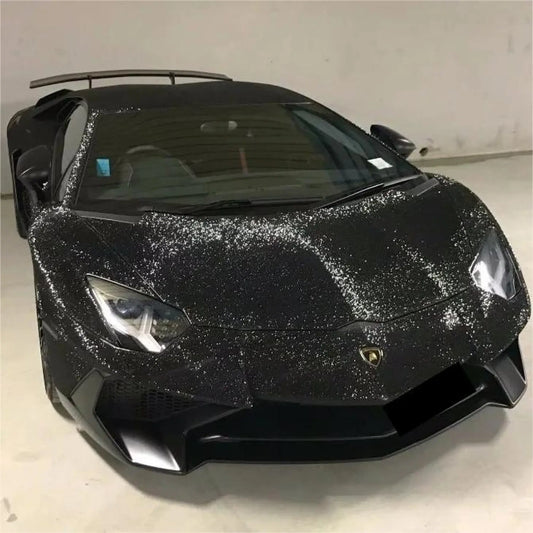
The benefit shows up differently across each series. The flawless surface of the Ultra Matte Series demands a bubble-free lay-down, because any trapped air telegraphs instantly through a matte finish. The deep, reflective tones of the Metallic Series and Liquid Series reward a clean install with mirror-smooth panels. And the optical effects of the Crystal Series and Rainbow Laser Series only look their best when the film sits perfectly flat against the body.
Where Air-Release Earns Its Keep: Complex Curves
Flat panels are forgiving. The places that separate a good install from a frustrating one are the recesses, mirror caps, bumpers, and tight contours—exactly where air loves to get trapped. This is where air-release channels matter most, because they keep venting even as the film is being stretched and pushed into a curve.
Our 3D Carbon Fiber Wrap collection is the clearest example. A textured, three-dimensional finish has to follow every contour without lifting, and that is impossible if air is trapped underneath fighting the adhesive. The same logic applies to the colour-shifting Dual Color Dream Series, where conformability over body lines is the whole point. Channelled adhesive is what makes wrapping these demanding surfaces achievable rather than a fight.
The Tools That Work With the Technology
Air-release channels do most of the work, but they perform best alongside the right technique and equipment. A quality squeegee directs air toward the nearest channel exit, and gentle heat helps the film relax and the adhesive settle. Having the proper wrapping tools on hand turns the channel system from a nice feature into a genuine speed advantage. For the full method, our DIY Car Wrap Installation Guide walks through surface prep, squeegee angle, and post-heating step by step.
A useful principle from fluid dynamics explains why this all works: air, like any fluid, follows the path of least resistance. The channels simply create that path. Give trapped air an easy route out, and it leaves on its own. Block its exit, and it stays and forms a bubble. Every good installation technique is really just a way of keeping those exit paths open.
Air-Release Isn't the Same as Self-Healing
It's worth clearing up a common mix-up. Air-release technology is about installation—getting the film down cleanly and fast. It is not the same as the self-healing property found in paint protection film, which is about durability and recovering from scratches after install. Those are two different jobs handled by two different materials. If protecting your paint from chips and abrasion is the goal rather than changing colour, that calls for our TPU Paint Protection Wrap or Colored Paint Protection Film, which use a self-healing thermoplastic built for impact resistance. A future article on PPF vs vinyl wrap will map out exactly when each one is the right choice.
Test the Difference Before You Commit
The fastest way to understand what air-release technology feels like is to handle the film yourself. The way a channelled adhesive slides into position and vents air is something you notice immediately on a sample panel, long before you commit to a full roll. That is why we always recommend starting with a sample kit—it lets you feel the install behaviour of each finish in your own hands.
The Takeaway
Install speed isn't only about how skilled the hands are. It is built into the film itself. Air-release channel technology turns the slowest, most error-prone part of wrapping—venting trapped air—into something that mostly takes care of itself. Paired with a stable PET base, it is what lets a wrap go down flat the first time, conform to tight curves without lifting, and reach a flawless finish in a fraction of the time.
Ready to experience a faster, cleaner install? Explore the full Sailifilm car wrap collection, pair it with the right wrapping tools, and start with a sample kit to feel the air-release difference for yourself.

