



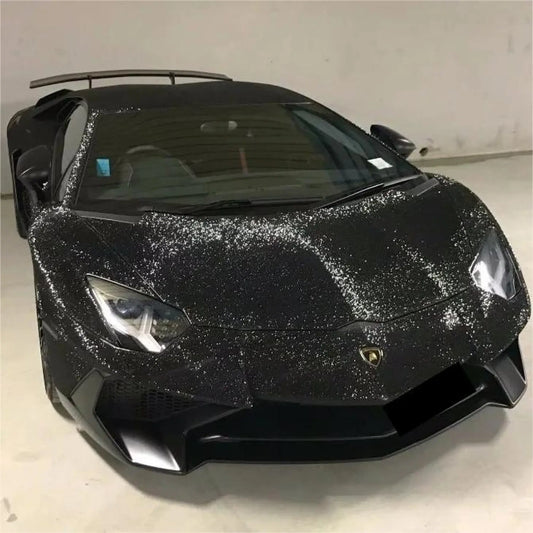
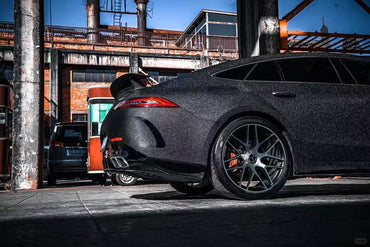
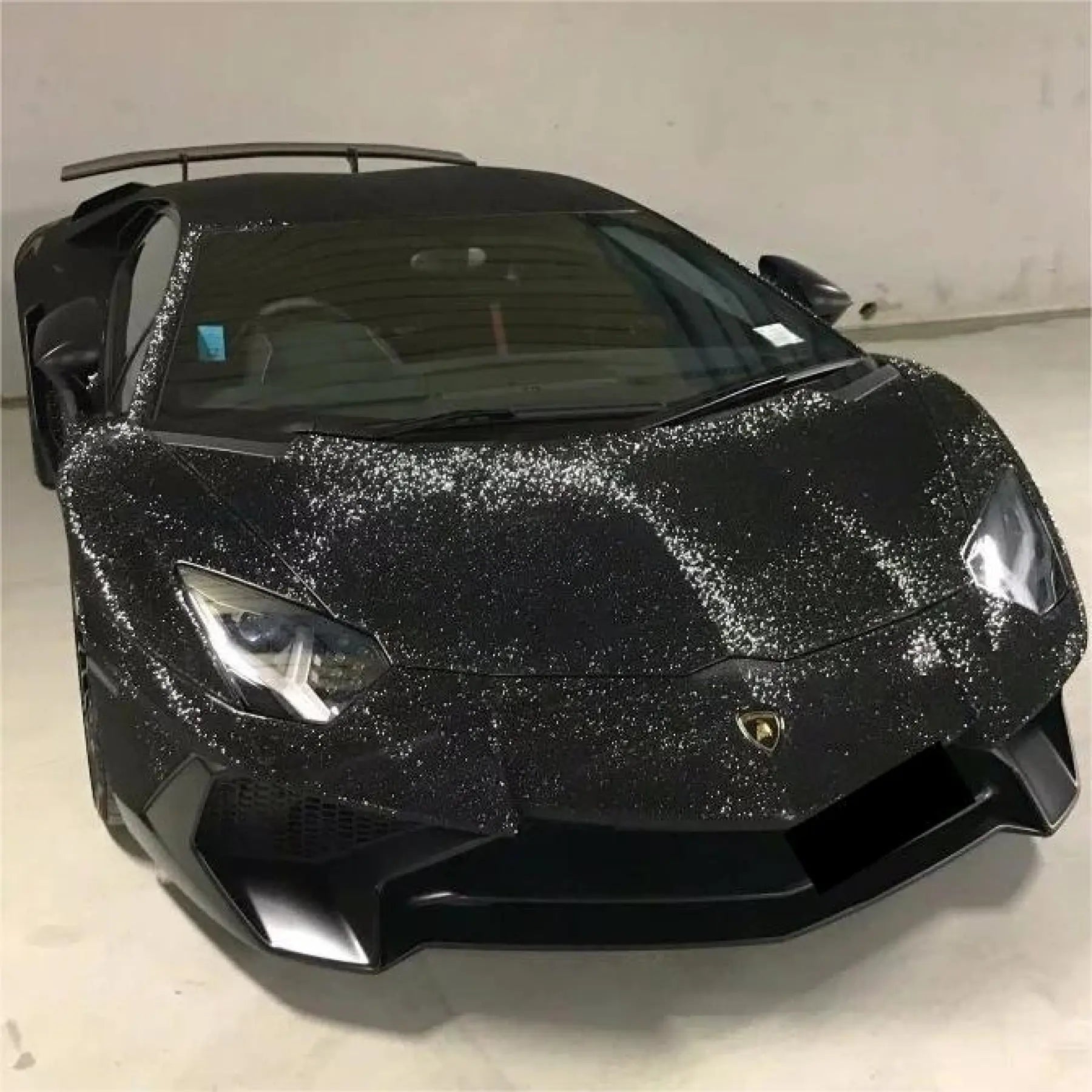





What Is Chrome Delete, Exactly?
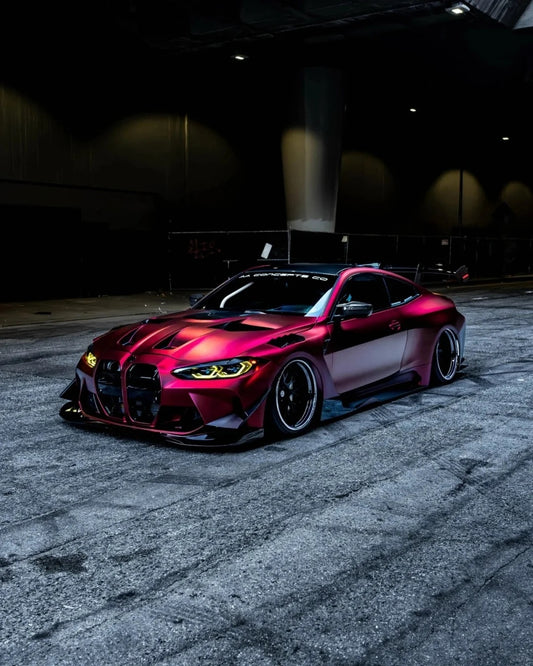
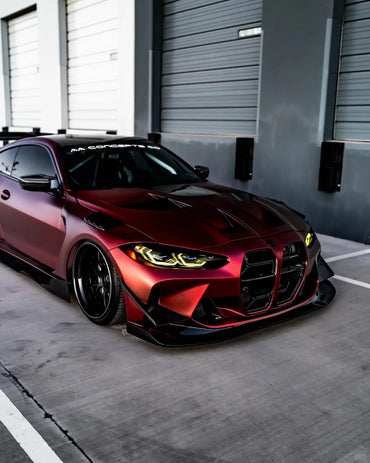
Chrome delete is the practice of covering shiny chrome accents on a vehicle with self-adhesive vinyl film so the brightwork visually disappears. Nothing gets removed, sanded, or repainted. The factory chrome stays sealed underneath the film, and the trim takes on whatever finish the wrap delivers, typically matte black, satin black, gloss black, or a body-color match.
The look most people are chasing has several names: blacked-out, murdered out, monochromatic, or stealth. The underlying idea is the same. Removing the visual noise of bright trim simplifies a vehicle's silhouette and makes the body lines, wheels, and stance read more clearly. To dive deeper into the broader category these films belong to, see this overview of vehicle vinyl wraps on Wikipedia.
Why Chrome Delete Is a 2026 Mega-Trend
Several forces have pushed this style from a niche modification into the mainstream:
-
EV design language. Modern electric vehicles ship with minimal trim and clean surfaces. Owners of older luxury and performance cars are mimicking that aesthetic by deleting their chrome.
-
Social-media-driven builds. Short-form video has made the before-and-after of a chrome delete one of the most visually rewarding edits a car can receive. The transformation is dramatic in a thirty-second clip.
-
Reversibility. Vinyl films come off cleanly, leaving the original chrome untouched. That matters for leased vehicles, for resale, and for owners who simply want flexibility.
-
Cost efficiency. Compared with full color changes, deleting trim takes far less material and time. A DIY-friendly project can be wrapped up in an afternoon with the right tools.
Where Chrome Delete Vinyl Goes on Your Car
Almost any chromed surface is fair game. The most commonly wrapped areas include:
-
Window surrounds and B/C pillars — the single most popular target, especially on sedans and crossovers.
-
Grille bars and slats — wrapping the front grille trim instantly modernizes the face of older models.
-
Door handles — a quick visual win that also keeps handles cooler in summer heat.
-
Mirror caps — either fully blacked out or color-matched for a custom touch.
-
Emblems and badges — logos, model badges, and trim plaques get a stealth treatment.
-
Lower bumper trim and exhaust tips — small but high-impact areas that finish the build.
-
Interior accents — dashboard rings, vent surrounds, and shifter trim can all be covered with offcuts.
The Best Sailifilm Finishes for a Chrome Delete
Not every wrap film performs the same on small, complex trim pieces. Window surrounds and grille bars demand high stretchability, low memory, and reliable adhesion around tight curves. Here are the Sailifilm series we recommend pairing with this style.
1. Ultra Matte Series — The Stealth Standard
The Ultra Matte Series is our most-recommended chrome delete film. Its non-reflective surface absorbs light rather than bouncing it back, giving trim the deep, velvety look that defines a true blackout build. Ultra Matte Ultimate Flat Black and Ultra Matte Flat Meteorites Grey are particularly strong choices for window surrounds, where any reflection would otherwise draw the eye.
2. Metallic Series — Subtle Depth Without the Shine
If a pure flat finish feels too aggressive, the Metallic Series introduces a soft metallic shimmer that still reads as dark and modern. This works beautifully when you want the trim to coordinate with metallic body paint instead of contrasting against it.
3. Liquid Series — Gloss Black Done Right
Some builds call for the wet, mirror-deep look of gloss black on the grille while keeping the rest of the car untouched. The Liquid Series delivers that high-shine, fluid character with strong conformability around badges and grille slats.
4. 3D Carbon Fiber Wrap — Sporty Texture for Accents
For mirror caps, roof inlays, and interior trim, the 3D Carbon Fiber Wrap adds a tactile, performance-inspired finish that complements blacked-out exteriors on coupes and sport sedans.
5. Colored Paint Protection Film — Shielded Body-Color Match
When the goal is to color-match trim to the body rather than blacken it, our Colored Paint Protection Film doubles as a chrome cover and a protective layer. This is the choice for owners who want trim to vanish into the bodywork while gaining scratch resistance.
Step-by-Step DIY Chrome Delete Process
This project is achievable at home with patience and the correct supplies. For a more thorough walkthrough of vinyl handling, also reference the official Sailifilm DIY Car Wrap Installation Guide.
-
Step 1 — Wash and decontaminate. The trim must be free of wax, oils, brake dust, and silicone residue. An isopropyl alcohol wipe-down right before wrapping is essential.
-
Step 2 — Measure and pre-cut. Lay the film over each piece and oversize each cut by at least one inch on every side. Tight cuts cause panic during installation.
-
Step 3 — Apply with heat. Use a heat gun on a low setting to soften the vinyl as you press it around curves and into recesses. Avoid stretching past forty percent or the film will memory back.
-
Step 4 — Squeegee and trim. Work air channels out from the center toward the edges, then trim along the natural border of each piece using a sharp blade.
-
Step 5 — Post-heat the edges. A final pass with the heat gun at the edges locks the adhesive in and prevents lifting around door seams and window seals.
All the squeegees, knives, gloves, and heat-management items used in these steps are stocked in our Wrapping Tools collection. New to vinyl? Order a Sample Kit first to confirm finish and color before committing to a full set of trim pieces.
Keeping Your Chrome Delete Looking Fresh
Vinyl trim does not behave like painted bodywork. Avoid automatic car washes with stiff brushes, skip pressure washing within a fingernail of any film edge, and use pH-neutral shampoos. Detailed care steps are covered in the Sailifilm Car Film Maintenance Guide. Done right, a quality chrome delete using car vinyl wrap can hold up beautifully for five to seven years before replacement is even a discussion.
Pure Vinyl vs TPU Paint Protection Film for Trim
Some installers prefer to wrap chrome trim in TPU paint protection film instead of standard cast vinyl, especially when the trim color needs to remain factory chrome but be shielded from oxidation. Our TPU Paint Protection Wrap is engineered for that exact use, while traditional cast vinyl from the Ultra Matte or Metallic series remains the right call when the goal is a true blackout transformation.
Color Pairing Ideas Beyond Black
Chrome delete does not have to mean black. Adventurous builds are mixing trim color with body color in unexpected ways:
-
Dual Color Dream Series — color-shifting trim for show cars and event builds.
-
Crystal Series — pearlescent depth that catches light without going full chrome.
-
Rainbow Laser Series — eye-catching iridescent trim for personality builds and influencer cars.
-
Glitter Sparkle Wrap — sparkle accents on small badges or vents for a distinctive twist.
Chrome Delete FAQ
Will chrome delete damage my factory trim?
No. Quality cast vinyl uses pressure-activated adhesive that releases cleanly when heated and pulled at the correct angle. The chrome surface stays exactly as it left the factory.
How long does the project take?
A first-time DIY installer can usually finish window trim and door handles on a sedan in four to six hours. Adding the grille and badges may push the project across an entire weekend.
Is matte or gloss better?
Matte hides imperfections and reduces glare. Gloss draws attention and pairs naturally with sport-tuned builds. Order a Sample Kit to compare both finishes against your paint before deciding.
Can I do just one part of the car?
Absolutely. Many owners start with window surrounds only, evaluate the look for a few weeks, then return for the grille and badges. The modular nature of trim film is one of its biggest advantages.
Ready to Black Out Your Trim?
Chrome delete sits at the intersection of fashion, restraint, and reversible customization. Whether you drive a daily commuter that needs a refresh or a weekend project car heading to the next car meet, the right Sailifilm film transforms the entire personality of the vehicle for a fraction of the cost of paint.
Browse our best-selling vinyl wraps, explore the full car vinyl wrap range, and start mapping out the trim pieces you want to delete first. For installers and shops, our dealer program offers wholesale pricing on every series mentioned in this guide.
Questions before you order? Reach out through our contact page and our team will help you choose the right finish, size, and tools for your specific build.
INTERNAL & EXTERNAL LINK MAP (FOR EDITOR REFERENCE)
External anchor links: Wikipedia – Vehicle wrap (used in 'What Is Chrome Delete' section)
Internal anchor links used: Ultra Matte Series · Metallic Series · Liquid Series · 3D Carbon Fiber Wrap · Colored Paint Protection Film · TPU Paint Protection Wrap · Dual Color Dream Series · Crystal Series · Rainbow Laser Series · Glitter Sparkle Wrap · Best Sellers · Car Vinyl Wrap · Wrapping Tools · Sample Kits · DIY Installation Guide · Maintenance Guide · Become A Dealer · Contact · Sailifilm Home
Suggested follow-up blog topics (future internal-link supplements): Tesla Model 3 Chrome Delete walkthrough · BMW window trim blackout guide · Matte vs Satin vs Gloss black comparison · Best wrapping tools for beginners · How to remove vinyl wrap safely · Top 10 blacked-out wrap colors of 2026

