


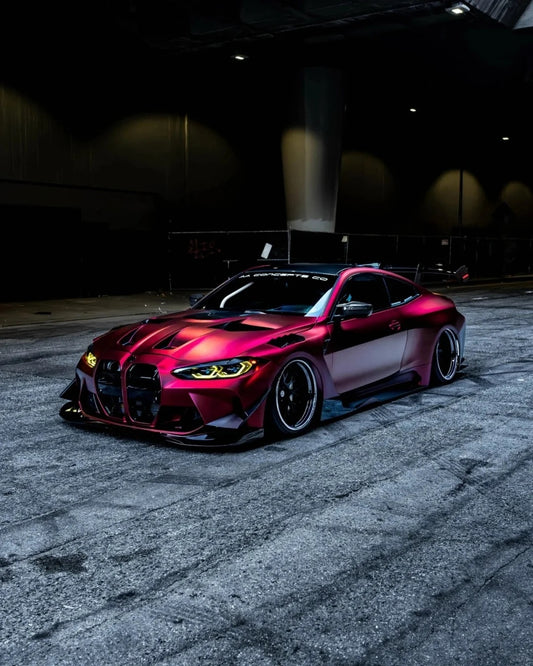
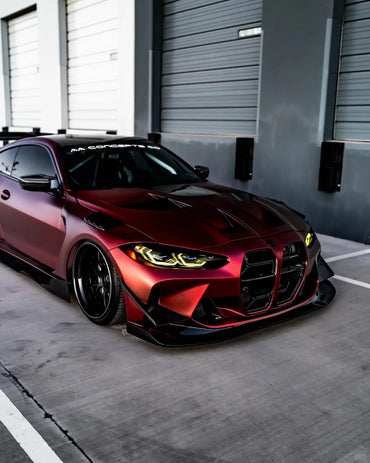
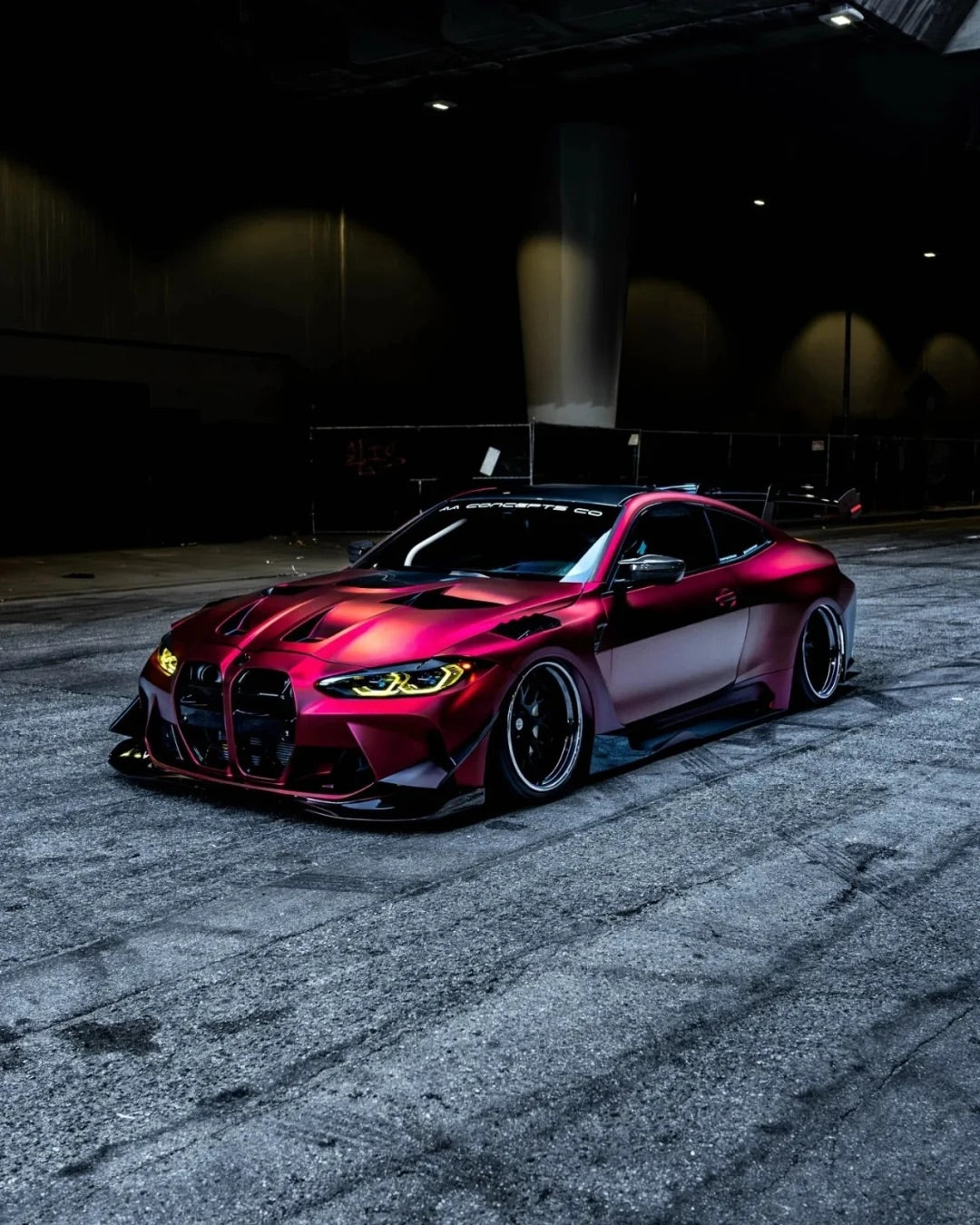
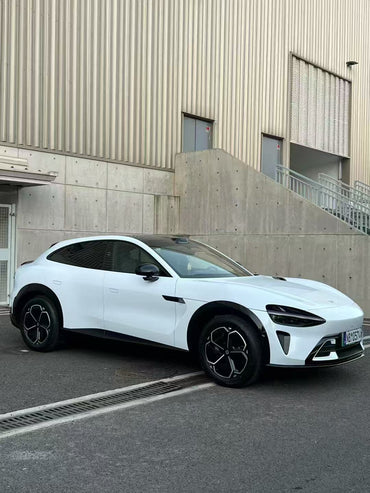
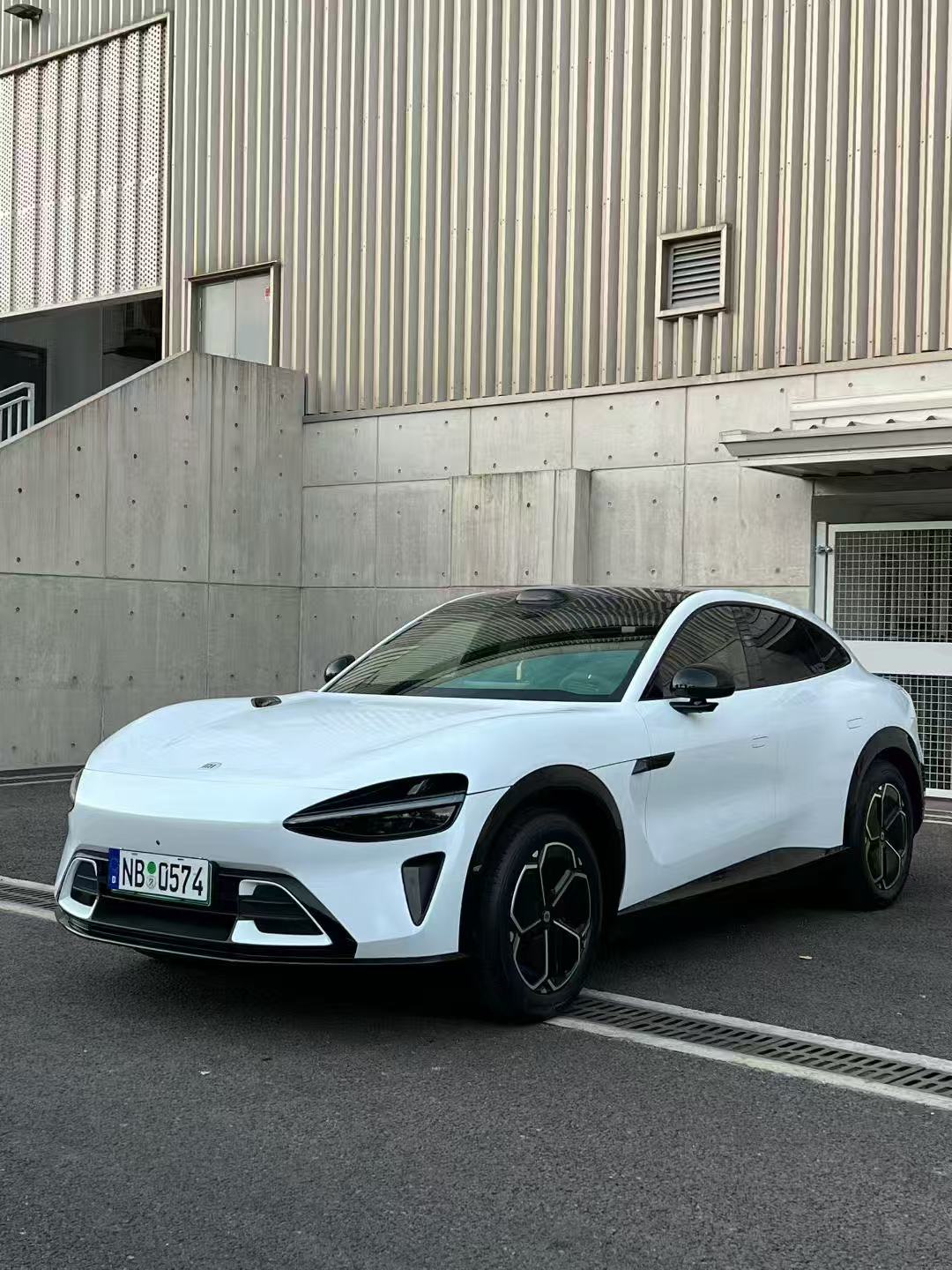


A color change wrap should be chosen by matching three things: how curved your vehicle is, how much film the job needs, and which finish effect you want. Simpler-panel cars accept almost any series on a modest budget. Deep contours and directional finishes need more film, more skill, and a higher spend. Choose the series to fit that reality, not the other way around.
Most buyers pick a color first and discover the fit problems later. A galaxy-shift film that looks unreal in a video can turn into a mismatched patchwork on a curvy coupe if the panels are wrapped without directional planning. A high-flake glitter finish that photographs beautifully can demand more footage and more patience on an SUV than a plain gloss ever would. The smarter path is to reverse the order: assess the vehicle, set the budget, then select from the car vinyl wrap series that suit both.
Why complexity and budget decide the film, not the color
Two variables quietly control every wrap project. The first is panel geometry. Flat doors, straight roofs and shallow bumpers are forgiving. Deep hood contours, sculpted rear quarters and recessed intakes are not. The second is coverage area, because film is priced and consumed by surface footage.
A full wrap on a compact sedan typically needs 150 to 200 square feet of vinyl, while a full-size SUV or truck can require 250 to 320 square feet (Vinyl Wrap Calculator, 2026). That difference alone can move a project between budget bands before you even choose a finish. Complexity then multiplies it. Sports cars and coupes carry similar square footage to compacts but far more complex panel shapes, so labor and waste climb per panel (TunedRides, 2026).
Finish choice sits on top of both. Solid gloss and satin colors are the most forgiving. Directional finishes — color-shift, chrome-effect, high-flake — cost more per square foot and demand alignment skill across panels (TunedRides, 2026). When you match the wrap finish to the vehicle instead of fighting against it, the result looks cleaner and the budget stays honest.
Tier one: simple panels, tight budget
If your vehicle has mostly flat, shallow panels and you want maximum visual return for the lowest spend, start here. Compact cars sit in the most price-competitive category, with simpler panel geometry and fewer recessed areas (TunedRides, 2026). That means the film does the talking and the installation stays quick.
Ultra Matte and gloss solids
Flat matte peaked years ago, and the 2026 direction is matte with texture — films with a subtly tactile surface rather than a dead-flat sheen (AutoStylePPF, 2026). Satin finishes have overtaken plain matte as the most requested category overall (Blackout Tinting, 2026). The Ultra Matte Series covers this demand directly, giving a modern stealth look that hides minor surface imperfection and reads as premium without a premium price.
3D Carbon Fiber accents
Carbon fiber texture is the classic entry point for a first wrap, especially as an accent on hoods, roofs and mirror caps. The 3D Carbon Fiber Wrap delivers a raised, dimensional weave that suits partial applications. Partial wraps require significantly less vinyl and are easier for beginners (YesWrap, 2026), which makes this an ideal low-risk starting project before committing to a full color change.
For this tier, the honest advice is to keep the finish solid or textured rather than directional. Save the color-shift drama for a vehicle and budget that can support it.
Tier two: moderate curves, mid budget
Sedans and crossovers occupy the middle. They carry mid-range square footage and moderately complex panels, where the roof and trunk stay straightforward but a rear bumper with cutouts takes skill (TunedRides, 2026). This tier can support richer finishes without the extreme footage or difficulty of a full exotic build.
Metallic and Crystal finishes
Premium metallic wraps typically offer a 5 to 7 year lifespan, especially when paired with protective lamination (CarlikeFilm, 2026). The Metallic Series brings depth and light play that solid colors cannot, and it remains daily-driver friendly. Ghost midnight purple, GT silver and similar tones read as sophisticated rather than loud.
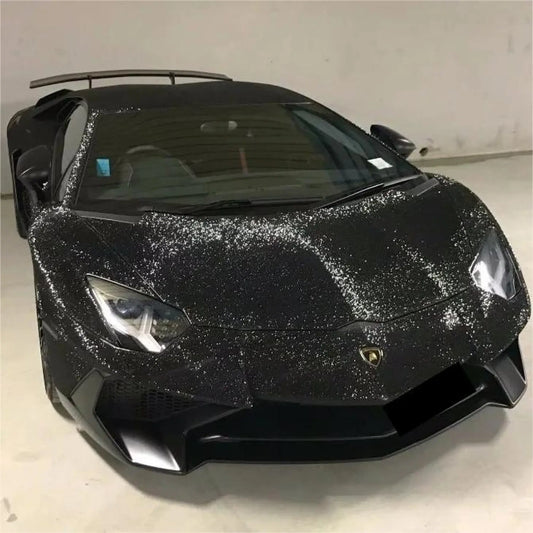
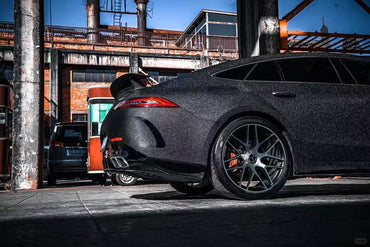
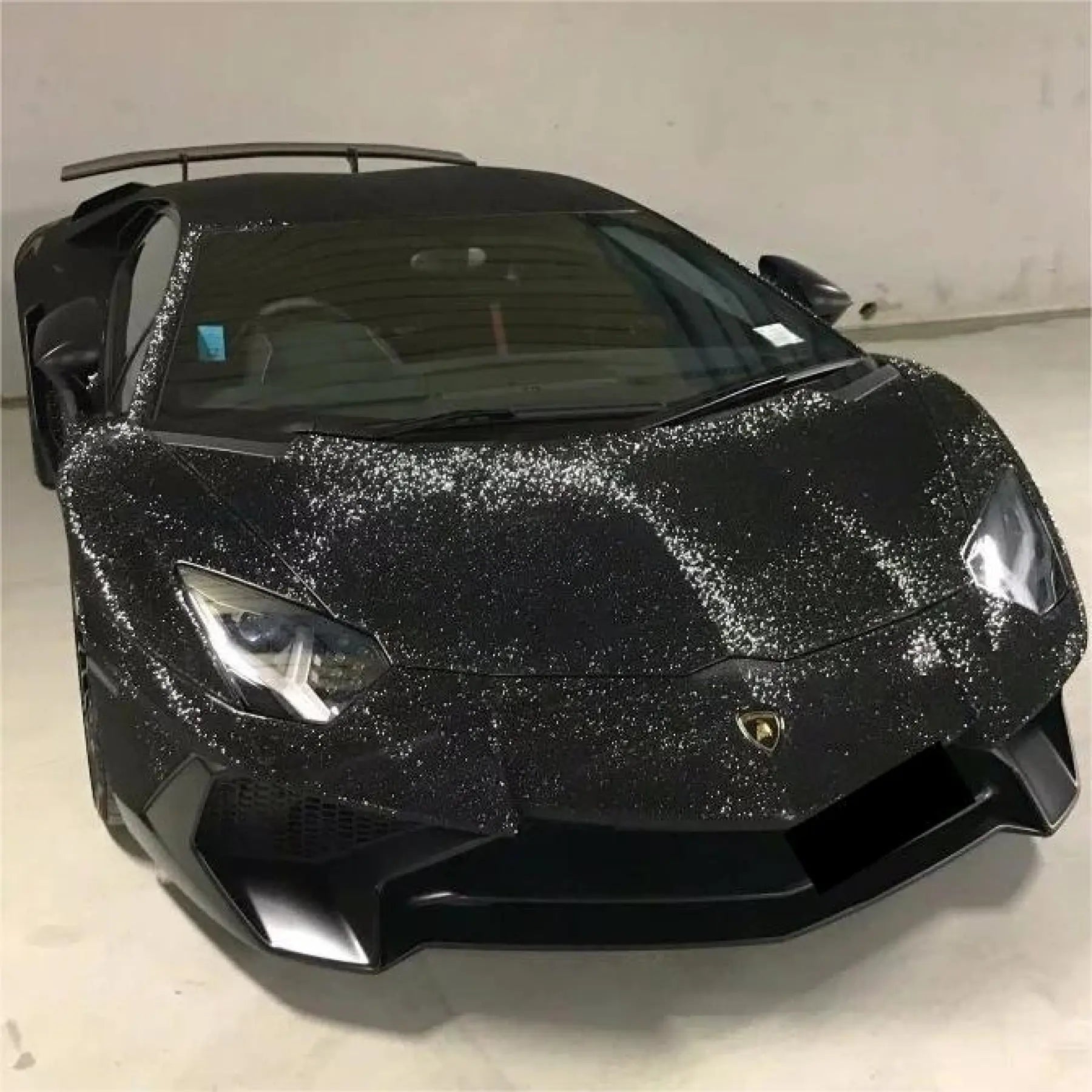
For sparkle without full commitment to a shifting effect, the Crystal Series embeds flake into the film for a continuous glitter that intensifies under direct light. It photographs brilliantly and dominates a parking lot, which is exactly why this finish thrives with owners who treat the car as personal style.
Choosing by color family
Buyers increasingly shop by hue first. Midnight purple is having a major resurgence, reading dark and subtle at night but exploding with color in the sun (WrapMatchPro, 2026). If you are drawn to a specific tone, browsing purple wraps or red wraps by color family is a faster route to the right series than scrolling finishes at random.
The mid tier is where most personal vehicles land. It rewards a step up from solid color into metallic or crystal depth while keeping installation within reach of a skilled DIYer or a mid-range shop.
Tier three: complex contours, premium budget
Sports cars, coupes and exotics demand the most. Deeper hood contours and complex rear quarter panels push labor hours higher per panel (TunedRides, 2026). Directional finishes belong here because these vehicles have the sculpted surfaces that make a shifting effect look intentional rather than accidental.
Rainbow Laser and color-shift films
No finish category captured more attention in 2026 than color-shifting film, which changes hue by viewing angle and light to create a living surface no static paint can replicate. The Rainbow Laser Series uses laser-interference technology to produce genuine optical depth at multiple viewing distances, not a gimmick sheen. These films have a specific directionality, so a replacement panel that is not aligned with the rest of the roll can read one color on the door and another on the fender (WrapMatchPro, 2026). That is precisely why they suit a premium budget with skilled installation.
Liquid and Dual Color Dream
The Liquid Series delivers a wet, mirror-deep gloss that reveals every flaw in prep and dust control, rewarding a careful build. The Dual Color Dream Series shifts between two defined tones by angle and light, giving the controlled, sophisticated shift that mature buyers now prefer over maximum rainbow spectacle.
For this tier, spend on the film and the surface underneath it. A directional finish on a complex car is only as good as the planning behind it.
The one-layer alternative: Colored PPF
There is a fourth path that cuts across all three tiers. Color change PPF is a pigmented urethane film that changes your color and protects the factory paint from chips, scratches and UV in a single installation. Traditional vinyl film is only 2 to 4 mils thick, compared with PPF at 6 to 8 mils (AutoStylePPF, 2026).
For buyers who once had to choose between protecting paint and changing color, colored PPF removes the compromise. The Colored Paint Protection Film range suits owners of higher-value vehicles who want the aesthetic change and the armor together, and are willing to pay for a thicker, tougher film.
Comparison: matching series to vehicle and budget
| Series | Best vehicle tier | Finish effect | Install difficulty | Budget band |
|---|---|---|---|---|
| Ultra Matte | Simple panels | Textured satin/matte | Low | Entry |
| 3D Carbon Fiber | Simple / accents | Raised weave texture | Low–Medium | Entry |
| Metallic | Moderate curves | Metallic depth | Medium | Mid |
| Crystal | Moderate curves | Continuous glitter flake | Medium | Mid |
| Liquid | Complex contours | Wet mirror gloss | High | Premium |
| Dual Color Dream | Complex contours | Two-tone angle shift | High | Premium |
| Rainbow Laser | Complex contours | Multi-angle color shift | High | Premium |
| Colored PPF | Any (high-value) | Color + chip protection | High | Premium+ |
The table reads top to bottom as increasing ambition. Entry-band films forgive mistakes and suit flat panels, so they are the right first wrap and the right choice for a tight budget. Mid-band metallic and crystal finishes add depth for personal vehicles with moderate curves. Premium-band directional films need sculpted surfaces and skilled hands to look their best, which is why they belong on coupes and exotics rather than a first DIY project. Colored PPF stands apart as the protection-plus-color option for owners who value the underlying paint. Use the row that matches your car and your spend, then pick the color within it.
How this applies to your Sailifilm project
Start by measuring, not by browsing colors. Multiply your vehicle length by three to estimate coverage, then add extra footage for complexity (Vinylfrog). That single number tells you which budget band you are really in. Order a sample kit next, because color on a screen differs from color on a car in direct sunlight, and the sample confirms the finish reads the way you expect on your paint.
If this is a first wrap or a tight budget, choose from the Ultra Matte or 3D Carbon Fiber range and consider a partial application to learn the material. For a personal daily driver with moderate curves, the Metallic or Crystal series gives depth that lasts. For a sculpted coupe or a show build with a premium budget, the Rainbow Laser, Liquid or Dual Color Dream series will justify the spend. Whatever the tier, pair the film with the right wrapping tools and follow the technique that suits a directional finish.
Frequently asked questions
How do I know how much wrap film my car needs?
Multiply your vehicle length by three to cover both sides and the roof, then add 5 to 15 extra feet for complexity and error margin (Vinylfrog). A compact sedan usually needs 150 to 200 square feet, while a full-size SUV or truck can require 250 to 320 square feet (Vinyl Wrap Calculator, 2026). Order to the nearest roll size up so you never run short mid-panel.
Which color change wrap is easiest for a beginner?
Solid gloss, satin and textured finishes are the most forgiving for a first install. Ultra matte and 3D carbon fiber films hide minor handling marks and suit flat panels, so they carry the lowest risk. Directional finishes like color-shift and liquid chrome are far less forgiving and reward experience, so save those for a later project or a professional install.
Are color-shift and chrome wraps harder to install than solid colors?
Yes. Color-shift films have a directional grain, so panels must be aligned across the whole vehicle or adjacent sections read as different colors (WrapMatchPro, 2026). These specialty finishes also cost more per square foot and demand more alignment skill than solid gloss (TunedRides, 2026). Complex, curvy vehicles are where that extra effort pays off visually.
What is colored PPF and how is it different from vinyl?
Colored PPF is a pigmented urethane film that changes your car color and protects the paint from chips and UV in one layer. It runs 6 to 8 mils thick versus 2 to 4 mils for standard vinyl (AutoStylePPF, 2026). Vinyl changes color affordably with no meaningful chip protection, while colored PPF combines the color change and armor for a higher spend.
Does the wrap color affect the film series I should choose?
Somewhat, because certain effects only exist in certain series. Deep shifting purples and multi-angle tones live in the Rainbow Laser and Dual Color Dream ranges, while stealth tones sit in Ultra Matte and glitter in Crystal. Shopping by color family first, then confirming the series and complexity fit, is the fastest way to a result that matches your vehicle.
How long does a color change wrap last?
Premium metallic and cast films commonly last 5 to 7 years with proper care and lamination (CarlikeFilm, 2026). Specialty color-shift and chrome finishes are more sensitive to UV and heat and require stricter maintenance. Hand washing and avoiding abrasive tools extends the life of any finish, and a protective layer on top helps the most demanding films endure.
Next step
Match the vehicle first, set the budget second, and let the finish follow. Use the comparison table to place your car in a tier, then narrow the color within that band. When the shortlist is ready, order a Sailifilm sample kit so you can judge the finish on your own paint in real sunlight before committing to a full roll. That one step prevents the most expensive mistake in wrapping: buying a beautiful film that was never right for the car it landed on.
Vehicle wraps (background reading): https://en.wikipedia.org/wiki/Vehicle_wrap Paint protection film (background reading): https://en.wikipedia.org/wiki/Paint_protection_film

