





Why Measurement Matters More Than You Think
Most first-time buyers assume they can estimate by vehicle class alone. The reality is that two cars with the same overall length can have dramatically different surface areas depending on body style. A coupe with long sweeping doors requires more film per panel than a compact hatchback of similar bumper-to-bumper length. A deep, contoured rear bumper consumes more material to wrap cleanly than a flat slab-style truck tailgate.
Understanding vehicle vinyl wrap as a surface coverage problem — not just a length problem — is the mindset shift that produces accurate estimates every time.
The standard roll width used by professional installers and available throughout the Sailifilm car vinyl wrap collection is 5 feet (1.52m) wide. This width covers most vehicle panel heights without requiring a horizontal seam, which is why nearly every formula in professional wrapping is built around it.
Tools You Need Before Measuring
Before unrolling a tape, gather the right equipment. A flexible measuring tape at least 25 feet long is essential — rigid rulers cannot follow body contours accurately. A notepad or phone for recording panel-by-panel measurements prevents mistakes from carrying forward.
Check out the Sailifilm wrapping tools collection to also prepare for the installation phase — having squeegees, knifeless tape, and a heat gun ready before your film arrives keeps the workflow moving without interruption.
The Universal Calculation Formula
The industry standard formula for full-vehicle wrap estimation is straightforward:
Vehicle length (in feet) × 3 + buffer = total linear feet of film needed
The multiplier of 3 accounts for both side panels plus the top surface running front to back. The buffer accounts for bumpers, mirrors, door jambs, and installation waste.
Buffer guidelines vary by experience level and vehicle complexity. A first-time DIY installer should add 15 feet of buffer beyond the calculated minimum. An experienced installer on a standard sedan can work with a 5-to-10-foot buffer. Complex vehicles — wide-body builds, trucks with large bumpers, or vehicles with deep body creases — should always use the higher buffer figure.
A practical example: a sedan measuring 16 feet bumper to bumper calculates as 16 × 3 = 48 feet, plus a 12-foot buffer = 60 linear feet of film. This aligns directly with Sailifilm's 5ft × 59ft roll option, making it the recommended starting point for most standard sedans.
Vehicle-Specific Measurement Formulas
Different vehicle types require different multipliers because their surface-area-to-length ratio varies significantly.
Sedans without bumpers: Length × 3.25. Add 6 inches to both front and back measurements to account for body curvature before calculating.
Sedans with bumpers (full wrap): Length × 4. Bumpers are the most material-intensive panels on any vehicle due to their compound curves, and this multiplier absorbs that cost.
Trucks and SUVs without bumpers: Length × 3. Taller panels compensate for slightly shorter overall lengths in most truck configurations.
Trucks and SUVs with bumpers (full wrap): Length × 3.75. Large truck bumpers are significantly more demanding than sedan bumpers, which is reflected in the lower multiplier compared to sedans — the geometry is simpler even though the panels are larger.
Small cars (Honda Civic, BMW 3 Series class): Plan for 50–55 linear feet (approximately 15–17m).
Mid-size cars (Toyota Camry, Tesla Model 3 class): Plan for 60–65 linear feet (approximately 18–20m).
Full-size cars and compact SUVs (BMW 5 Series, Honda CR-V class): Plan for 65–75 linear feet (approximately 20–23m).
Large SUVs and full-size trucks (Ford F-150, Chevy Tahoe class): Plan for 75–100 linear feet (approximately 23–30m).
Sailifilm offers rolls in 5ft × 10ft, 5ft × 16ft, 5ft × 33ft, 5ft × 49ft, 5ft × 59ft, 5ft × 69ft, and 5ft × 79ft increments — meaning almost every vehicle class maps directly to an available roll size without over-ordering significantly.
Panel-by-Panel Measurement: The Precision Method
The formula approach gives you a reliable estimate. Panel-by-panel measurement gives you precision. For complex builds, color-accent partial wraps, or high-end finishes where film waste needs to be minimized, measuring each section individually is worth the extra time.
Hood: Measure length front-to-back following the contour, not the flat horizontal distance. Add 3 inches of bleed on each side for tucking. Hoods on most sedans average 5–6 square feet of film per running foot of width.
Roof: Measure from the front edge of the windshield frame to the rear edge, then across the widest point. Factor in any sunroof or panoramic glass sections — these areas require clean cuts and sharp edges, so extra material pays off here.
Doors: Measure each door individually since front and rear doors on the same vehicle are often different sizes. Include the door handle recess in your height measurement.
Front and rear bumpers: These are the most material-intensive panels on the vehicle. Measure the widest horizontal span and the tallest vertical point, then multiply these together. Add 30–40% waste allowance specifically for bumpers due to their compound curves. Deep bumper contours that require significant stretch will consume more film than the flat measurement suggests. (Internal link placeholder: see upcoming guide — "How to Wrap a Bumper Without Lifting Edges.")
Fenders and quarter panels: Measure length and height including any wheel arch extension. Fenders under 30 inches tall can typically be cut from a single 5ft-wide roll width, yielding two panels from one linear foot of film.
Side mirrors: Small but precision-demanding. Measure the mirror face plus the housing, and allow one to two extra linear feet of film specifically for mirrors.
Trunk lid / hatchback: Measure width and height including any curvature toward the spoiler base.
Measuring for Partial and Accent Wraps
Not every wrap project is a full color change. Accent wraps and partial wraps are among the fastest-growing search categories in 2025, with roof wraps, hood wraps, and mirror cap wraps consistently trending on DIY automotive platforms.
For a roof-only wrap, measure the roof panel as described above and add 6 inches of bleed on all four sides. Most standard sedan roofs require 1.5–2 linear feet of 5ft-wide film.
For a hood-only wrap, add 4 inches of bleed on all sides. Most hoods require 2–3 linear feet of 5ft-wide film depending on the length.
For door pillar or A/B/C-post wraps, particularly popular with 3D carbon fiber wrap and matte finishes, each post typically requires a small off-cut. Calculate these from leftover material after measuring main panels — post wraps are an efficient use of what would otherwise be waste.
For full mirror cap sets, measure each mirror cap at its widest point and allow 1 linear foot per pair. (Internal link placeholder: see upcoming guide — "Mirror Cap Wrap: The Easiest DIY Accent Wrap to Start With.")
Choosing the Right Film Finish Before Ordering
Measurement tells you how much to order. Film selection tells you what to order. The finish you choose affects how the film handles during installation and how much buffer you need.
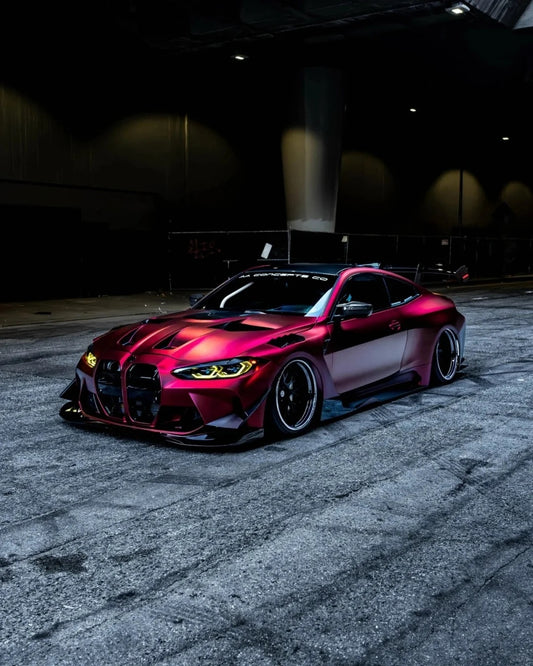
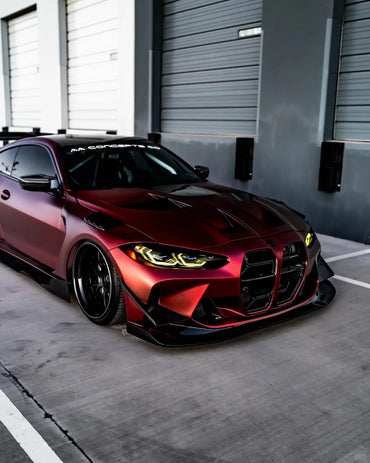
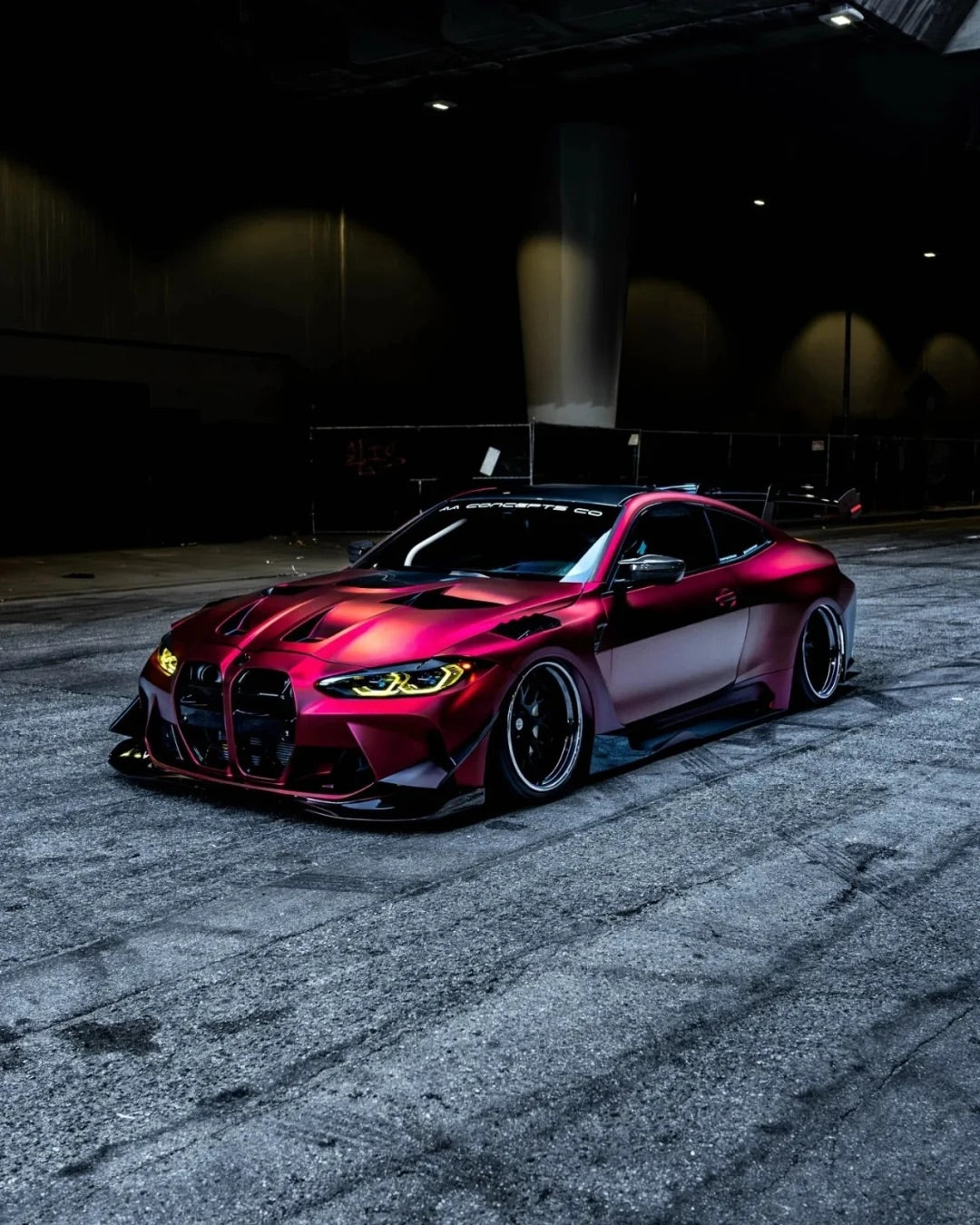
Ultra matte wrap films have a flat surface that does not reveal installation artifacts when properly applied, making them slightly more forgiving for first-time installers. Liquid chrome wrap and metallic vinyl wrap are highly reflective and will show any imperfection in surface prep or application, requiring more careful work and therefore a slightly higher buffer allowance.
Rainbow laser vinyl wrap and dual color dream vinyl wrap have directional color effects that require consistent film orientation across all panels — meaning you cannot flip or rotate off-cut pieces to reduce waste. Factor this into your order by adding 10% to your calculated total specifically for orientation waste.
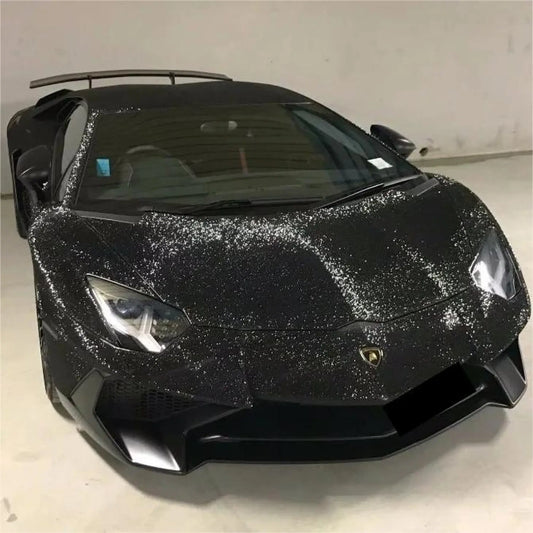
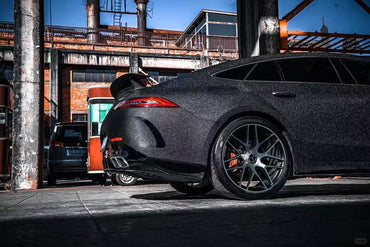
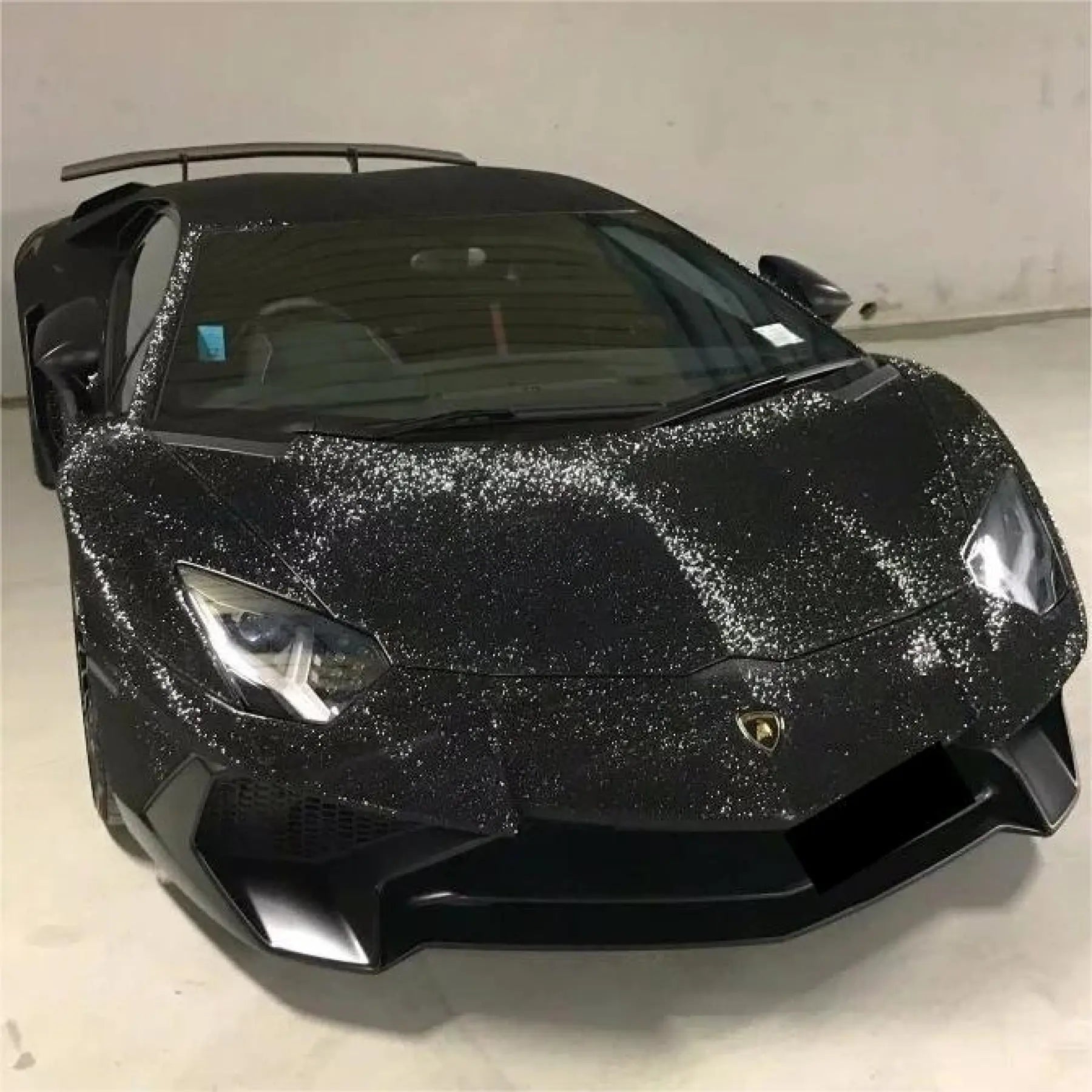
Crystal vinyl wrap and glitter sparkle car wrap are more forgiving with orientation since their visual effect is multidirectional. These are generally better candidates for tight material planning.
For colored paint protection film and TPU paint protection wrap, apply the same measurement formulas but factor in that TPU film is less elastic than standard cast vinyl. Give yourself a larger buffer on bumpers and complex curves — 15–20% additional material rather than 10%.
Order a Sample Kit Before Committing to a Full Roll
If you are finalizing a finish decision alongside your measurements, ordering a Sailifilm sample kit before purchasing a full roll is a practical step. Color accuracy on-screen is inherently limited — particularly for metallic, laser, and color-shifting finishes where the viewing angle changes the entire appearance. Confirming the physical material against your vehicle's trim and bodywork before ordering a 59-foot roll prevents costly returns.
For further reference on professional wrap installation standards and training resources, the Professional Decal Application Alliance (PDAA) maintains industry guidelines that detail measurement, installation, and finishing practices used by certified wrap shops worldwide. Car Throttle's beginner guide to DIY car wrapping also covers practical pitfalls that online calculators tend to understate.
Measurement Checklist Before You Order
Before placing your order, confirm you have recorded: overall vehicle length bumper-to-bumper, individual panel measurements for hood, roof, each door, front bumper, rear bumper, and trunk lid, the number of mirrors and whether you are wrapping the full housing or just the cap, whether the project is full-vehicle or partial, your experience level for buffer sizing, and the film finish type for orientation waste adjustment.

