



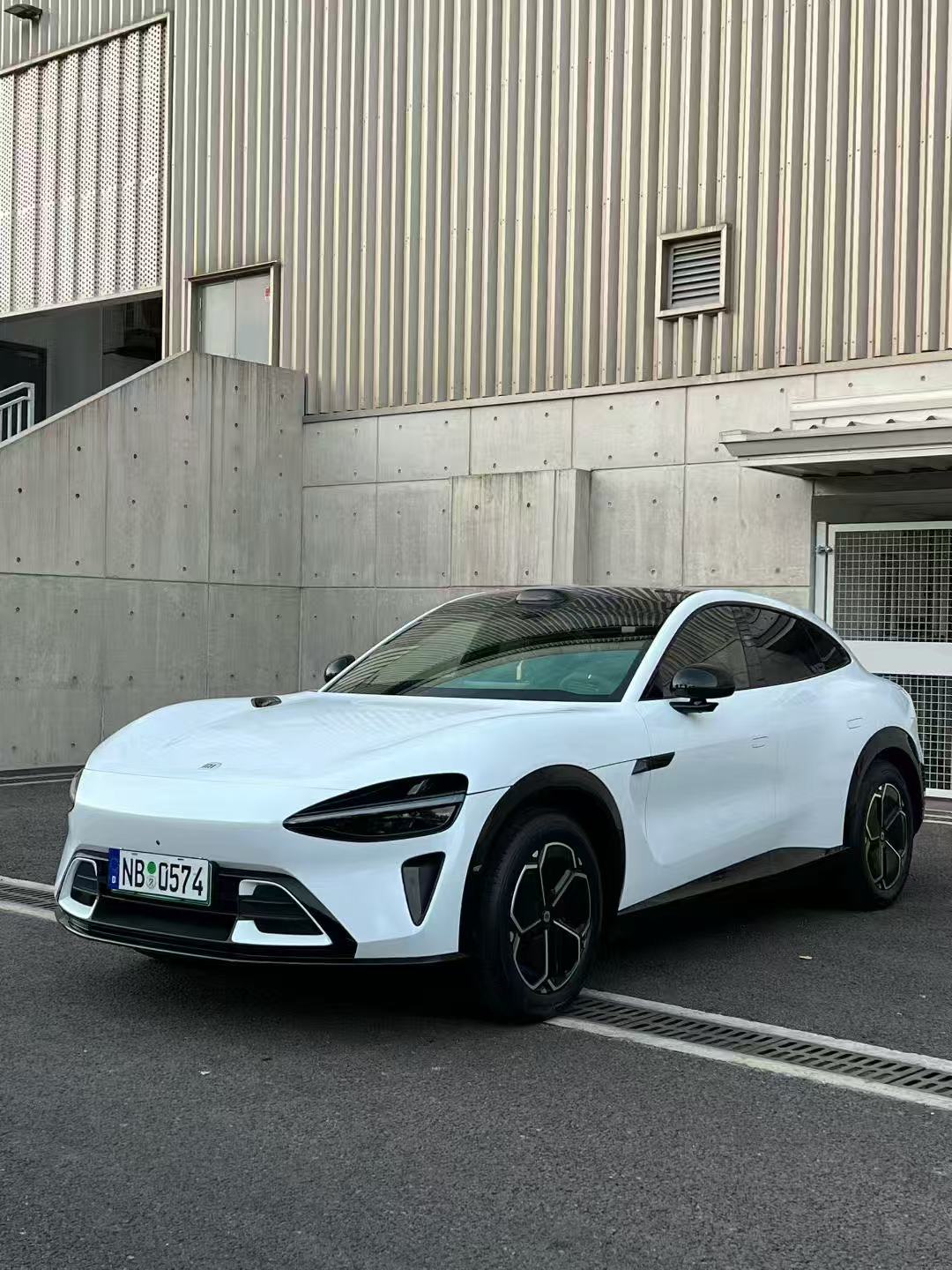


A scratch appears on a car's surface. The owner does nothing. By afternoon, after the vehicle has sat in sunlight for a few hours, the scratch is gone — completely. This is not a detailing trick or a marketing claim. It is the operational reality of self-healing paint protection film, one of the most consequential material science advances to enter the automotive aftermarket in the past two decades.
Understanding exactly how this technology functions — and why it outperforms every alternative for long-term paint preservation — makes the purchasing decision straightforward for any serious vehicle owner. This guide breaks down the science, the film structure, the practical limits, and the product choices available through Sailifilm's PPF and TPU wrap collections.
What Self-Healing PPF Actually Is
Paint protection film is a thin, flexible sheet of thermoplastic polyurethane — commonly abbreviated TPU — applied directly to a vehicle's painted surfaces. It functions as a sacrificial barrier: road debris, stone chips, bird droppings, swirl marks from washing, and UV radiation all impact the film rather than the paint underneath. When the film eventually reaches the end of its service life, it can be removed to reveal the original factory paint in the condition it was in at installation day — often dramatically better preserved than an unprotected surface of the same age.
Self-healing PPF takes this a step further by giving the protective film the ability to repair its own surface damage. The technology is built into the film's molecular structure, not applied as a topcoat additive after manufacture. This distinction matters: self-healing capability in a quality TPU film is an engineered property of the material itself, not a surface treatment that wears off.
👉 Internal link placeholder: [Paint Protection Film vs. Vinyl Wrap: Which Protection Is Right for Your Vehicle? — Coming Soon]
The Molecular Mechanism: Three Layers, One System
Every premium self-healing PPF is a multi-layer construction, and each layer carries a specific functional role. Understanding this structure explains why the film behaves the way it does.
The adhesive base layer bonds the film to the vehicle's painted surface. A quality adhesive is pressure-sensitive, repositionable during installation, and designed to release cleanly at end of life without leaving residue or pulling paint.
The TPU core layer provides the film's structural substance — its impact resistance, flexibility, and ability to conform to curved body panels. Thermoplastic polyurethane is the correct material for this application because it combines the impact absorption of rubber with the dimensional stability of hard plastic. It resists puncture, stretches around complex body geometry without tearing, and withstands the temperature range a parked vehicle experiences across all four seasons.
The elastomeric topcoat is where self-healing lives. This outermost layer — typically between 0.5 and 1 mil in thickness — is engineered from elastomeric polymers with a critical property: shape memory. The polymer chains in this layer have a preferred, neutral configuration. When surface damage occurs — a swirl mark, a fine scratch from a key grazing the surface, micro-abrasions from an automatic car wash — those chains are displaced from their equilibrium state. They deform to accommodate the damage, and the scratch becomes visible as a surface discontinuity.
The self-healing activation occurs when heat is applied.
How the Healing Actually Happens: The Physics of Recovery
The polymer chains in the self-healing topcoat exist in two behavioral states depending on temperature. Below a threshold called the glass transition temperature — typically in the range of 120°F to 160°F (49°C to 71°C) for automotive-grade TPU formulations — the chains have limited mobility. A scratch displaces them from their equilibrium positions, and they stay displaced. The scratch is visible and stable.
When the surface temperature rises above this threshold — through direct sunlight, warm water poured over the panel, or a heat gun held at safe working distance — the polymer chains gain enough thermal energy to become mobile again. This is not melting; the material does not become liquid. Instead, the soft segment polymer chains begin to flow at a microscopic level, driven by the elastic restoring force of the harder polymer network beneath them. That restoring force pulls the displaced chains back toward their original flat configuration.
Once the heat source is removed and the surface cools below the glass transition temperature again, the chains lock into their recovered position. The scratch is gone. The repair is permanent — not temporary, not reversible by cold temperatures. The polymer chains have returned to equilibrium and bonded in place.
External reading: The physics behind this process is explained in detail in the Wikipedia article on glass transition temperature — a fundamental concept in polymer material science.
This is why a car parked in direct summer sunlight for a few hours can emerge with fewer visible surface marks than it went in with. The sun is doing the repair work passively, continuously, across every inch of the exposed film surface.
What Self-Healing PPF Can and Cannot Repair
Managing expectations around self-healing capability is important for any buyer making a serious investment in PPF.
The technology excels at repairing the surface damage that accumulates most rapidly on daily-driven vehicles. Car wash swirl marks — the fine circular scratches that dull a gloss finish over months of automated washing — disappear completely with heat activation. Light scratches from key contact, fingernails, or incidental surface contact with soft objects heal fully. Micro-abrasions from road grit that settles on the surface and gets wiped across the film during cleaning recover with a short period of sunlight exposure.
The technology has a clear boundary condition. Damage that penetrates completely through the elastomeric topcoat and into the TPU core cannot be self-repaired — the healing mechanism lives in the topcoat alone. A deep gouge from a rock chip that physically punctures the film, or damage from a deliberate sharp instrument dragged with force across the surface, falls outside what the molecular structure can recover from. A section replacement is the correct solution for this category of damage. This physical limit is consistent across all self-healing films regardless of manufacturer, price, or specification — it is a property of the underlying material science, not a product deficiency.
👉 Internal link placeholder: [How to Spot Damaged PPF and When to Replace a Section vs. the Full Wrap — Coming Soon]
Sailifilm's TPU PPF Collections: Protection and Color Change in One Film
Sailifilm offers two distinct PPF categories that incorporate self-healing TPU technology — one optimized for protection, one for color transformation, and a third that delivers both simultaneously.
Colored Paint Protection Film
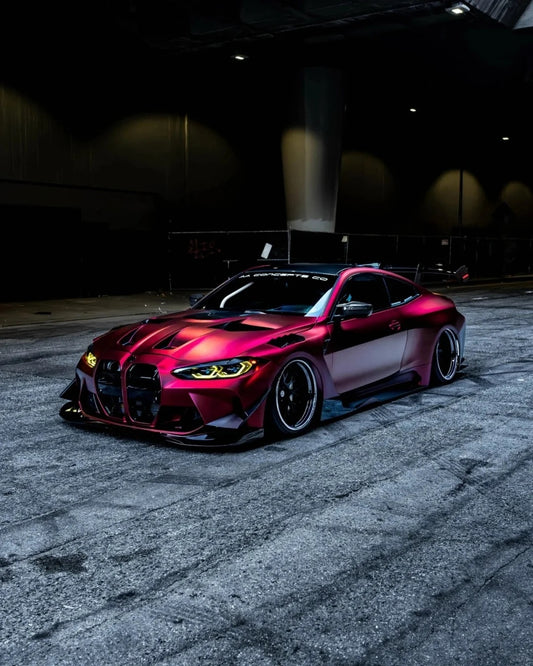
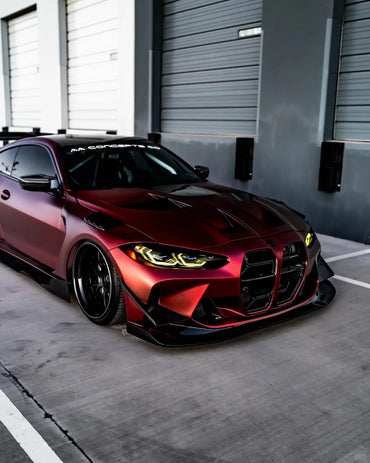
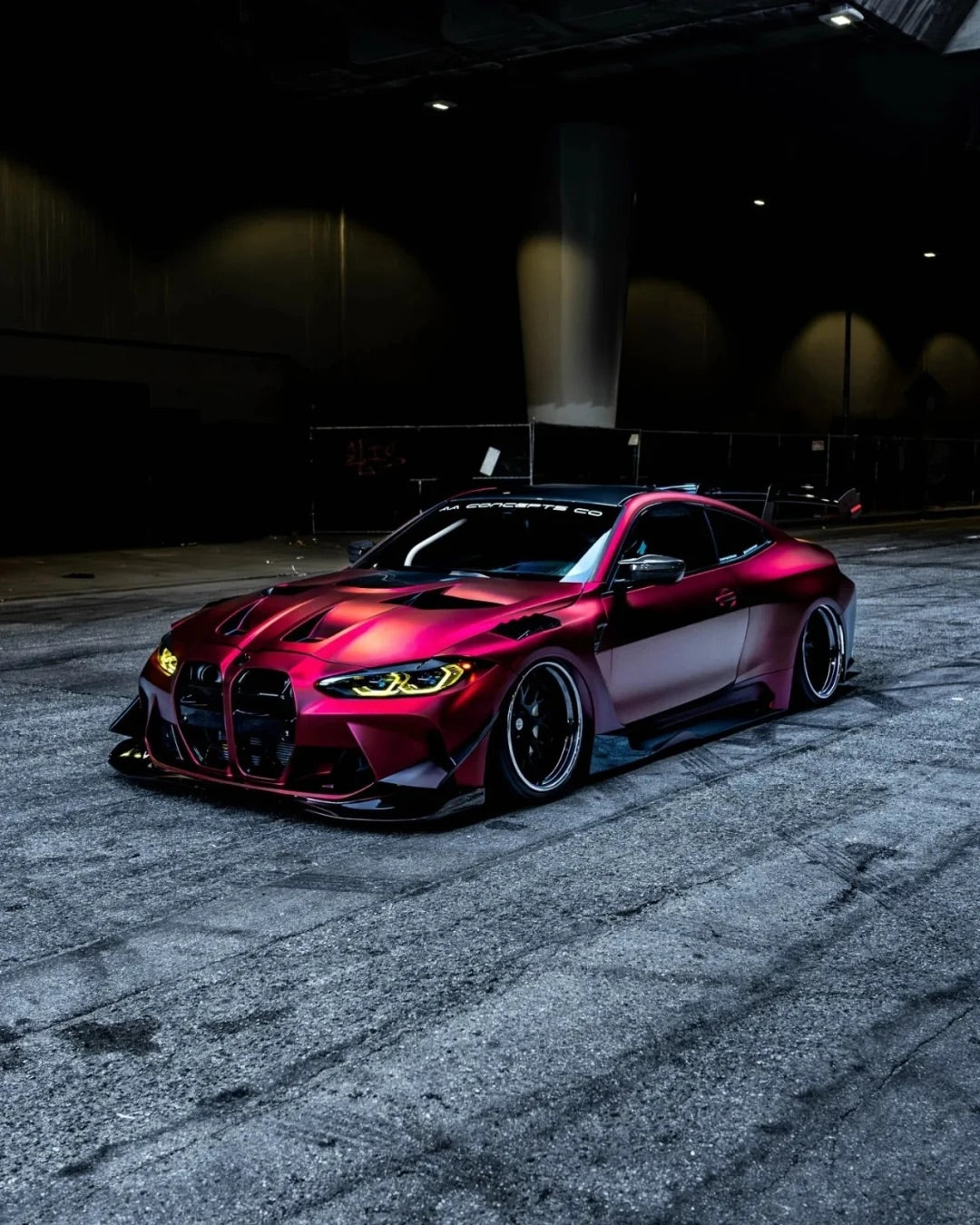
Sailifilm's Colored Paint Protection Film collection solves the most common dilemma in automotive protection: the choice between changing a vehicle's color and protecting its paint. Colored PPF eliminates that tradeoff. The film changes the vehicle's appearance — delivering a new color and finish — while the TPU construction provides the same scratch resistance, rock chip absorption, UV blocking, and self-healing capability as a clear protective film.
This is structurally different from a vinyl wrap. A standard vinyl car wrap is a cosmetic film: it changes appearance and provides light surface protection, but it lacks the impact-absorbing core thickness and self-healing topcoat of a dedicated PPF. Colored PPF is thicker, more structurally robust, and engineered specifically to take physical hits rather than merely cover a surface.
TPU Paint Protection Wrap
Sailifilm's TPU Paint Protection Wrap collection is the cleaner-car-protection choice for owners who want to preserve their existing color and paint condition. The TPU base delivers the full self-healing performance described above, combined with hydrophobic surface properties that cause water, road spray, and liquid contaminants to bead and roll off rather than settle and dry on the surface. This hydrophobic behavior means less contamination reaches the film between washes, and cleaning intervals become less labor-intensive.
The hydrophobic top surface is a structural feature of how the film's molecular architecture is oriented — not a coating applied over the film that eventually wears away. It remains effective for the film's service life.
External reading: The Wikipedia article on hydrophobicity explains the surface chemistry underlying why water beads on a properly engineered TPU film.
PPF vs. Vinyl Wrap: Which Material Suits Your Goals?
This is the most common question vehicle owners bring to any wrap or protection decision, and the answer depends entirely on what the vehicle owner is trying to achieve.
If the primary goal is maximum paint protection — absorbing rock chips, resisting deep scratches, preserving resale value by keeping the factory paint pristine — TPU PPF is the correct choice. Its physical thickness, self-healing capability, and impact resistance exceed what any vinyl wrap can provide.
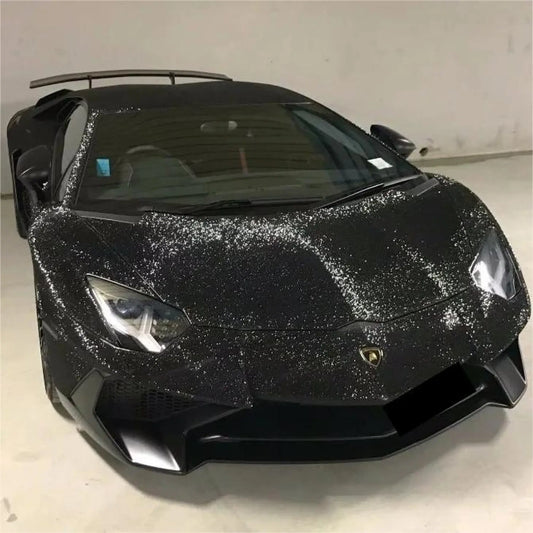
If the primary goal is visual transformation — changing the vehicle's color, finish, or surface texture — Sailifilm's vinyl collections offer options that PPF cannot match in terms of color range and surface variety. Sailifilm's Rainbow Laser Vinyl Wrap, Dual Color Dream Vinyl Wrap, Liquid Chrome Wrap, Metallic Vinyl Wrap, Crystal Vinyl Wrap, Ultra Matte Wrap, 3D Carbon Fiber Wrap, and Glitter & Sparkle Car Wrap deliver effects that colored PPF cannot replicate — iridescent color shifts, mirror chrome surfaces, deep matte flat finishes, and textured three-dimensional appearances.
If the goal is both color transformation and protection, Sailifilm's Colored PPF collection occupies the overlap between these two categories — more limited in finish variety than vinyl, but significantly more protective and longer-lived.
| Goal | Best Choice |
|---|---|
| Maximum paint protection | TPU Paint Protection Wrap |
| Color change + protection | Colored Paint Protection Film |
| Maximum color/finish variety | Car Vinyl Wrap Collection |
| Dramatic visual effects | Rainbow Laser / Chrome / Dual Color |
| Understated luxury matte | Ultra Matte Wrap |
👉 Internal link placeholder: [How to Combine PPF and Vinyl Wrap for Full-Vehicle Paint Defense — Coming Soon]
Triggering Self-Healing: Practical Methods for Vehicle Owners
Understanding how to activate the self-healing mechanism allows vehicle owners to use the technology proactively rather than waiting passively for sunlight to do the work.
Natural sunlight is the most accessible trigger. Parking a vehicle in direct sun for two to four hours on a warm day activates the mechanism across the entire exposed surface simultaneously. This is the lowest-effort approach and effective for light swirl marks and minor surface abrasions accumulated during routine washing.
Warm water applied directly to the affected area accelerates the process when sunlight is not available or when the damage is visible on a specific panel. The water temperature should be warm — not scalding — and matched to ambient conditions to avoid thermal stress to the film or the panel beneath it.
A heat gun or hair dryer at low-to-medium setting, held at a working distance of six to twelve inches from the surface, produces the fastest results for spot treatment. This method is most appropriate when there is a specific visible scratch that needs immediate attention. Heat gun use on PPF should be slow, sweeping, and deliberate — concentrated heat held in one spot for too long can approach temperatures that exceed the safe operational range of the adhesive layer.
The correct tool for all of the above, including keeping the film pristine during regular care, comes from Sailifilm's Wrapping Tools collection, which provides the heat guns, squeegees, and finishing tools used at professional installation level.
Lifespan and Long-Term Performance
Self-healing PPF made from quality TPU formulations maintains its healing capability over a service life that typically spans five to ten years depending on climate, UV intensity, and maintenance quality. The healing mechanism does not wear out from use — repeated minor scratches and repeated activations do not deplete the topcoat's polymer reserves. What eventually limits healing performance is cumulative UV degradation of the polymer chains over years of outdoor exposure, which gradually reduces the material's elasticity and its ability to recover from displacement.
Vehicles in high-UV environments — desert climates, coastal regions with strong reflected light — reach this point earlier than vehicles garaged or operating in moderate climates. A vinyl-safe ceramic coating applied over the PPF surface adds a UV-blocking layer that extends the film's functional life by reducing the UV load reaching the elastomeric topcoat.
Starting With Confidence: Sample Before You Commit
Film appearance and quality cannot be fully evaluated from a screen. Sailifilm's Sample Kits provide physical film samples that allow buyers to assess color accuracy, surface finish, and material quality on an actual vehicle surface before committing to a full installation. For colored PPF in particular — where the film will be the vehicle's primary visual statement and its primary physical defense simultaneously — evaluating the actual material in natural light is the most informed way to proceed.
The Sailifilm Best Sellers collection reflects which products have demonstrated the strongest real-world performance across the broadest customer base — a practical starting point for first-time PPF buyers who are navigating the technology for the first time.
Final Word: The Best Protection Is the Kind That Takes Care of Itself
Self-healing PPF represents a fundamental shift in what vehicle protection means. Rather than applying a sacrificial layer that accumulates damage visibly over time until it requires replacement, TPU paint protection film actively recovers from the damage it absorbs — passively, continuously, simply by being exposed to warmth. For any vehicle owner who cares about long-term paint condition, resale value, or the sustained appearance of a quality finish, this technology is no longer an upgrade. It is the rational baseline.
Sailifilm's full range — from TPU PPF to Colored PPF to the complete vinyl wrap collection — provides a product for every protection goal and every aesthetic direction.

