

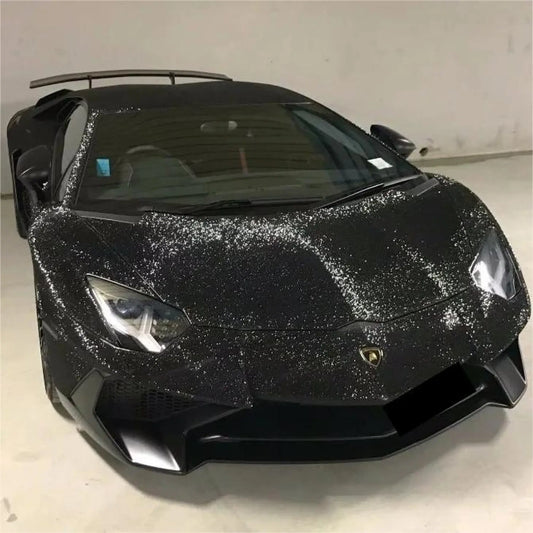
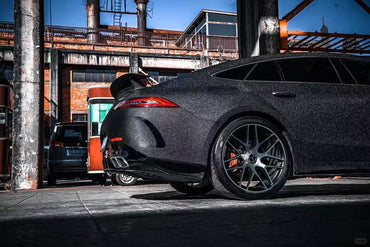
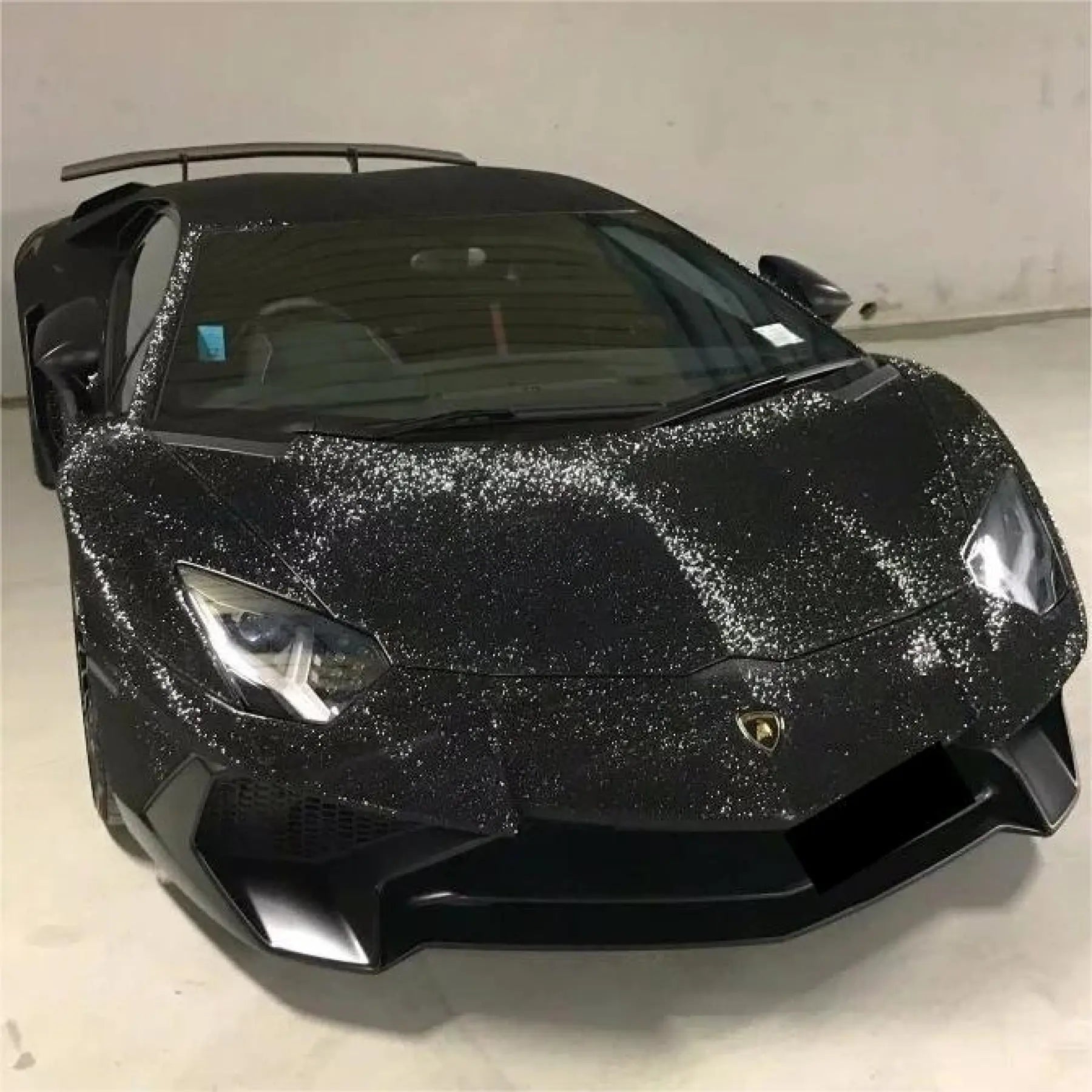


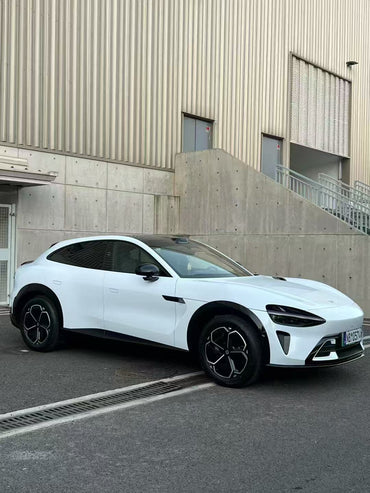
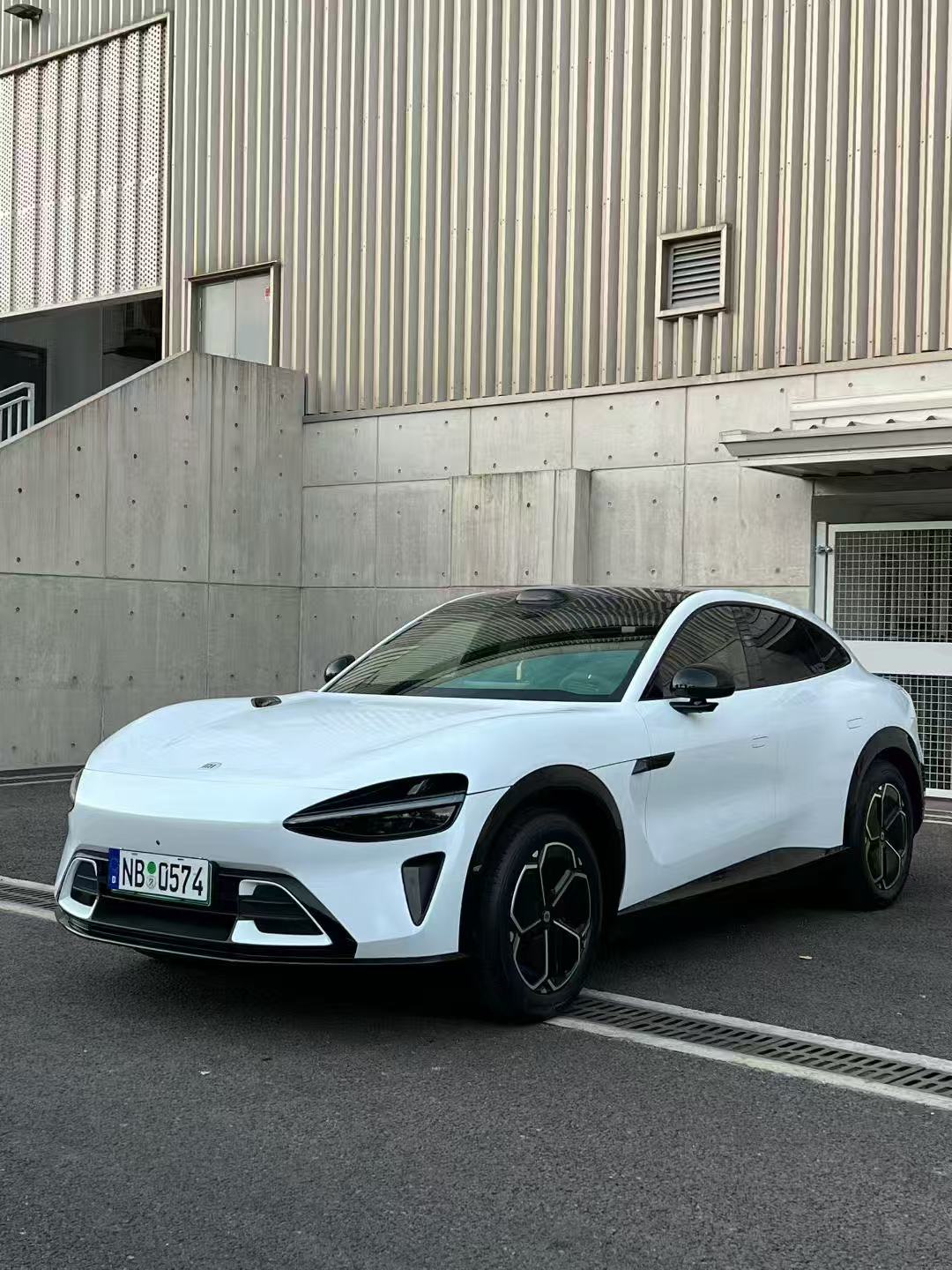
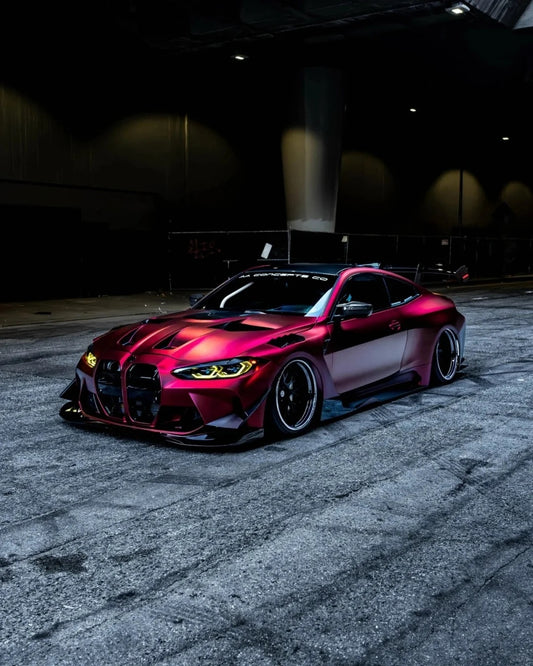
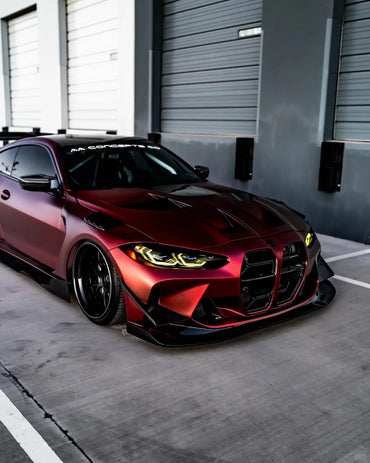
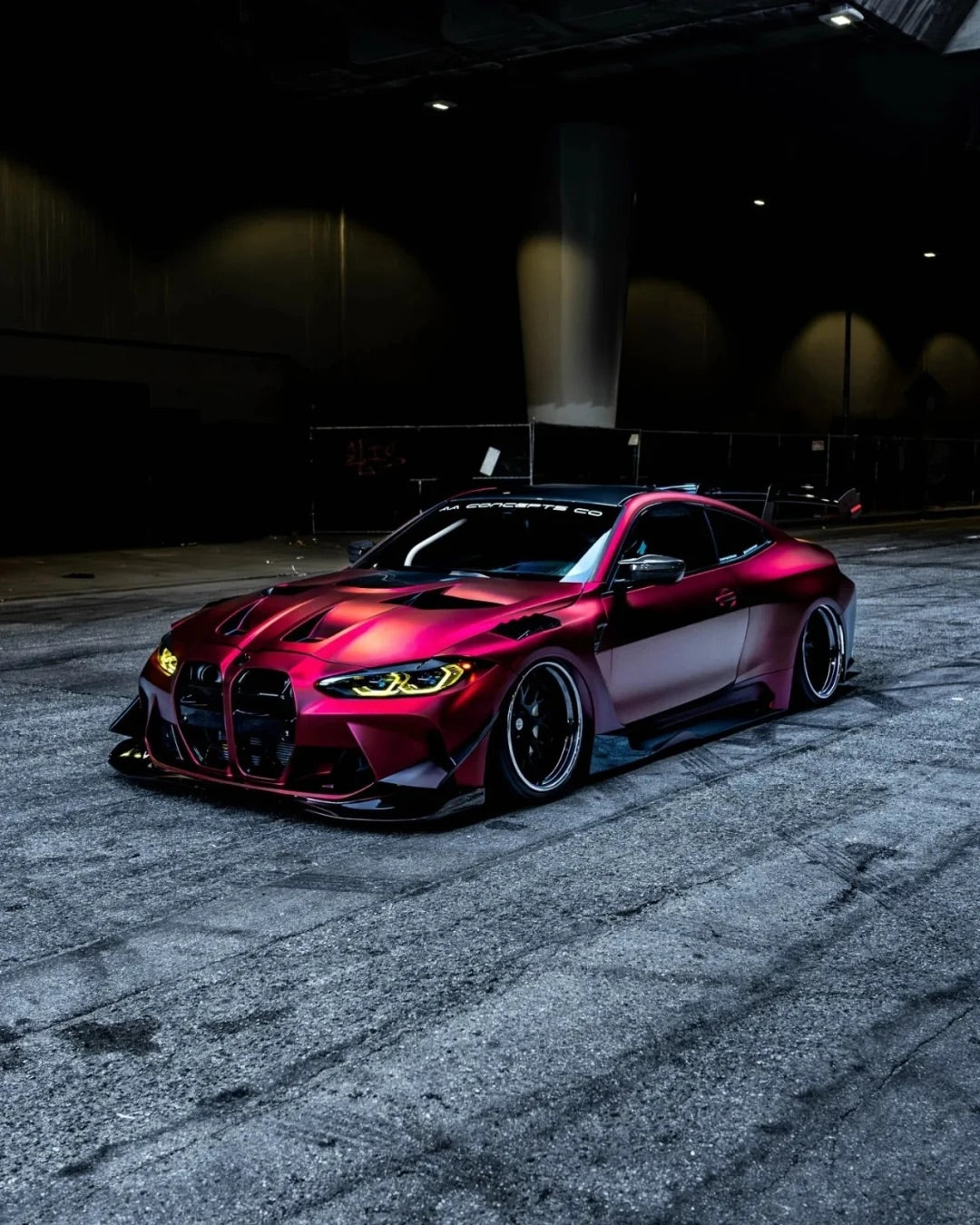


Textured color change films add physical depth that flat color cannot. Brushed finishes carry fine directional grain, forged carbon shows a random marbled pattern, and woven carbon fiber gives a raised 3D weave. Each reacts to light with micro-shadow rather than a single reflection, so the surface reads as material, not just a shade. That depth is what separates a premium build from a plain one.
Flat color still dominates the market, but texture is where 2026 is heading. A brushed panel reads as a custom car at first glance even on an otherwise modest build. A forged carbon hood signals hypercar intent from across a parking lot. A woven carbon roof throws light differently on every curve. These are not louder colors, they are richer surfaces, and they photograph in a way solid gloss simply cannot.
Why texture beats flat color for depth and value
Texture-forward surfaces are defining the premium aftermarket. A flat film returns one clean reflection, which looks sharp but uniform. A textured film scatters light across a grain, a marble, or a weave, so the same panel shows different tones as you walk around it. That shifting micro-shadow is what the eye reads as depth and craftsmanship.
Texture also hides wear. Fine grain and matte marbling mask minor dust, light smudges, and small surface imperfection far better than high gloss, which shows every fingerprint. For a daily driver that will never be garage-perfect, that forgiveness is a practical advantage on top of the looks.
The value case is the same as any quality wrap finish. A textured film sits on top of the factory paint as a cosmetic and protective layer, shielding the panel underneath from UV and light debris. When installed and removed correctly, it comes off without harming the original finish, so the paint stays fresh and resale value is preserved. You get the custom surface now and the clean factory panel later.
Brushed looks: directional grain and subtle drama
Brushed finishes simulate the fine, straight grain of brushed metal. The effect is understated. It reads as a custom, expensive surface without shouting, and it pairs beautifully with darker accents. Up close the directional lines give the panel a tactile, machined quality that flat color never achieves.
Where the brushed effect lives in the range
The brushed aesthetic sits closest to the textured metallics in the Metallic Series, where fine flake and a directional surface catch light along the grain. For a softer, low-reflection take on a machined look, the Ultra Matte Series delivers a satin-textured surface that reads as brushed stone or sand-finish metal rather than a mirror.
Install caution: grain direction matters
The one rule with any directional finish is alignment. Brushed grain must run the same way across adjacent panels, or a fender will show lines going one direction while the door shows another. That mismatch is the classic sloppy-install tell. Plan panel direction before you cut, and treat the whole side of the car as one grain map rather than a set of independent pieces.
Forged carbon: the marbled supercar pattern
No pattern has crossed from supercar exclusivity into the mainstream faster than forged carbon. Instead of a repeating weave, forged carbon shows a random, marbled, scattered-fragment look, so no two panels are ever identical. That irregularity is exactly why it photographs so well, since the chaotic structure interacts with light differently than a uniform grid.
Sailifilm forged carbon finishes
The 3D Carbon Fiber Wrap collection reproduces that marbled chaos through advanced printing and embossing, so the texture is physically raised rather than a flat printed image. That raised surface produces genuine micro-shadow when light hits from different angles. The forged options come in gloss and matte, in black and red colorways, with the gloss variants using a lacquered surface that amplifies the depth of the random fiber orientation, and the matte versions giving the dry-carbon look motorsport purists prefer.
Gloss versus matte forged
Choose gloss forged when you want the pattern to pop on camera and under indoor lighting. Choose matte forged for a stealth build, since it tones down reflections and hides dust better. Black forged carbon remains the most popular choice, while red forged carbon has emerged as one of the most eye-catching accent options for a bolder, race-inspired statement.
Woven carbon fiber: the classic 3D weave
Traditional carbon fiber wrap replicates the distinctive woven pattern of real carbon composite. Modern films have evolved through 3D, 4D, and deeper classifications, each adding dimensional realism through sharper weave definition and richer gloss layering. The 4D and forged styles lead current search interest because they deliver the most convincing depth at arm's length, especially on flowing curved surfaces.
The woven finishes in the 3D Carbon Fiber Wrap range include a deep 4D gloss black variant that gives the classic weave extra depth under a gloss top layer. Unlike rigid carbon panels, the vinyl conforms easily to curves, edges, and complex shapes, so it works on hoods, roofs, spoilers, mirror caps, and interior trim alike. It captures the supercar aesthetic at a fraction of the cost of real composite, and because it is film, it is fully reversible.
A practical note on expectation: carbon wrap is a surface, not a structure. It reproduces the look and feel of composite but adds no weight savings and no structural strength. The value is visual and protective, which for most builds is exactly the point.
Comparison: matching texture family to your build
| Texture family | Pattern | Best panels | Finish options | Install difficulty |
|---|---|---|---|---|
| Brushed / metallic | Fine directional grain | Full body, accents | Metallic, ultra matte | Medium (grain alignment) |
| Forged carbon | Random marbled | Hood, roof, mirrors | Gloss/matte, black/red | Low–Medium |
| Woven carbon (3D/4D) | Repeating weave | Hood, roof, trim | Gloss black, 4D depth | Low–Medium |
| Full-body texture | Satin / textured matte | Whole vehicle | Ultra matte | Medium |
The table reads as a menu, not a ranking. Brushed and metallic textures suit owners who want subtle machined drama across a full body, with grain alignment as the main skill demand. Forged carbon is the accent king, delivering maximum visual impact on a hood, roof, or mirror caps with forgiving installation. Woven 3D and 4D carbon give the classic motorsport weave for trim and statement panels. Full-body ultra matte texture wraps an entire vehicle in a tactile satin that hides wear. Most strong builds mix two of these rather than choosing one, which is where texture becomes a design language instead of a single choice.
How this applies to your Sailifilm build
Texture works best in combination. For a factory-supercar look, pair a metallic grey body from the Metallic Series with a gloss forged carbon hood and mirror caps, recreating the OEM two-tone at aftermarket pricing. For a full stealth build, combine matte forged carbon accents from the 3D Carbon Fiber Wrap with a charcoal or black Ultra Matte body, using the textural contrast to keep a dark build from looking flat.
Whatever the mix, judge texture in person before committing. A raised weave or a marbled forge reads completely differently under sunlight than on a screen. Order a sample kit to evaluate the grain, the depth, and the color against your own paint, and pick up the right wrapping tools so directional finishes go on with the grain running true.
Frequently asked questions
What is the difference between forged carbon and regular carbon fiber wrap?
Forged carbon shows a random, marbled, non-repeating pattern, while regular carbon fiber wrap shows a uniform woven grid. Forged came from supercar components and reads as more organic and modern, so no two panels look identical. Woven carbon reads as classic motorsport. Both are available as raised, embossed textured films that add real depth rather than a flat printed image.
Is a textured wrap harder to install than flat color?
Slightly, mainly because of grain direction. Brushed and other directional textures must be aligned so the grain runs the same way across adjacent panels, or the finish looks mismatched. Forged and woven carbon are more forgiving since the pattern is less strictly directional. Working panel by panel with the right tools and planning the grain map first keeps the install clean.
Does textured carbon fiber wrap add strength to the panel?
No. Carbon fiber wrap reproduces the look and feel of composite but adds no weight savings and no structural strength. It is a cosmetic and protective film that sits on top of the factory paint. The value is visual depth plus a protective layer over the panel, not any change to the panel underneath.
Should I choose gloss or matte forged carbon?
Choose gloss forged carbon when you want the marbled pattern to pop on camera and under indoor lighting, since the lacquered surface amplifies depth. Choose matte forged carbon for a stealth build, because it tones down reflections and hides dust and smudges better. Black is the most popular colorway, while red forged carbon works as a bold accent.
Where do textured wraps look best on a car?
Forged and woven carbon look strongest on hoods, roofs, mirror caps, and trim, where a single statement panel creates a two-tone effect. Brushed and metallic textures suit full-body applications where the grain can run across the whole side. Full-body ultra matte texture wraps an entire vehicle in a tactile satin. Mixing an accent texture with a contrasting body finish gives the most premium result.
Can textured film be removed without damaging paint?
Yes, when installed on healthy paint and removed correctly with controlled heat and a low peel angle. Textured films are still vinyl over factory paint, so they release cleanly without harming the finish underneath. Raised textures at tight edges may need a little extra heat during removal, but the paint stays protected and preserved for resale.
Next step
Texture is the fastest way to move a build from ordinary to custom without changing a single mechanical part. Decide whether you want subtle brushed grain, marbled forged carbon, or classic woven weave, then plan where each lives on the car. Pair an accent texture with a complementary body finish for the strongest result. When your combination is set, order a Sailifilm sample kit to confirm the depth and color on your own paint in real light before you commit to full rolls.
Forged carbon (background reading): https://en.wikipedia.org/wiki/Forged_Carbon Carbon fiber reinforced polymer (background reading): https://en.wikipedia.org/wiki/Carbon_fiber_reinforced_polymer Brushed metal (background reading): https://en.wikipedia.org/wiki/Brushed_metal

