

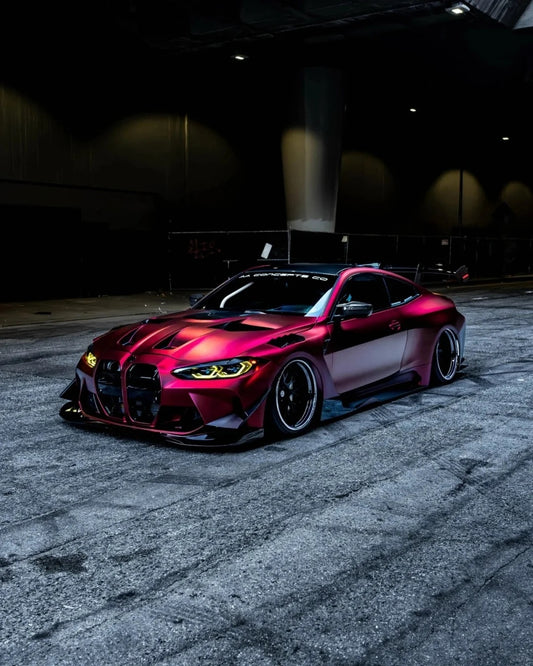
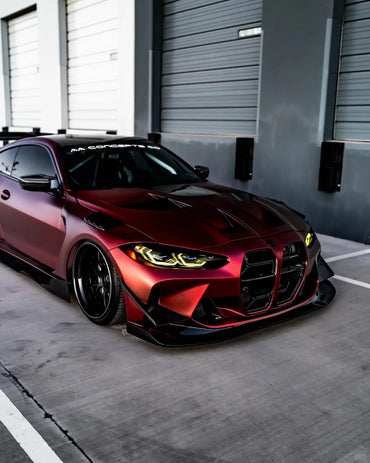


Most owners plan a colour change around three questions: which shade, which finish, and how much film. There is a fourth question that almost nobody asks until the car is already sitting outside in a new colour, and it is the one that can cost real money later. Your vehicle is registered as a specific colour, insured on the description of a specific vehicle, and photographed by cameras that expect the two to match. Film changes all of that in an afternoon.
None of this is a reason to hesitate. A wrap remains one of the few upgrades that is fully reversible, and the paperwork side is usually a five-minute task rather than an obstacle. It just has to be done deliberately. Below is a practical walkthrough of what changes on paper when a car is wrapped, which finishes attract genuine scrutiny, and how to build a small evidence file that protects you at claim time and at resale.
Everything here is written around the car vinyl wrap and TPU films Sailifilm produces, and around the sizes and finishes that actually ship from our catalogue.
A wrap changes a recorded fact, not just an appearance
Registration records describe a vehicle in a handful of fields: make, model, identification number, engine, and colour. The first four are fixed by the manufacturer. Colour is the only one an owner can alter in a single day without touching a bolt. That is exactly why authorities and insurers treat a colour change as a reportable detail rather than a cosmetic afterthought.
The threshold in most jurisdictions is a common-sense one. A roof panel in gloss black on a silver car does not make the car black. A full wrap that turns a white saloon into a deep metallic purple clearly does. Between those poles sits a grey zone, and the safe reading is straightforward: if a person standing thirty metres away would name a different colour than the one on your documents, treat it as a colour change. The background to how these films are constructed is covered in the general reference on vehicle wrapping.
Why your insurer wants to hear about it
Insurance is a contract written against a described risk. The description includes what the car looks like. When the description drifts from reality, two practical problems appear.
The first is identification. A stolen or damaged vehicle is traced, verified and valued against its recorded description. A car listed as silver that is physically bronze slows every one of those steps down.
The second is the modification question. Some insurers classify a full colour change as a modification and adjust the policy accordingly. Others record it as a description update at no cost. You will not know which until you ask, and the cost of asking is a phone call. The cost of not asking can be a disputed claim on a car you have already paid to wrap. The general mechanics of how declared risk affects cover are outlined in the reference on vehicle insurance.
Say it plainly when you call: the vehicle has been wrapped in removable film, the factory paint is untouched underneath, the film can be removed, and the new visible colour is X. That sentence answers almost every question an underwriter will have.
The registration document
Practice varies by country, and this is one place where local rules genuinely differ rather than merely differ in wording.
In the United Kingdom, a permanent colour change is notified to the licensing authority so the registration certificate can be updated, using the process for changing vehicle details. Several European markets follow a similar logic through their vehicle registration offices, sometimes with a technical inspection body involved when the change is substantial. Across much of the United States the requirement is looser and handled at state level, often only surfacing at the next registration renewal or transfer.
Because the rules are set locally, the only reliable instruction is the boring one: check the specific requirement for the country and region where the vehicle is registered before you order film, not after. A dedicated country-by-country breakdown is planned as a follow-up article at colour change notification rules by country.
One nuance worth knowing. Some authorities distinguish between a permanent change and a temporary one, and a wrap can sit in either category depending on how long it stays on. If you intend to run a finish for a season and then return to factory colour, note that intention when you notify. It often simplifies the record.
Finishes that get looked at twice
The film that causes questions is rarely the film owners expect.
Mirror and liquid finishes. High-reflectivity surfaces are the most likely to draw comment, because a mirror-bright panel can throw sunlight or headlight glare toward other road users. Some regions restrict full-vehicle mirror coverage on public roads while permitting the same film on show cars, trailers and display vehicles. This does not make the category off limits. It makes placement the deciding factor. The Liquid Series is frequently specified for roofs, bonnets, mirror caps and pillar trim rather than every panel at once, which delivers the visual hit without the compliance argument.
Holographic and colour-shift. Rainbow and chameleon effects are a different question from reflectivity, though they are often confused with it. A Rainbow Laser or Dual Color Dream film shifts hue with viewing angle but does not behave like a retroreflector, which returns light directly to its source. That difference matters, because rules written about retroreflective materials are aimed at safety and emergency-service marking, not at decorative colour travel. Where the practical problem does appear is on the registration form: a film that reads gold from one side and green from another has no single colour to declare. Record the dominant hue and the fact that the finish is multi-tone.
Colours reserved for authorities. Some markets restrict liveries and colour schemes that could cause a vehicle to be mistaken for police, ambulance or fire service. This almost never affects a single-colour wrap and almost always affects contrasting block patterns in specific colour pairs. If a build involves high-contrast panels in white with blue, yellow or red blocks, confirm the local position first.
The parts that must stay uncovered
This list is short and consistent almost everywhere.
Number plates stay fully visible and unobstructed. Lights, indicators, reflectors and their lenses stay uncovered by body film. Cameras, radar apertures and parking sensors stay clear, which matters more every model year as driver-assistance hardware spreads across the front end. Glass is a separate legal category governed by window-tint rules, not by body-wrap rules, and body film does not belong on it.
Everything else on the painted exterior is fair territory, including door jambs and engine-bay panels for owners who want a complete transformation.
The finishes that almost never raise a question
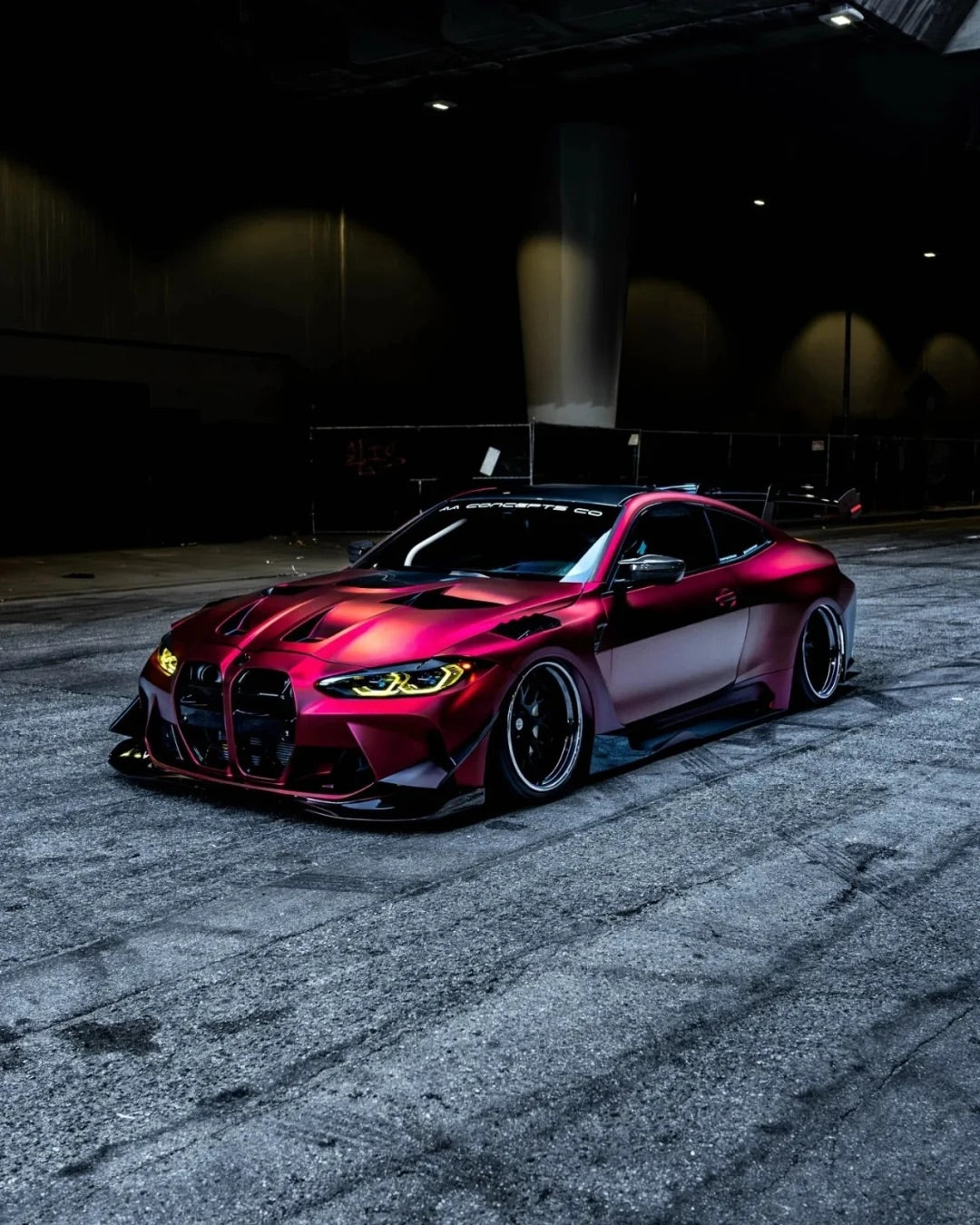
Matte, satin, metallic, pearl and textured films sit comfortably inside normal expectations everywhere. An Ultra Matte grey, a Metallic midnight purple, or a 3D carbon fibre bonnet is a colour change and nothing more. Declare the colour, keep the receipt, drive it.
The same applies to colored paint protection film. Because the pigment sits inside a thermoplastic polyurethane layer built for impact absorption, colour PPF changes appearance and adds physical protection at the same time. Legally it is treated as what it visually is: a colour change. The broader TPU protection range covers the clear side of the same technology.
Build a small evidence file
This takes ten minutes and repays itself the first time anyone asks a question.
Keep the purchase invoice showing film type, finish and roll size. Photograph the car before installation, once with panels stripped or masked, and once finished in daylight. Keep one unused swatch from the sample kit that matches the installed colour, labelled with the date. Note the installer and installation date.
Three things become easy afterwards. You can prove to an insurer that factory paint was intact before the film went on. You can order a matched repair section years later when a panel gets scuffed. And at resale you can show a buyer exactly what is underneath, which is the single most persuasive argument for a wrapped car's value. Removal itself is covered in detail in our guide to protecting the original paint during removal.
For owners running a wrap on a leased vehicle, the documentation habit matters even more, and a full lease-return walkthrough is planned at wrapping a leased car.
Commercial vehicles carry an extra layer
A van carrying printed branding is advertising as well as decoration, and some municipalities regulate advertising vehicles separately from private ones, particularly around parking and stationary display. Fleet operators should confirm the local position before committing a livery across twenty vehicles rather than after. Workshops handling this volume regularly can find trade pricing through our dealer programme.
Pre-installation checklist
Confirm the notification requirement for your registration country. Call your insurer and record the reference number of the conversation. Decide whether the finish is full-coverage or accent, especially for mirror-bright film. Photograph the car before work starts. Order a swatch and keep one spare. Confirm plates, lights and sensor apertures will remain clear. Keep the invoice with the vehicle documents.
Once that list is done, the only remaining decisions are the enjoyable ones. Aftercare from that point is simply washing discipline, covered in the film maintenance guide, and if you are installing yourself, the DIY installation guide and the wrapping tools range cover the practical side.
Frequently asked questions
Does wrapping a car void insurance? Not by itself. Problems arise from failing to disclose, not from the film. An insurer told about the change updates the record and continues cover.
Is a partial wrap a colour change? Generally no. Accent panels, roofs, mirror caps and bonnets leave the vehicle's dominant colour intact. The test is what an observer would call the car from a distance.
Do I need to notify anyone if I remove the wrap later? If you notified a colour change when the film went on, notify the return to factory colour when it comes off, so the record matches the car again.
Does a wrap affect resale value? Removable film applied over sound paint tends to help rather than hurt, because the paint underneath is shielded from ultraviolet exposure and light abrasion for the life of the wrap. Documentation is what converts that into a higher price.

