



The structural difference nobody explains properly
Automotive paint is a bonded system. Primer, base coat and clear coat cure into a single film that is chemically married to the panel. Changing it means removing what is already there, which is why a colour change in paint is a body process rather than a finishing one. Door jambs, engine bay edges and the underside of the boot lid all have to be addressed or the car reveals its history every time it opens.
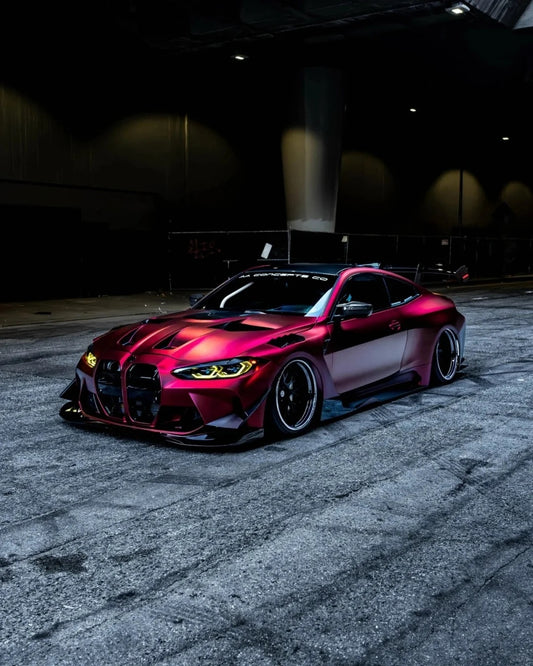
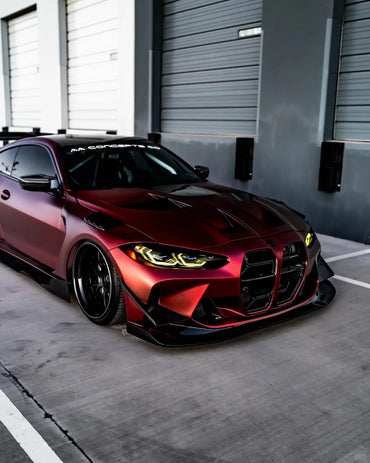
A colour change film is a mechanical system. A pigmented or optically layered face stock carries the colour, a protective top layer carries the gloss level and weather resistance, and a pressure-sensitive adhesive holds it against the clearcoat. Nothing is dissolved and nothing is cured onto the panel. Sailifilm builds its colour change range on PET-based construction, which is what allows the harder, more mirror-like finishes in the Liquid Series to hold their reflection instead of softening into orange peel.
That single distinction drives every practical difference that follows.
Cost: the number that changes when you divide it by years
Paint pricing is dominated by labour. Stripping, sanding, masking, booth time and curing are hours you pay for before any colour goes on, and specialty finishes multiply those hours because they demand more coats and tighter control. The material is a small fraction of the invoice.
Wrap pricing separates cleanly into film and installation. A Sailifilm colour change roll starts at $99, and rolls run from a single 5ft x 3.28ft panel piece up to 5ft x 79ft, which is the practical coverage range for a full sedan. That means the material half of the decision is knowable before you speak to anyone, and a DIY build on a small car or a partial wrap on roof, bonnet and mirror caps can be costed to the dollar.
The honest comparison is cost per year of the look you actually want, not sticker against sticker. A specialty paint finish is a single large payment you live with. A wrap is a smaller payment you can repeat with a different colour when you get bored, and the second colour costs the same as the first because there is nothing to strip.
| Factor | Colour change film | Repaint |
|---|---|---|
| Dominant cost | Film plus installation labour | Preparation and booth labour |
| Cost of changing colour again | Same as the first time | Same as the first time, plus removal of the previous work |
| Partial coverage | Straightforward and cheap | Awkward, needs blending |
| Cost known in advance | Film cost is fixed and published | Quote-dependent |
| Reversible | Yes | No |
Lifespan and what actually ends it
A well-installed film on a garaged car holds its finish for years. What ends a wrap is rarely the colour giving up. It is horizontal panels taking ultraviolet load that vertical panels never see, edges lifting where post-heating was rushed, and heat cycling working the adhesive loose over thousands of expansion and contraction events. The roof and bonnet of a car parked outside age at a different rate to the doors, which is why a wrap ages unevenly rather than fading uniformly the way paint does.
Climate is the single biggest variable, and it does not affect every finish equally. We covered the mechanisms in detail in how climate affects wrap longevity, and the short version is that a coastal car and a desert car are running two completely different tests on the same film.
Paint fails differently. It does not lift, it thins. Clearcoat oxidises, loses its refractive layer and turns chalky, and once that stage arrives there is no correction left because there is nothing to polish. A wrap can be removed at its worst point and reveal an intact factory finish underneath. A failed clearcoat has to be sanded and resprayed.
Sealing the film changes the maintenance picture significantly, and the trade-offs are worked through in our post on ceramic coating over vinyl.
Damage, repair and the cost of one bad day
This is where the two options separate most sharply.
Stone chip a painted bonnet and you are into colour matching, blending across adjacent panels, and a repair that is visible under direct light to anyone who knows where to look. Metallic and pearl paints make this worse, because matching flake orientation across a blend is genuinely difficult work.
Damage a wrapped panel and you replace that panel's film. The rest of the car is untouched. Order the same colour from the same series, re-cut, re-install, done. If the film is one of the optically layered finishes, the Metallic Series or Rainbow Laser Series for example, stretch consistency matters for a clean match, which is explained in our breakdown of how colour is built into a wrap film.
For pure impact defence rather than appearance, film and paint are not even competing. Thermoplastic polyurethane absorbs and self-heals in a way no clearcoat can, which is why TPU paint protection wrap exists as a separate category on this site in 7.5mil and 8.5mil gloss and matte constructions. Owners who want the protection and the colour change in one layer use colored paint protection film instead of stacking two products.
Resale value and the reversibility argument
Residual value is where wrapping quietly wins for most owners. A non-factory paint colour narrows your buyer pool and invites questions about accident history, whether or not any accident happened. A repaint is permanent evidence that something was done.
A wrap is the opposite. The factory colour survives underneath, shielded from UV and light abrasion for the entire time the film is on. Peel it before sale and the car presents in original specification with better-preserved paint than an equivalent unwrapped example. The condition of that paint at removal depends heavily on technique, which is why we wrote colour change removal: protecting the original paint underneath as a standalone guide.
The exception is a car whose value is tied to originality. Collector vehicles are judged on their factory finish, and film is a protective measure on those cars, never a styling one.
Finish range: what paint cannot do at any price
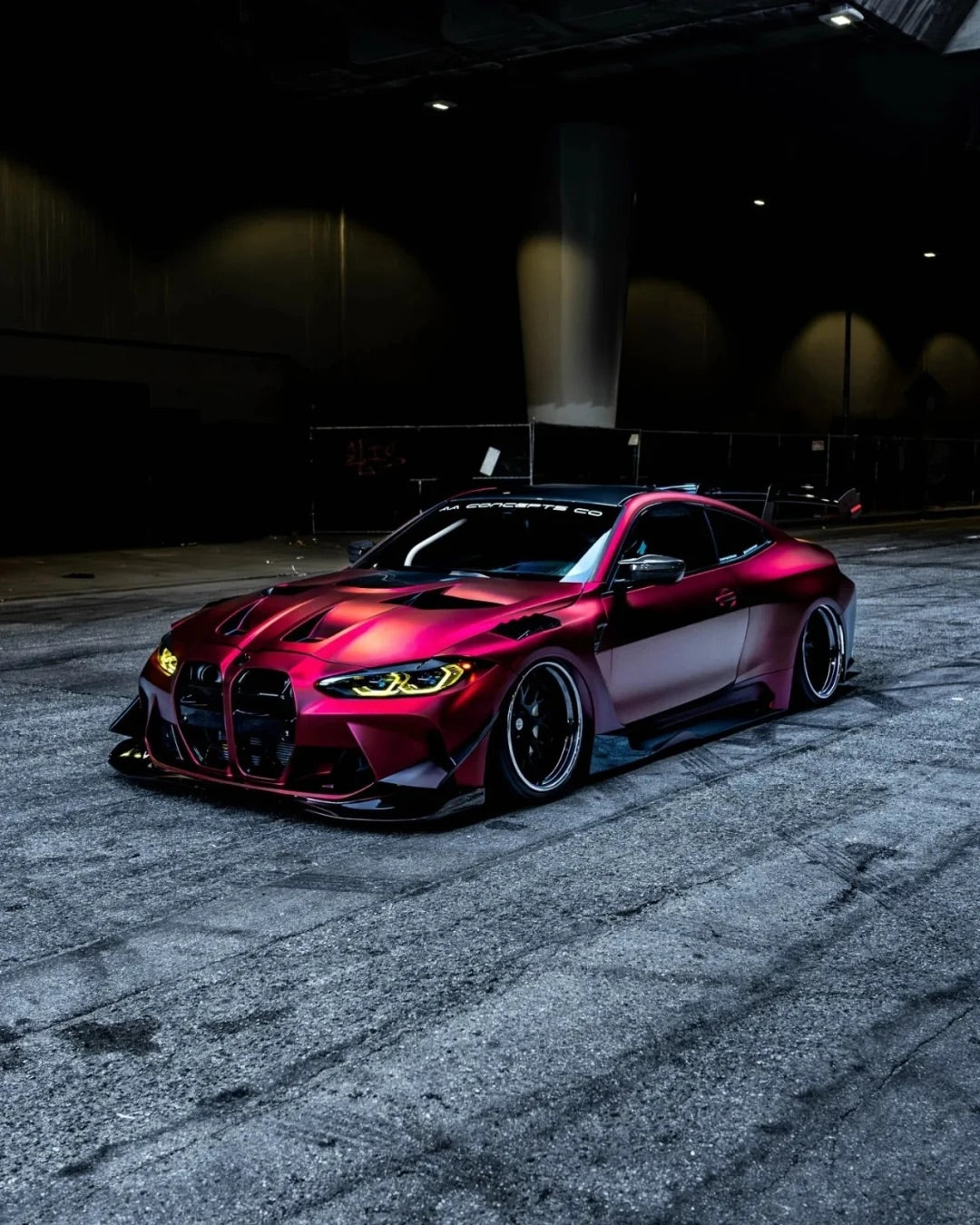
Paint can be mixed to almost any colour, but there are visual effects that live outside what a sprayable system can produce economically. Colour-shift, deep laser diffraction and true mirror finishes require structured optical layers built into a film during manufacture, and they are either impossible or absurdly expensive to spray.
Sailifilm's series map directly onto that gap:
- Crystal Series for clean, stable single-layer colour that behaves predictably in every light
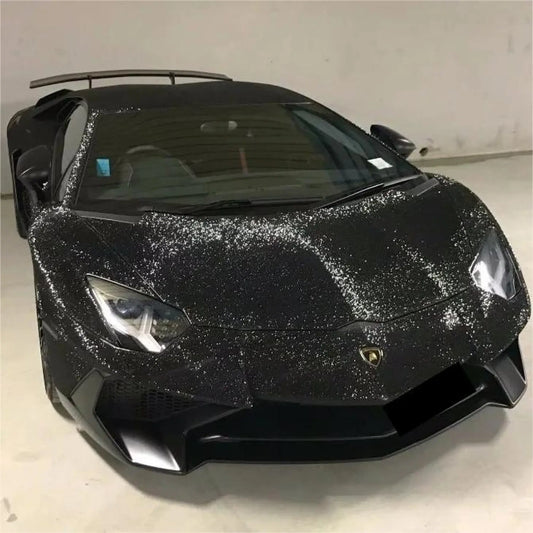
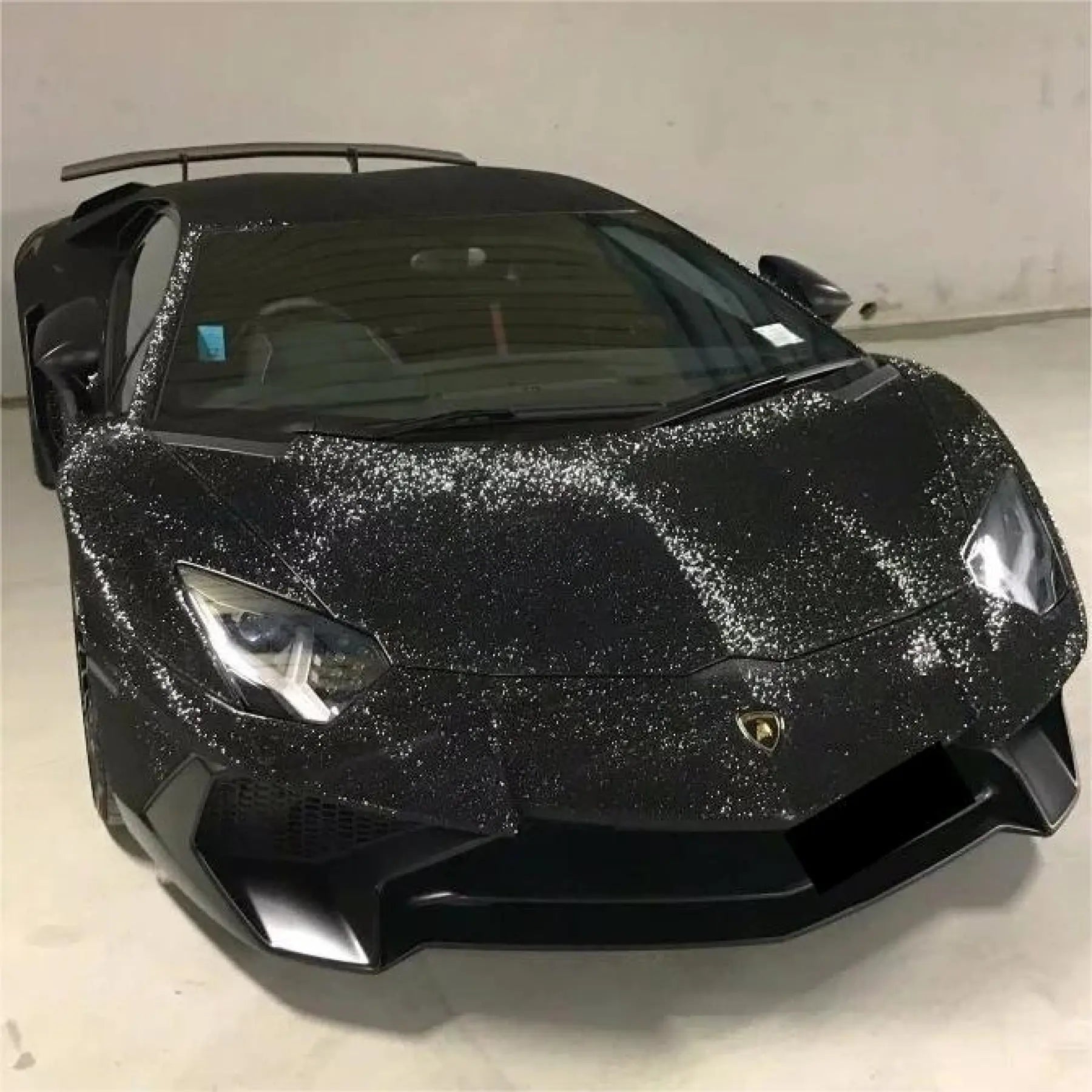
- Ultra Matte Series for the flat and satin looks that are notoriously fragile in paint form, including satin chrome effects
- Metallic Series for suspended-flake depth
- Liquid Series for high-reflection finishes paint cannot approach
- Rainbow Laser Series for diffraction effects
- Dual Color Dream Series for two-tone shift across viewing angles
- 3D Carbon Fiber Wrap for physical texture, which spray simply cannot replicate
The texture families and where each belongs on a build are covered in textured color change films. If you are hunting a specific shade rather than a specific effect, the colour collections are faster, and black wraps is the busiest of them because matte black and gloss black remain the most requested colour change on the planet.
Worth stating plainly: spraying releases volatile organic compounds and requires booth extraction. Applying film does not.
When paint is genuinely the better answer
Choose paint when the existing finish is failing rather than merely tired. Film needs a sound, smooth substrate to bond to. Peeling clearcoat, rust bubbling, filler ridges and heavy orange peel all telegraph through, and adhesive over compromised clearcoat can pull it away on removal. Paint also wins on a restoration where correctness is the point, on a car you will keep for decades without changing colour, and where deep bodywork is happening anyway.
Everywhere else, on a daily driver, a lease, or any build where the owner wants the option to change their mind, film is the more rational instrument.
Frequently asked questions
Is it cheaper to wrap or paint a car?
For an equivalent quality of finish, wrapping is usually the lower total outlay, mainly because paint pricing is dominated by preparation labour that film does not require. The gap widens over time, since a second colour change in film costs roughly what the first did, while a second repaint means undoing the first.
Does a vinyl wrap damage the original paint?
Not when the paint is sound and the film is removed correctly. Factory finishes in good condition are protected by the film rather than harmed by it. The risk sits with panels that were already repainted poorly, have failing clearcoat, or were wrapped over contamination.
How long does a car wrap last compared to paint?
Paint lasts longer in raw years, but degrades in a way that cannot be reversed. A wrap has a shorter service life and reaches the end of it with the original finish intact underneath. Judge them on cost per year of the appearance you want, not on years alone.
Can you wrap a car that has scratches or dents?
Film follows the surface it is laid on. Deep scratches, dents and body filler ridges remain visible as shapes through the wrap, and rough surfaces reduce adhesion. Correct the panel first or expect the flaw to show.
Is matte black wrap better than matte black paint?
Wrap is far more practical. Matte paint is difficult to repair, intolerant of polishing, and expensive to correct when marked. Matte film can be replaced panel by panel, which is why matte and satin finishes drive so much of the colour change market.
Can I install a colour change film myself?
Flat panels and partial builds such as roofs, bonnets and mirror caps are realistic for a careful first-timer. Full wraps involve compound curves and deep recesses that reward experience. Start with a sample kit to learn how a specific film stretches, and work through the DIY car wrap installation guide before committing a full roll.
Next step
Decide what you are optimising for. If it is permanence on a car you will never change, paint. If it is a finish you want now, protection for the factory paint underneath, and the freedom to change your mind, film is the better tool and the cheaper mistake.
Order a sample kit and see the colour on your own panel in your own light before committing. Equip properly with the right wrapping tools, respect the substrate temperature rules in our guide to the minimum temperature to install a car wrap, and follow the car film maintenance guide once the film is down. Shops fitting film regularly should look at the dealer programme.
Background reading: Vehicle vinyl wrap · Automotive paint · Clear coat · Thermoplastic polyurethane · Polyethylene terephthalate · Pressure-sensitive adhesive · Residual value

