



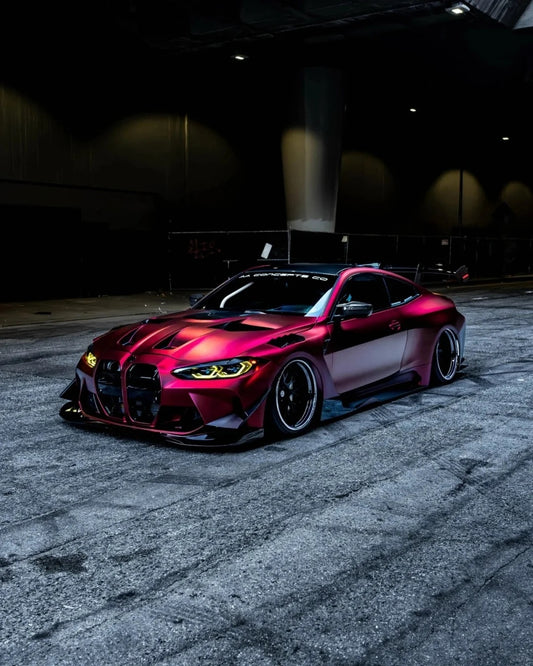
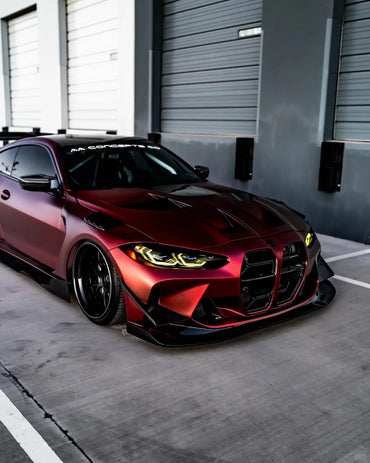







Ask any wrap installer which two finishes test their skills the most, and chrome and matte will both appear on the list — but for very different reasons. In 2026, search volume for terms like "chrome wrap whitewashing," "matte wrap fingerprints," and "DIY car wrap installation" has surged as more enthusiasts decide whether to tackle their own builds or hand the keys to a professional.
The honest answer is that chrome is harder to install for technical reasons, while matte is harder to install for cosmetic reasons. One forgives nothing about your stretching technique. The other forgives nothing about your prep cleanliness. Knowing the difference before you order will save you a roll of film, a weekend, and a lot of frustration.
Quick Verdict Before the Details
If we are scoring pure installation difficulty on a ten-point scale:
- Liquid chrome wrap: 8 to 9 out of 10. The thickness, stiffness, and stretch sensitivity make this the most demanding family of finishes in the wrap world. Mistakes are immediately visible and often permanent.
- Ultra matte wrap: 6 to 7 out of 10. More forgiving during stretching, but every speck of dust, every fingerprint, and every uneven squeegee pass shows up in the final result. Mistakes are visible but not always permanent.
Now let us unpack why.
What Makes Chrome Wraps So Demanding
A chrome finish is not just a glossy surface with a shiny pigment. The reflectivity comes from a thin metallized layer inside the film structure — a sandwich of multiple plies that produces the mirror effect. That construction is what gives chrome its striking visual impact, and it is also what makes the material behave unlike standard cast vinyl.
1. Thickness and Stiffness
A traditional gloss or matte cast vinyl typically measures around 3.5 mil in thickness. Mirror chrome films often run closer to 5 mil or more — nearly double — because of the metallized middle layer. The extra thickness makes the film noticeably stiffer in your hands, harder to manipulate around tight curves, and far less willing to relax over compound surfaces.
The Sailifilm liquid chrome wrap collection is engineered as a liquid gloss chrome-like finish rather than a true electroplated mirror chrome, which improves flexibility considerably compared to old-style chrome films. Even so, the material is firmer than standard gloss vinyl and rewards a slower, more methodical installation rhythm.
2. The Whitewashing Problem
This is the single most cited reason DIY installers fail on chrome. When chrome vinyl is over-stretched — pulled too hard around a bumper corner, a mirror cap, or a wheel arch — the metallized layer inside the film begins to crack at a microscopic level. The result is a permanent cloudy or hazy patch on what should be a perfect mirror finish. Once whitewashing appears, it cannot be reversed by heat, by tension relief, or by re-positioning. The panel has to be re-wrapped.
Standard gloss and matte films can be relaxed and reset if you over-tension them; chrome cannot. This single property is why chrome demands the most disciplined hand of any finish category.
3. Heat Sensitivity
Chrome wraps respond to heat differently than other vinyl. Too little heat and the film will not conform; too much heat and the metallized layer can distort, change reflectivity, or develop an orange-peel texture. The working temperature window is narrower than for matte or gloss films, and a heat gun held at the wrong distance for a few seconds longer than needed can ruin a panel.
Beginners often default to maximum heat to force compliance. With chrome, that approach destroys the finish.
4. Every Imperfection Shows
A mirror surface reflects everything behind it. That means every speck of dust trapped under the film, every adhesive bubble, every micro-pinhole in your prep surface — all of it becomes a visible defect in the final wrap. Prep cleanliness needs to be aggressive: full decontamination, lint-free wipes, and ideally a dust-controlled environment.
For complex factory paint underneath, our guide on paint correction vs touch-up before wrapping walks through which prep method makes the most difference for high-reflectivity finishes.
5. Radar Sensor Considerations on Modern Vehicles
This is an emerging concern in 2026 as more electric vehicles and ADAS-equipped cars hit the road. The metallized layer inside a chrome film can interfere with radar, lidar, and proximity sensors on the front bumper, side mirrors, and rear quarters. Professional installers commonly trim around sensor zones during chrome installations to avoid signal disruption. A DIY installer who is unaware of this will sometimes trigger dashboard warning lights after wrapping.
This concern is significantly reduced with the Sailifilm liquid chrome line because the chrome-effect finish is produced through advanced gloss-layer technology rather than a full electroplated metal layer.
What Makes Matte Wraps Their Own Challenge
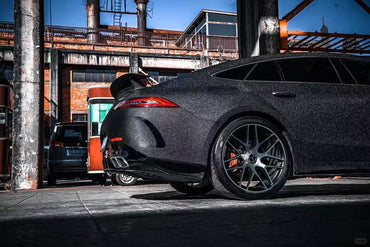
A matte finish absorbs light rather than reflecting it. That property is what gives matte its aggressive, stealth-modern aesthetic — and also what makes it surprisingly unforgiving during installation in a different way than chrome.
1. Fingerprints, Marks, and Permanent Touch Damage
This is the matte wrap installer's nightmare. The micro-textured surface of a quality matte film, including the ultra matte wrap collection, is what creates the deep flat look. But that same texture grabs and holds oils from your skin. A single bare-fingertip touch on a matte panel during installation can leave a glossy patch that does not fully fade.
Professionals install matte wraps with cotton gloves or nitrile gloves at all times. The film also cannot be aggressively burnished with a squeegee — too much pressure on the matte surface compresses the texture and creates a permanent shiny streak.
2. Stretching Behavior — Easier Than Chrome
Here is where matte actually outperforms chrome. Because there is no metallized layer to crack and no mirror reflectivity to dull, matte wraps can be stretched moderately without permanent visible damage. You will see some lightening at high-stretch zones (this is true of any vinyl), but the catastrophic whitewashing failure simply does not happen on matte material.
This makes matte a more realistic DIY project than chrome for first-time installers, provided the prep environment is clean and the squeegee technique is light.
3. Dust Visibility
A glossy or chrome surface reflects light cleanly, so dust trapped underneath shows up as a tiny lump or shadow. A matte surface diffuses light, which actually camouflages very small particulate contamination — small win for the DIY installer. However, larger debris still creates visible bumps in the diffuse surface, so prep still matters.
4. Seam and Overlap Visibility
Matte finishes can show seams and overlaps more harshly under certain angled light because the diffuse surface highlights any change in elevation. Planning panel seam placement on hidden edges (door jambs, body lines, panel gaps) is critical with matte installations.
5. Maintenance During Installation
Even after the wrap is applied, the matte surface must not be waxed, polished, or treated with standard auto products — these will fill the texture and create a permanent gloss. Our guide on how to wash a vinyl wrapped car covers the matte-safe cleaning approach specifically.
Side-by-Side Installation Comparison
| Installation Factor | Liquid Chrome Wrap | Ultra Matte Wrap |
|---|---|---|
| Film thickness | Thicker, stiffer | Standard cast thickness |
| Stretching tolerance | Low — risk of whitewashing | Moderate — more forgiving |
| Heat sensitivity | High — narrow temperature window | Moderate — wider window |
| Dust visibility | Extremely high | Lower (diffuses light) |
| Fingerprint risk | Moderate | High — gloves required |
| Squeegee pressure | Light to moderate | Light only |
| DIY suitability | Advanced level | Intermediate level |
| Mistake reversibility | Often permanent | Often correctable |
| Prep cleanliness demand | Maximum | High |
Tools That Make Either Finish Achievable
Both finishes reward proper tooling. A precision heat gun with adjustable temperature, a soft microfiber-edge squeegee, a sharper hard squeegee for edges, and a knifeless cutting tape system reduce installation difficulty significantly. The Sailifilm wrapping tools collection covers the full toolkit professional installers rely on, packaged for DIY-friendly use.
If you are new to wrapping, the DIY car wrap installation guide walks through the entire workflow from prep through post-heating, and the car film maintenance guide covers what to do once the wrap is on.
Test Before You Commit
The single best investment for either chrome or matte projects is a sample kit. The sample kits collection lets you order small swatches of liquid chrome and ultra matte films to practice stretching, squeegee technique, and heat behavior on a scrap panel before committing to a full vehicle. Twenty minutes of practice on a sample will tell you more about a film's character than any blog post can describe.
Which Should You Choose for Your Build?
Choose a liquid chrome wrap if:
- You want maximum visual impact and a show-car finish
- You are willing to invest more time per panel or hire a professional installer
- Your build is mostly flat or gently curved surfaces (chrome roofs, hoods, mirror caps look stunning)
- You are comfortable with the higher maintenance commitment
The liquid chrome wrap range covers indigo blue, racing green, cherry red, liquid silver, and more — every color delivers that signature mirror gloss without the brittleness of old-style electroplated chrome.
Choose an ultra matte wrap if:
- You want a stealthy, aggressive, modern aesthetic
- You are doing a DIY install for the first or second time and want a more forgiving material
- You drive daily and prefer a finish that hides minor swirl marks and small scratches
- You want a finish that looks expensive without screaming for attention
The ultra matte wrap collection includes deep matte blacks, romance red, satin chrome metallics, and more.
Other Finishes Worth Comparing
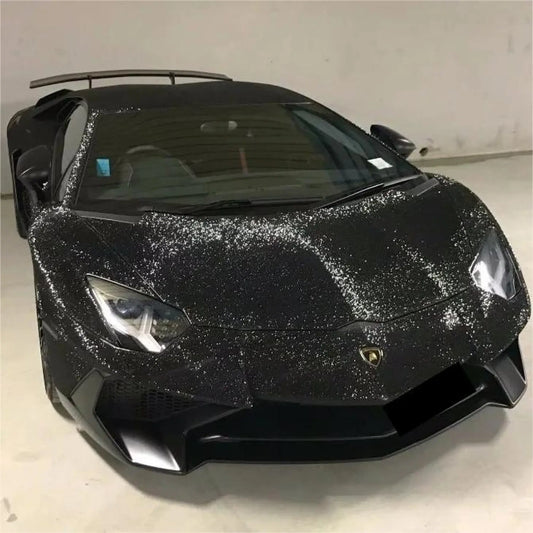
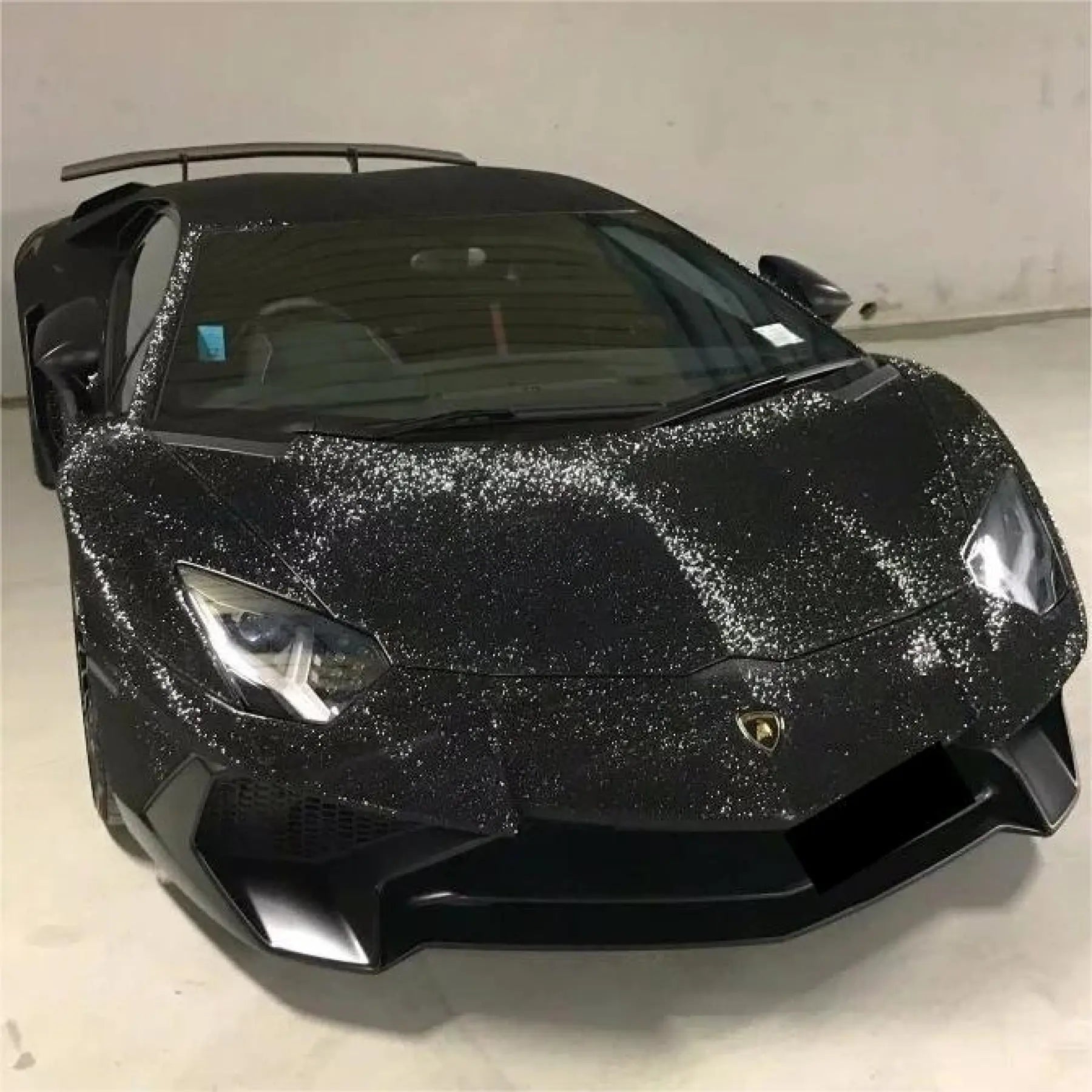
If you are still weighing options, the broader car vinyl wrap catalog spans every major finish family. The metallic vinyl wrap collection offers shimmer without the chrome installation difficulty, the crystal vinyl wrap line delivers depth and sparkle, the glitter sparkle car wrap collection adds diamond-like reflectivity, the rainbow laser vinyl wrap and dual color dream vinyl wrap lines provide color-shifting drama, and the 3D carbon fiber wrap line gives that motorsport-inspired weave look.
For owners who want to protect the paint underneath any of these finishes, the TPU paint protection wrap and colored paint protection film collections add self-healing chip resistance to high-impact zones. Curious how that self-healing layer actually works? The self-healing PPF technology guide explains the polymer science behind it.
For broader context on the difference between matte and gloss finishes, the matte vs gloss car wrap deep-dive covers which style holds up better in different lighting and weather conditions.
For the background material science on how vinyl films are engineered as a class, the Wikipedia entry on vehicle wraps covers the polyvinyl chloride and laminate construction principles common to all modern automotive vinyl.
Final Word
Chrome wraps and matte wraps both push installation difficulty above standard gloss films — they just do it in different ways. Chrome punishes aggressive stretching and rewards a slow, disciplined hand. Matte punishes careless handling and rewards a clean glove-on environment. Neither is impossible for a determined DIY installer, but matte is the better entry point for someone learning the craft, while chrome is best approached after you have a few full panels of experience or with a professional installer handling complex curves.
Whichever direction your build is heading, Sailifilm's full catalog is engineered around DIY-friendly air-release adhesive technology — so even our most demanding finishes are achievable with the right preparation and the right wrapping tools.
Browse the best sellers collection to see which finishes other Sailifilm customers have chosen most often this year, then order a sample kit to feel the material in your own hands before your first roll arrives.

